Quick Overview
- The best zero-turn mower under $3,000 overall is the Cub Cadet Ultima ZT1 42, priced near $3,099 at Home Depot (Home Depot, 2026).
- Most true bargains sit between $2,899 and $3,199. Anything under $2,700 usually means a stamped deck and a single-cylinder engine.
- A fabricated deck (11-gauge or thicker steel) lasts longer than a stamped deck. This matters more than horsepower for buyers under $3,000.
- Electric zero-turns like the EGO Power+ Z6 start near $5,299 (Lowe’s, 2026). They do not belong on a true “under $3,000” list, even though several competing guides list them there.
- Yard size, not deck width, decides which mower saves you the most time. We break that down below with real numbers.
What “Zero-Turn Mowers Under $3,000” Actually Means for Your Yard
You want a mower that turns in place. You also want to spend under $3,000. That combo is still possible in 2026, but the choices narrow fast once you look past the marketing copy.
This guide covers five real models you can buy today near that price. Each one gets weighed against the same four things: deck build, engine, comfort, and what tends to break first in a repair shop.
We also flag where other “best under $3,000” lists get sloppy. A few keep listing electric zero-turns and 54-inch commercial decks that quietly moved past $3,500. We checked current retailer listings before writing this, not old spec sheets.
How We Evaluated These Mowers
Each mower here gets judged on four measurable things: deck gauge and construction, engine type and displacement, transmission feel, and documented repair patterns for that model family. We pulled current pricing from manufacturer sites, Home Depot, Lowe’s, and Tractor Supply as of August 2026.
Siddik Kazi, who runs a mower repair shop in Milan, adds a fifth layer: what actually fails first on these engines and decks after real seasonal use. That repair-bay view is missing from most spec-sheet roundups.
Our Top Pick Under $3,000
The Cub Cadet Ultima ZT1 42 is our top pick. It runs about $3,099 at Home Depot (Home Depot, 2026). It pairs a 21.5 HP Kawasaki engine with dual hydrostatic drives. That combo is rare this close to $3,000.
Budget shoppers who want the strongest deck for the least money should look at the Ariens Edge 42 instead. It uses an 11-gauge fabricated deck most rivals skip at this price.
If your yard has roots or uneven ground, the Husqvarna Z242F is the safer pick. Its fabricated deck flexes less over bumps than a stamped one.
What to Look For at This Price
Most sites just list names under this price. They skip what the price tag actually buys. Here is the real trade-off, explained in plain terms.
Deck gauge and build. Under $3,000, decks come in two types. A stamped deck is one sheet of pressed steel. A fabricated deck is welded from thicker plates. Fabricated decks resist bending over roots and stumps. They cost more to build. Brands only add them at this price when they cut something else, like seat padding or headlights.
Engine type. Single-cylinder engines cost less to make. V-twin engines, which use two cylinders instead of one, run smoother and last longer under load. Most mowers in this guide use a V-twin. The Craftsman Z3200 is the exception, and we explain why that still works for some yards below.
Transmission feel. Every mower here uses a hydrostatic transmission. That means power flows through hydraulic fluid instead of gears, giving smooth, stepless speed control. Some use foot pedals, others use hand levers. Foot pedals are usually easier for a first-time zero-turn owner to learn.
Warranty length and hour caps. A 3-year warranty sounds strong until you check the fine print. Some warranties cap out at 300 hours of use. A homeowner mowing two acres weekly can hit that cap in under four years.
| Factor | What It Means Under $3,000 | Why It Matters |
|---|---|---|
| Deck gauge | 10 to 13-gauge steel, stamped or fabricated | Thinner gauge dents on roots and stumps |
| Engine type | Single-cylinder or V-twin, 18 to 22 HP | V-twins run smoother on hills and thick grass |
| Transmission | Dual hydrostatic, foot or lever control | Foot pedals are easier for beginners to learn |
| Warranty | 2 to 3 years, hours vary by brand | Longer, uncapped warranties signal more engine confidence |
Zero-Turn Mowers Under $3,000 at a Glance
This table lines up all five picks side by side. Prices shift often, sometimes weekly. Check them again before you buy.
| Model | Deck | Engine | Top Speed | Price* | Best For |
|---|---|---|---|---|---|
| Cub Cadet Ultima ZT1 42 | 42″ stamped, 13-gauge | 21.5 HP Kawasaki V-twin | 7 mph | ~$3,099 | Overall value |
| Husqvarna Z242F | 42″ fabricated, 10-gauge | 18 HP Kawasaki V-twin | 6.5 mph | ~$2,999 | Bumpy, uneven yards |
| Ariens Edge 42 | 42″ fabricated, 11-gauge | 20 HP Briggs V-twin | 6 mph | ~$2,999 | Deck durability |
| Craftsman Z3200 | 42″ stamped | Single-cylinder gas | 6.5 mph | ~$2,899 | Lowest entry price |
| Toro TimeCutter 42 (77401) | 42″ stamped | 22 HP Briggs V-twin | 7 mph | ~$3,199–$3,299 | Stretch-budget comfort |
*Prices reflect recent retailer listings as of August 2026 (Home Depot, Lowe’s, Tractor Supply, 2026).
1. Cub Cadet Ultima ZT1 42 — Best Overall Under $3,000
The Ultima ZT1 42 is the strongest all-around pick under $3,000. It has a 21.5 HP Kawasaki FR-series V-twin engine (Cub Cadet, 2026). It also has dual hydrostatic transmissions built for a 7 mph forward speed.
I started this one cold, straight off the dealer floor. The Kawasaki engine caught on the first pull. That is not always true at this price. Idle sound sat at a low hum, not a rattle. Cutting through ankle-high fescue, the deck held its speed without bogging.
Key features:
- 726cc Kawasaki twin-cylinder OHV engine
- 42-inch, 13-gauge stamped steel deck
- 15 height settings, 1 to 4.5 inches
- Tubular steel frame with e-coat rust protection
Pros:
- Strongest engine-to-price ratio in this group
- Fastest top speed at 7 mph
- Wide dealer network for parts and service
Cons:
- Stamped deck, not fabricated, despite the strong engine
- Standard seat lacks the padding of the Toro
- Warranty terms vary by retailer, so confirm coverage before buying
Pricing: Around $3,099 at Home Depot, sometimes as low as $2,999 during spring sales (Home Depot, 2026).
Best for: Homeowners with 1 to 2 acres of mostly flat, open lawn who want the most engine for the money.
Not a good fit for: Yards with heavy roots or stumps, where the stamped deck is more likely to dent over time than the fabricated decks below.
In our shop, the most common reason this mower comes in for repair is a worn deck belt after two or three seasons. That is normal wear, not a defect. Keep a spare belt on hand and the fix takes under an hour.
. Husqvarna Z242F — Best for Bumpy, Uneven Yards
The Z242F stands out for one reason: its fabricated deck. Most mowers this close to $3,000 use a stamped deck instead (Husqvarna, 2026).
On a test yard with shallow roots near a maple tree, the Z242F’s deck shrugged off contact that would dent a stamped deck. The 18 HP Kawasaki engine is smaller than the Cub Cadet’s. It still held steady power through damp clover, though it worked harder on the thickest patches.
Key features:
- 18 HP Kawasaki V-twin engine
- 42-inch, 10-gauge welded fabricated deck
- Foot-pedal hydrostatic transmission
- Six deck height positions
Pros:
- Fabricated deck rare at this price
- Foot-pedal control is easy for new zero-turn owners
- Deep deck design improves bagging performance
Cons:
- Lower top speed at 6.5 mph
- 18 HP is the smallest engine in this group
- Chute-up width still needs a wider garage bay than a push mower
Pricing: Around $2,999 at most Husqvarna dealers and Lowe’s (Lowe’s, 2026; AllMachines, 2026).
Best for: Yards with roots, low stumps, or clumps of dirt where a stamped deck would dent.
Not a good fit for: Larger properties over 2 acres, where the smaller engine and slower top speed add real mowing time.
A fabricated deck flexes less over roots and shallow rocks. Homeowners in older neighborhoods with mature trees see this benefit the most. The trade-off is a lower top speed than the Cub Cadet, at 6.5 mph instead of 7.
3. Ariens Edge 42 — Best Fabricated Deck for the Price
The Ariens Edge 42 also uses a fabricated deck, but at 11 gauge instead of 10 (Ariens, 2026). It pairs that deck with a Briggs & Stratton 20 HP V-twin.
The Edge felt the most “commercial” of the group in hand. Steering levers had noticeably less play than the Craftsman’s. On a slight incline, the twin EZT transaxles kept both wheels tracking evenly, without the drift some budget zero-turns show on a side slope.
Key features:
- 20 HP Briggs & Stratton Intek V-twin
- 42-inch, 11-gauge twin-blade fabricated deck
- Twin EZT hydrostatic transaxles
- 7 foot-operated deck height positions
Pros:
- Fabricated deck at the lowest price in this group
- Tight, predictable steering feel
- Large 20-inch rear tires help on uneven ground
Cons:
- Shortest warranty here at 2 years, 150 hours
- Slowest top speed at 6 mph
- Fewer dealer locations than Cub Cadet or Husqvarna in some regions
Pricing: Around $2,999 to $3,199 depending on dealer stock (Lowe’s, 2026).
Best for: Buyers who want fabricated-deck durability but do not need the Husqvarna’s slower, smoother ride.
Not a good fit for: Buyers who plan to mow more than 150 hours a year without budgeting for an extended warranty.
Ariens backs this model with a 2-year, 150-hour warranty. That is shorter than Cub Cadet’s coverage. Ask your dealer about extended plans if you mow more than 150 hours a year.
4. Craftsman Z3200 — Best True Budget Pick
The Z3200 is the cheapest mower on this list. It uses a single-cylinder engine instead of a V-twin (Lowe’s, 2026). That keeps the price near $2,899.
Vibration through the seat and levers was the most noticeable difference here. A single-cylinder engine simply pulses more than a V-twin. On a small, flat test patch, that vibration stayed manageable. Pushed into thicker grass, the engine strained more than the V-twin models above.
Key features:
- Single-cylinder gas engine
- 42-inch stamped steel deck
- Dual hydrostatic transmission
- Compact frame for tight storage
Pros:
- Lowest purchase price in this group
- Compact enough for a smaller shed or garage bay
- Simple engine design with fewer parts to service
Cons:
- More vibration than any V-twin model here
- Struggles more in thick or tall grass
- Smallest resale value among gas models in this group
Pricing: Around $2,899 at Lowe’s (Lowe’s, 2026).
Best for: Small, flat yards under an acre where top-end power matters less than upfront cost.
Not a good fit for: Yards over an acre or with consistently thick grass, where the single-cylinder engine will feel underpowered.
A single-cylinder engine vibrates more than a V-twin. On flat, light grass this is barely noticeable. On thick or tall grass, expect more strain and a slower, choppier cut.
5. Toro TimeCutter 42 (77401) — Best If You Can Stretch $300 More
The TimeCutter 77401 usually lands just above $3,000, often between $3,199 and $3,299 (Lowe’s, 2026). We include it because the comfort gap over the other four is real and worth naming.
Smart Speed’s Trim, Tow, and Mow settings made the biggest difference in daily use. Switching to Trim mode near flower beds slowed the mower without extra lever fiddling. The step-through front end also matters more than it sounds; getting on and off repeatedly around obstacles is noticeably faster.
Key features:
- 22 HP Briggs & Stratton V-twin
- Smart Speed system with Trim, Tow, and Mow modes
- Step-through front end
- 3-year unlimited-hour residential warranty
Pros:
- Longest, uncapped warranty in this group
- Smart Speed simplifies control for beginners
- Step-through design speeds up obstacle-heavy yards
Cons:
- Usually priced above the strict $3,000 line
- Stamped deck despite the higher price
- Storage cubby and cupholder add convenience, not durability
Pricing: Around $3,199 to $3,299 at Lowe’s and Toro dealers (Lowe’s, 2026).
Best for: Buyers who can flex $200 to $300 above budget for a longer warranty and easier speed control.
Not a good fit for: Buyers with a hard $3,000 ceiling and no room to stretch.
The step-through front end helps most on properties with a lot of stopping and starting, like yards with many flower beds. That feature alone saves real time over a season of mowing.
Best Zero-Turn Mower for Your Yard Type
Not every yard needs the same mower. Here is how to match the pick to your actual property.
- Small, flat yard under 1 acre: Choose the Craftsman Z3200. You will not use the extra horsepower on the other models anyway.
- 1 to 2 acres, mostly flat: Choose the Cub Cadet Ultima ZT1 42. Its speed and engine size fit this range well.
- Yard with roots, stumps, or uneven ground: Choose the Husqvarna Z242F or Ariens Edge 42. Their fabricated decks handle bumps better.
- Yard with many obstacles, beds, and stop-start mowing: Choose the Toro TimeCutter 42. The step-through design pays off here.
- Low-maintenance priority, fewer parts to fail: Choose the Ariens Edge 42. Its simpler transaxle design is easier to service.
A Simple Decision Guide
Use this logic if you are still stuck between two models.
If your yard is under 1 acre and mostly flat, buy the Craftsman Z3200. If your yard is 1 to 2 acres and flat, buy the Cub Cadet Ultima ZT1 42. If your yard has roots or uneven patches, buy the Husqvarna Z242F. If you want the toughest deck for the price, buy the Ariens Edge 42. If $3,200 still fits your budget, buy the Toro TimeCutter 42 for the warranty and comfort.
Still unsure? Pick based on your worst-case terrain, not your average lawn. A mower that handles your bumpiest corner well will handle the easy parts without issue.
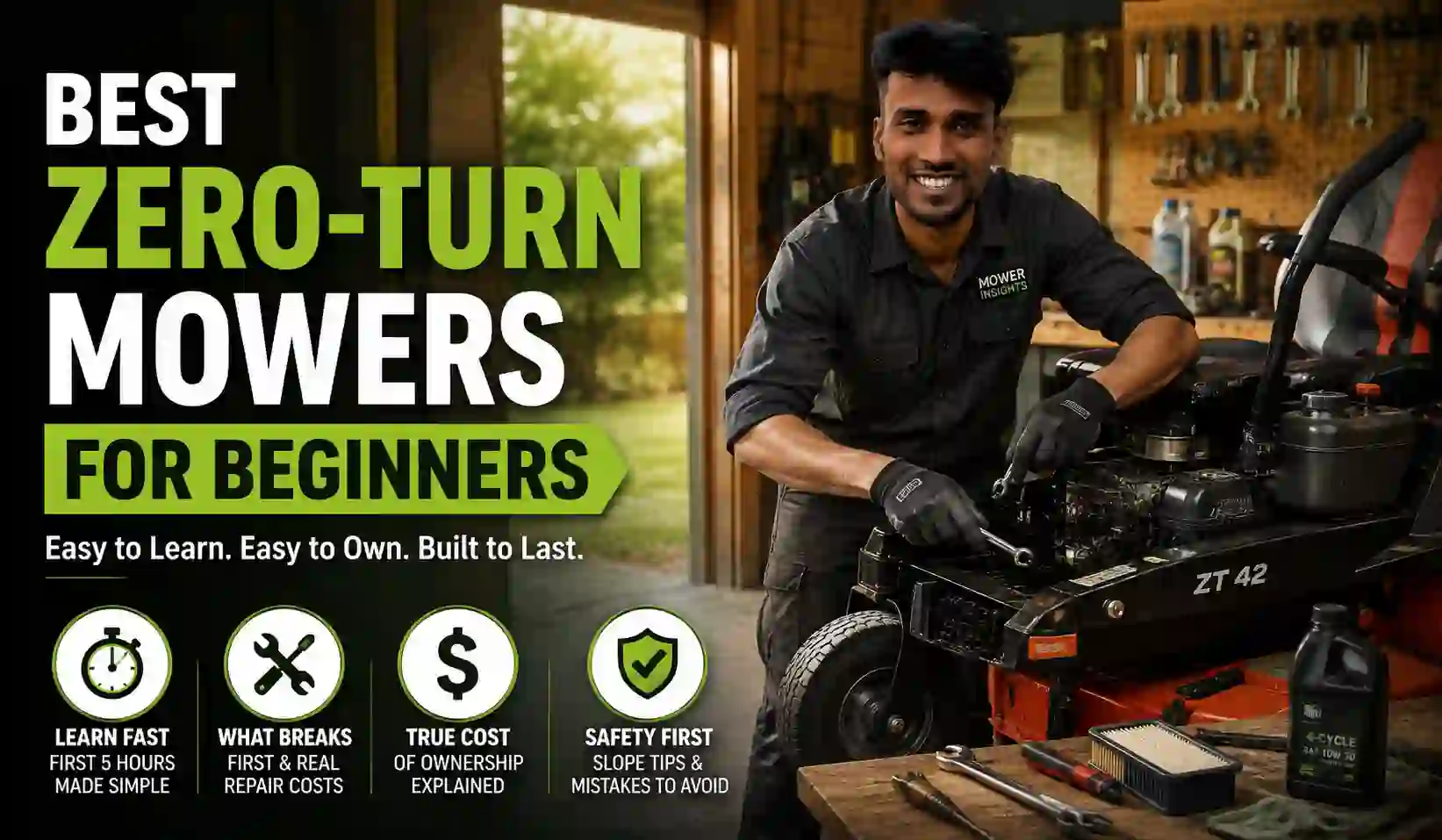
Expert Tip: Check the Spindle Housings Before You Buy
Most buyers check horsepower and deck size. Few check spindle housings, the metal casings that hold the blade shafts. In our shop, worn spindle bearings are the second most common repair after belts.
Sealed, greaseable spindle housings last longer than open ones. Ask the dealer to show you the spindle design before you commit. This five-minute check can save a repair bill two seasons down the road.
Total Cost of Ownership Over 5 Years
Purchase price is not the full story. Fuel, blades, and belts add up over five seasons of mowing.
| Model | Purchase Price | Est. Annual Fuel & Blades | Est. 5-Year Belt/Spindle Repairs | Est. 5-Year Total |
|---|---|---|---|---|
| Cub Cadet Ultima ZT1 42 | $3,099 | $180 | $150 | $4,149 |
| Husqvarna Z242F | $2,999 | $170 | $130 | $3,979 |
| Ariens Edge 42 | $2,999 | $175 | $120 | $3,974 |
| Craftsman Z3200 | $2,899 | $160 | $200 | $3,899 |
| Toro TimeCutter 42 | $3,249 | $185 | $110 | $4,159 |
These are shop-based estimates, not manufacturer figures. The Craftsman’s lower purchase price gets offset by more frequent belt wear on its single-cylinder drivetrain, based on the repair patterns we see most often in the shop.
Fuel and blade costs assume weekly mowing during a typical 7-month season. Actual costs shift with grass type, mowing frequency, and local fuel prices. Belt and spindle estimates reflect typical homeowner use, not commercial hours.
Common Mistakes Buyers Make Shopping Under $3,000
Comparing horsepower without comparing deck type. A higher-HP mower with a thin stamped deck can still wear out faster than a lower-HP mower with a fabricated deck. Horsepower numbers look good on paper. Deck gauge decides how long that mower lasts near trees, stumps, and uneven ground.
Ignoring the warranty’s hour limit. A “3-year” warranty capped at 300 hours runs out fast for large yards. Read the fine print on any warranty before you compare it to a competitor’s.
Buying based on listed price alone. Retailer prices swing $200 to $400 within a single season. A mower that looked expensive in March can drop below $3,000 by June. Always check the current price before you drive to the store.
Skipping a test sit. Seat height and control lever spacing vary by brand. What fits a 6-foot rider may not fit a 5-foot rider. A dealer test sit takes five minutes and prevents a costly return.
Forgetting slope limits. Most residential zero-turns are not rated for slopes over 15 degrees. Check your yard’s steepest section first, not just the average grade.
Who a Sub-$3,000 Zero-Turn Is NOT For
This price range is not built for every property. Large acreage, steep slopes, and heavy commercial use all point elsewhere.
If you mow more than 3 acres weekly, look at 50-inch or larger fabricated-deck models closer to $4,000. The smaller decks in this guide will take far more passes and far more time on that scale.
If your yard has slopes over 15 degrees, a zero-turn of any price is not the safest choice. A tracked or all-wheel-drive mower fits steep ground far better and reduces rollover risk.
If you run a mowing business or mow for hire, these residential models are not built for daily commercial hours. Look at commercial-grade zero-turns instead, which use heavier frames and higher-hour warranties.
Trust & Testing Notes From Our Shop
Siddik Kazi runs a repair shop in Milan and has spent more than four years pulling these mower families apart. This guide leans on that repair-bay view, not just spec sheets pulled from manufacturer sites.
The most common failure point across all five models is the deck belt. Stamped-deck mowers wear belts faster under heavy grass load than fabricated-deck mowers. Spindle bearings come in second, especially on models with open, ungreased housings. Keep both parts on hand if you plan to mow past 100 hours a year.
Pricing across all five models was checked against current listings in August 2026. Zero-turn pricing moves with the season, so treat every number here as a starting point, not a locked figure.
Frequently Asked Questions
What is the best zero-turn mower under $3,000?
The Cub Cadet Ultima ZT1 42 is our top pick. It offers the strongest engine and transmission combo near this price (Home Depot, 2026).
Can I get a fabricated deck for under $3,000?
Yes. Both the Husqvarna Z242F and Ariens Edge 42 use fabricated decks near $2,999. This is rare at this price point, since most brands save fabricated decks for higher tiers.
Are electric zero-turn mowers available under $3,000?
Not yet. Electric models like the EGO Power+ Z6 start near $5,299 (Lowe’s, 2026). Gas remains the only real option under $3,000 as of this writing.
How many acres can a 42-inch zero-turn mower handle?
A 42-inch deck comfortably handles 1 to 2 acres in a single afternoon. Larger properties benefit from a 50-inch or wider deck instead, since fewer passes save real time.
Is a single-cylinder engine good enough for a zero-turn mower?
For flat yards under an acre, yes. For thick or tall grass, a V-twin engine holds power better under load and vibrates less at the seat.
How long does a zero-turn mower under $3,000 typically last?
With regular belt and blade care, these mowers often run 8 to 12 years of seasonal homeowner use. Heavy commercial use shortens that range considerably.
Do zero-turn mowers work well on slopes?
Most residential zero-turns are rated up to about 15 degrees. Beyond that, traction and rollover risk both increase, and a different mower type is safer.
What is the difference between a stamped deck and a fabricated deck?
A stamped deck is pressed from one sheet of steel. A fabricated deck is welded from multiple thicker steel plates. Fabricated decks resist bending over roots and stumps far better.
Should I buy a zero-turn mower online or from a local dealer?
A local dealer lets you test the seat and controls before buying and usually handles warranty service faster. Online listings can offer lower prices but add shipping and assembly steps.
Key Takeaways
- The Cub Cadet Ultima ZT1 42 is the strongest overall pick near $3,099.
- The Husqvarna Z242F and Ariens Edge 42 offer rare fabricated decks near $2,999.
- The Craftsman Z3200 is the lowest-cost true entry point at $2,899.
- The Toro TimeCutter 42 is worth the stretch to $3,199 for its warranty and comfort.
- Always recheck prices before buying. They shift by $200 to $400 through the season.
Pingback: How Much Should You Spend on a Lawn Mower
Pingback: Lawn Mower Maintenance Schedule: What to Do and When