Quick Overview
- A mulching kit is a blade and plug set. It turns a bagging mower into a mulching mower.
- Most kits cost $15 to $60. Price depends on your deck size.
- Install takes 15 to 30 minutes. You need a socket wrench and a torque wrench.
- Mulching kits work best on dry grass. Wet or tall grass causes clumps.
- A kit saves bag time. It will not match a true mulching mower’s cut quality.
What Is a Mulching Kit?
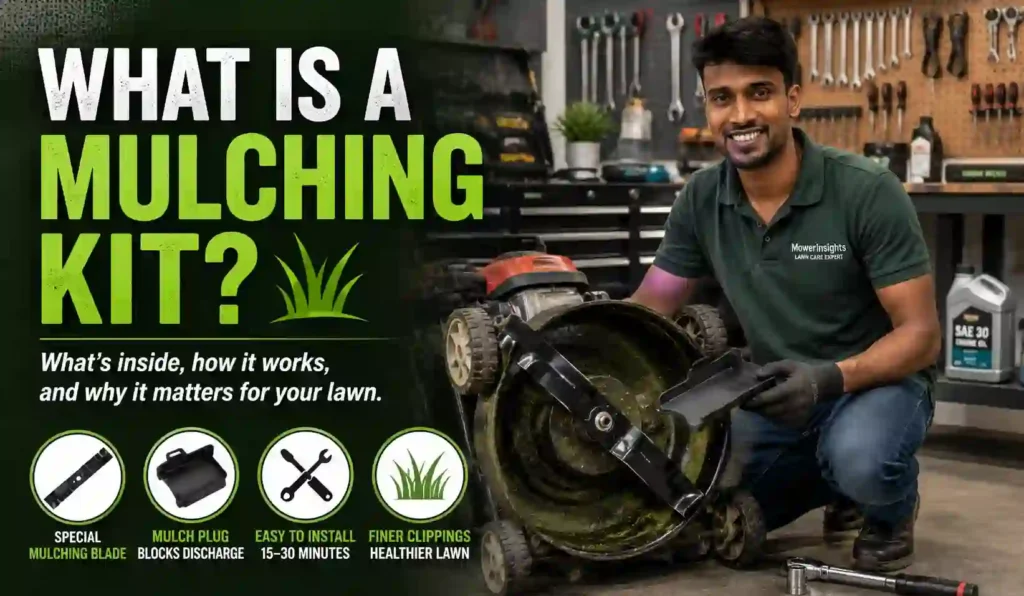
A mulching kit is a small parts kit. It turns your mower into a mulching mower.
It has two main parts. A mulching blade and a mulch plug.
The blade cuts grass into tiny pieces. The plug blocks the discharge chute.
Together, they trap grass under the deck. The blade cuts it again and again.
This makes very fine grass bits. They fall back into your lawn as food.
I have installed dozens of these kits in my shop. Most take under 30 minutes.
The idea is simple. But fit and setup matter more than people think.
A mismatched kit can cause vibration. It can also throw grass the wrong way.
That’s why picking the right kit matters as much as installing it well.
What’s Inside a Mulching Kit
A standard kit has three main parts. Each one has its own job.
The mulching blade. This blade has curved edges. The curves pull grass up, not out.
Standard blades throw grass sideways or back. Mulching blades keep grass spinning under the deck.
Some brands add small teeth along the edge. These teeth help slice grass more times per pass.
The mulch plug. This is a plastic or metal block. It seals the discharge opening.
Without a plug, cut grass would fly out the side. The plug stops that from happening.
Some plugs are solid blocks. Others have a hinged flap for easy removal.
Mounting hardware. Bolts, washers, or brackets. These hold the plug in place.
Some mowers need no extra hardware. The plug just slides into the chute.
Other mowers need a bracket and two bolts. Always check your kit’s instructions first.
Types of Mulching Kits
Not all kits are the same. Here are the three you’ll find.
Model-specific kits. These are built for one exact mower model. They fit perfectly, every time.
Universal kits. These claim to fit many mowers. Fit can still be off by a few millimeters.
I don’t recommend universal kits for tight-tolerance decks. A loose plug is a common result.
Blade-only kits. Some mowers already have a sealed deck. You only need the blade, not a plug.
Check your current deck first. If it has no side chute, you may only need a new blade.
How a Mulching Kit Works
Here is what happens during one pass with a mulching kit installed.
- The blade lifts the grass. Air pressure from the spinning blade pulls each blade of grass straight up.
- The blade makes the first cut. The sharp edge slices the grass at your set height.
- The plug blocks the exit. Cut grass can’t leave through the side chute. It stays under the deck.
- The blade cuts again. Trapped clippings pass under the spinning blade a second time. Sometimes a third time.
- Fine clippings fall down. Once small enough, the pieces drop through the grass and hit the soil.
- Microbes break it down. Soil bacteria and worms turn clippings into plant food. This takes one to two weeks (University of Minnesota Extension, 2023).
This whole process happens in under one second per blade of grass. The mower repeats it thousands of times per minute.
Blade speed matters here too. Most residential mowers spin the blade at 3,000 to 3,600 RPM. That speed creates the airflow needed to lift and re-cut grass properly.
Mulching Kit vs. Mulching Mower vs. Bagging
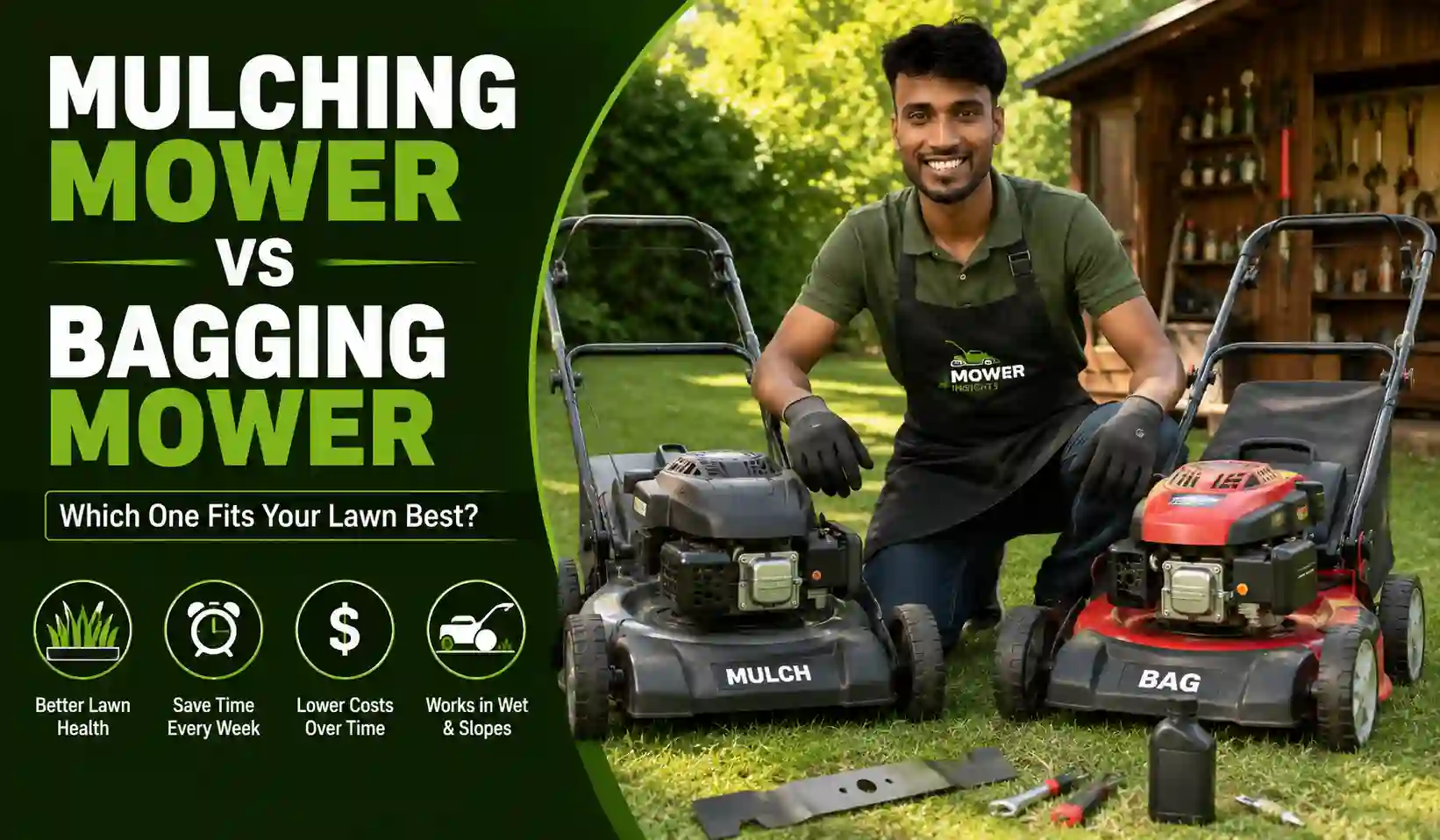
People mix these terms up. Here is the real difference.
| Feature | Mulching Kit (add-on) | Factory Mulching Mower | Bagging Mower |
|---|---|---|---|
| Cut quality | Good, not perfect | Best | N/A (collects, doesn’t chop) |
| Cost | $15–$60 | Built into mower price | Built into mower price |
| Deck design | Standard deck, sealed with plug | Deep, closed deck built for airflow | Open deck with chute |
| Best grass length | Under 3 inches | Under 3 inches | Any length |
| Setup time | 15–30 minutes | None (comes ready) | None (comes ready) |
| Clipping cleanup | None needed | None needed | Bag must be emptied |
A factory mulching mower has a deeper deck. This traps air and grass better than a kit-converted deck.
A mulching kit is the budget option. In my shop, I see it get close to factory-level results on well-maintained mowers. It rarely matches a true mulching deck on thick or wet grass.

How to Check If a Kit Fits Your Mower
Do this before you buy. It saves a return trip to the store.
- Find your mower’s full model number. It’s usually on a sticker under the handle or on the deck.
- Measure your deck width. Common sizes are 21, 42, and 46 inches.
- Check your blade’s center hole size. Most are 5/8″ or 3/4″.
- Look up your kit by exact model number, not just deck size.
- Confirm the plug style. Some decks need a bolt-on plug, others need a slide-in plug.
Skipping step 4 is the most common return reason. I hear this often from customers in my shop.
What You Need Before You Start
Gather these tools first. This saves trips back to the garage.
- A mulching kit made for your exact mower model
- A socket wrench set (usually 9/16″ or 15mm for blade bolts)
- A torque wrench
- Thick work gloves
- A block of wood or a blade lock tool
- Safety glasses
- A shop rag for cleanup
Check your mower’s manual first. It lists the exact blade bolt size.
Buying the wrong kit is the most common mistake I see. More on that below.
Step-by-Step: Installing a Mulching Kit
Follow these steps in order. Do not skip the safety step.
Step 1: Disconnect the Spark Plug (5 minutes)
Pull the spark plug wire off first. This stops the engine from starting by accident.
For electric mowers, remove the battery instead. Never skip this step.

Set the wire aside, away from the plug. This prevents any spark during blade work.
Step 2: Tip the Mower on Its Side (2 minutes)
Tip it with the air filter and carburetor facing up. This stops oil and gas leaks.
Check your manual. Some brands specify a direction.
Rest the mower against a solid wall or workbench. Do not balance it on the wheels alone.
Step 3: Remove the Old Blade (5 minutes)
Wedge a block of wood against the blade to stop it from spinning. Loosen the center bolt with your socket wrench.
Most bolts turn counter-clockwise to loosen. Some Craftsman and MTD models are reversed. Check your manual.
Set the old bolt and washer aside. You will likely reuse them with the new blade.
[VERIFY: bolt turn direction for the reader’s specific mower brand and model]
Step 4: Install the Mulching Blade (5 minutes)
Line up the blade with the mounting hub. The curved edges should face up, toward the deck.
Hand-tighten the bolt first. Then torque it to the spec in your manual.
Most residential mowers need 35 to 45 foot-pounds of torque (Toro Owner’s Manual, 2024). A torque wrench matters here.
A loose blade bolt is a top reason mowers land on my repair bench.
Step 5: Install the Mulch Plug (5 minutes)
Locate the discharge chute opening. Slide or bolt the plug into place.
Push until you hear or feel it click or seat fully. A loose plug will rattle and can pop out.
If your kit uses bolts, snug them evenly. Do not fully tighten one side first.
Step 6: Set the Mower Upright and Reconnect Power (2 minutes)
Set the mower back on its wheels. Reconnect the spark plug wire or battery.
Give the deck a quick visual check. Confirm the blade and plug both sit flush.
Step 7: Test on a Small Patch First (5 minutes)
Start the mower. Run it over a small, dry patch of grass.
Check the cut. Look for even, fine clippings with no clumps.
If clippings look uneven, stop the mower. Recheck the blade angle and plug seating.
Common Mistakes Homeowners Make
I see these mistakes weekly in my shop. Most are easy to avoid.
Buying a universal kit that doesn’t fit. Deck sizes and bolt patterns vary by brand. Always match the kit to your exact model number.
Skipping the torque wrench. A hand-tightened blade bolt can loosen within a few sessions. This causes dangerous vibration.
Mulching wet grass. Wet clippings stick together. They clog the deck instead of falling through.
Mulching grass that’s too tall. If you skip a week, clippings are too big to break down. Bag that first cut instead.
Forgetting to reinstall the plug correctly. A loose plug can vibrate out mid-mow. This exposes the spinning blade.
Never sharpening the mulching blade. A dull blade tears grass instead of cutting it. Torn grass turns brown at the tips faster.
Mowing at the wrong height. Cutting too short stresses the lawn. It also makes clippings too small to feed the soil well.
Ignoring deck buildup. Old, packed clippings under the deck block airflow. This makes clumping worse over time.
Safety Notes
Always disconnect the spark plug or battery before any blade work. This is not optional.
Wear thick gloves. Mulching blades have multiple sharp edges, more than a standard blade.
Never run a mower with a missing or loose mulch plug. The open chute can let debris fly out fast.
Check the blade bolt torque once a season. A loose blade can cause kickback. This is a known injury risk (Consumer Product Safety Commission, 2023).
Keep hands and feet clear of the deck during any test run. Debris can still eject from small gaps.
When to DIY vs. When to Call a Professional
Most mulching kit installs are DIY-friendly. You need basic tools and 30 minutes.
Call a professional if any of these apply to you.
- You don’t own a torque wrench and can’t borrow one
- Your mower is a riding or zero-turn model with a complex deck
- The blade bolt is rusted or won’t budge
- You’re not confident tipping the mower safely
- The kit doesn’t match your deck after checking twice
A shop install usually costs $20 to $40 in labor on top of the kit price. This is based on typical rates at independent repair shops.
Mulching Kit Maintenance
A mulching kit needs upkeep, just like the rest of your mower. Skipping this shortens its life.
Sharpen the blade every 20 to 25 hours of use. A sharp blade cuts cleanly and clogs less.
Clean the deck after every few mows. Scrape off packed clippings with a plastic scraper, not metal.
Check the plug seating monthly. Vibration can loosen bolts or slide-in plugs over a season.
Inspect the blade for bends or nicks. A bent blade throws off balance and wears the spindle bearing faster.
Doing these four things adds real life to a mulching kit. I’ve seen well-kept kits last five seasons or more.
Troubleshooting: Mulching Kit Problems and Fixes
Use this table if your mulching kit isn’t working right.
| Symptom | Likely Cause | Fix |
|---|---|---|
| Grass clumps on the lawn | Grass was wet or too tall | Wait for dry grass; mow more often |
| Clippings shoot out the side | Plug isn’t seated or is missing | Reinstall or replace the plug |
| Mower vibrates more than usual | Blade bolt is loose | Re-torque to manual spec |
| Cut looks torn, not clean | Mulching blade is dull | Sharpen or replace the blade |
| Deck clogs constantly | Grass too long, or wet buildup under deck | Clean deck; raise height for first pass |
| Engine bogs down while mowing | Deck packed with wet clippings | Stop, clean deck, mow drier grass |
| Uneven cut across the lawn | Blade bent or deck not level | Check blade balance and deck height |
| Grass leaves a dusty residue | Clippings cut too fine for dry, brittle grass | Raise cutting height slightly |
Total Cost of Ownership: Mulching Kit vs. New Mulching Mower
Here is what each option actually costs over time.
| Cost Factor | Mulching Kit | New Mulching Mower |
|---|---|---|
| Upfront cost | $15–$60 | $300–$1,200+ |
| Install labor (if hired) | $20–$40 one-time | None |
| Blade replacement (yearly) | $10–$25 | $10–$25 |
| Plug replacement (rare) | $5–$15 | N/A |
| Total first-year cost | $35–$115 | $300–$1,200+ |
A mulching kit is the clear budget choice. This is true if your current mower is in good shape.
A new mower makes more sense if your deck is already worn or rusted through.
Who a Mulching Kit Is a Good Fit For
A mulching kit fits you well if these describe your situation.
- You mow weekly and keep grass under 3 inches
- Your mower deck is in good shape, no rust or cracks
- You want to skip bagging without buying a new mower
- Your lawn is mostly flat with light to medium grass density
Who Should Skip a Mulching Kit
A mulching kit is not a good fit if these describe you.
- Your lawn grows fast and you often skip a week between mows
- Your area gets frequent morning dew or rain that keeps grass wet
- You have thick, dense grass like St. Augustine or zoysia
- Your mower deck already shows rust holes or heavy wear
For dense or fast-growing lawns, a bagging setup or a true mulching mower often performs better.
A Real Repair-Shop Example
Last spring, a customer brought in a mower. It vibrated hard after he installed a mulching kit himself.
I checked the blade bolt first. It was hand-tight only, no torque wrench used.
I torqued it to 40 foot-pounds. The vibration was gone in one test run.
This is the single most common fix I make on kit-converted mowers. It takes five minutes on my bench.
The lesson is simple. A torque wrench is not optional gear for this job.
Grass Type and Mulching Performance
Not all grass mulches the same way. Type matters as much as length.
| Grass Type | Mulching Performance | Notes |
|---|---|---|
| Kentucky bluegrass | Excellent | Breaks down fast, low clump risk |
| Fescue | Good | Handles mulching well if cut on schedule |
| Bermuda | Fair | Fine blades mulch well; thick patches can clump |
| St. Augustine | Poor to fair | Wide blades resist fine cutting; clumps more often |
| Zoysia | Poor to fair | Dense growth traps clippings under the deck |
If you have St. Augustine or zoysia, mow more often. Shorter, more frequent cuts reduce clump risk a lot.
Seasonal Mulching Tips
Grass behaves differently across the year. Adjust your mulching habit by season.
Spring. Grass grows fast. Mow twice a week if needed to avoid long clippings.
Summer. Heat can dry grass out. Mulching helps hold soil moisture during hot stretches.
Fall. Leaves mix with grass clippings. Most mulching kits handle light leaf cover fine, but heavy leaf piles should be bagged or raked first.
Winter. Growth slows or stops. Clean and store your mulching blade to prevent rust.
Mulching Kit Buying Checklist
Use this list before you click “buy” on a kit.
- Confirm your exact mower model number, not just the deck size
- Check that the kit includes both a blade and a plug, if you need both
- Look for a blade with a deep curve, not a shallow stamped edge
- Buy from the mower brand’s official site or a trusted retailer
- Check return policy in case the fit is wrong
Skipping the first item on this list causes most fit problems. I see it often in my shop.
Quick Glossary
Short definitions for terms used in this guide.
Discharge chute. The side opening where a mower normally shoots out grass clippings.
Mulch plug. The block that seals the discharge chute for mulching.
Blade hub. The center part of the deck where the blade bolts on.
Torque. How tight a bolt is turned, measured in foot-pounds.
Thatch. A layer of dead grass and roots that builds up at soil level.
Deck. The metal housing under the mower that covers the spinning blade.
Environmental and Lawn Health Benefits
Mulching does more than save bag time. It feeds your lawn too.
Grass clippings hold nitrogen, phosphate, and potash. These are the same nutrients in bagged fertilizer (University of Minnesota Extension, 2023).
Mulching can cut fertilizer use by a real amount over a season. Less fertilizer means less runoff into storm drains.
Mulched clippings also shade the soil. This slows moisture loss on hot, dry days.
Less bagging means less yard waste at the curb too. That’s a small but real environmental win.
Blade Material: What to Look For
Mulching blades come in a few materials. The material affects how long the edge lasts.
High-carbon steel. This is the most common choice. It holds an edge well and costs less.
Hardened steel. This resists nicks from rocks and roots better. It costs more but lasts longer.
Composite or coated blades. Some brands add a coating to resist rust. This helps in humid climates.
For most homeowners, a high-carbon steel blade is enough. Upgrade to hardened steel if your lawn has rocky soil.
How Mulching Affects Watering and Fertilizing
A mulching kit changes your lawn care routine slightly. Here’s what shifts.
Watering. Mulched lawns hold moisture better. You may water slightly less often.
Fertilizing. Clippings return some nutrients on their own. You can often reduce fertilizer applications during the growing season.
Mowing frequency. Mulching works best with frequent, short cuts. Plan to mow a bit more often than with a bagging setup.
None of these changes are dramatic. But small habit shifts help a mulching kit perform its best.
Mulching Kits for Riding Mowers vs. Push Mowers
Kit installation differs a bit by mower type. Here’s what changes.
Push mowers. These are the easiest to convert. One blade and one plug, usually under 30 minutes.
Riding mowers and zero-turns. These often have wider decks with multiple blades. Each blade may need its own mulching kit.
Multi-blade decks also mean more torque points to check. Missing one loose bolt is easy on a three-blade deck.
If you’re not confident working under a riding mower deck, this is a good case for professional install.
Mulching Kit Myths, Debunked
A few myths follow mulching kits around. Here’s what’s actually true.
Myth: Mulching spreads weeds and disease. This is only true if you mow over diseased or seeding weeds. Healthy grass mulching is safe.
Myth: A mulching kit always causes thatch buildup. Thatch comes from roots and stems, not grass clippings. Clippings break down too fast to cause thatch on their own (University of Minnesota Extension, 2023).
Myth: Any blade can be sharpened into a mulching blade. The curve shape matters, not just the edge. A standard blade sharpened at home will not mulch well, even with a sharp edge.
Myth: Mulching kits work the same on every mower brand. Deck depth and airflow design vary a lot. This is why fit and blade choice both matter.
How to Confirm Your Kit Is Working Right
Run this quick check after any install. It takes under five minutes.
- Mow a small, dry test patch first.
- Look at the clippings. They should be small and scattered evenly.
- Check for clumps or trails of grass. These signal a problem.
- Listen for rattling. A loose plug often makes noise.
- Feel for extra vibration through the handle.
If all five checks pass, your kit is set up correctly. If not, revisit the install steps above.
Warranty and Return Considerations
Most mulching kits carry a short warranty. This usually covers manufacturing defects only.
Warranties rarely cover install damage. This includes a bent blade from a bad tightening job.
Keep your receipt and the kit’s model number. You’ll need both for any warranty claim.
If a kit doesn’t fit after a careful check, most sellers accept returns within 30 days. Always confirm this before buying, since policies vary by retailer.
Trust & Testing Methodology
I run a mower repair shop in Milan. I have installed mulching kits on dozens of customer mowers since 2021.
I also hold an Agricultural Engineering degree from Politecnico di Milano. My notes here come from real bench work, not spec sheets.
The torque and cost figures above reflect typical ranges I see across common residential brands. Always confirm exact numbers against your mower’s manual before installing.
Expert Tip
Here’s a trick most guides skip. Run your finger along the mulching blade’s curve before installing it.
If the curve is shallow or nearly flat, it’s a cheap stamped blade. It will dull fast and tear grass within a few mows.
A deeper, sharper curve holds an edge longer. It also lifts grass more efficiently during each pass.
Frequently Asked Questions
What is a mulching kit?
A mulching kit is a blade and plug set. It converts a bagging or side-discharge mower into a mulching mower.
How does a mulching kit work?
The blade cuts grass into fine pieces under the deck. The plug seals the chute so clippings fall back into the lawn instead.
Does a mulching kit fit any mower?
No. You need a kit made for your exact mower brand and model. Deck size and bolt pattern vary widely.
How much does a mulching kit cost?
Most kits cost $15 to $60. Price depends on your deck size and mower brand.
Can I install a mulching kit myself?
Yes, most homeowners can. You need a socket wrench, a torque wrench, and about 30 minutes.
Is mulching bad for my lawn?
No, when done right. Mulching adds nutrients back into the soil (University of Minnesota Extension, 2023).
Why does my mulched grass clump instead of disappearing?
Clumping usually means the grass was wet, too tall, or the blade is dull. Fix the cause and the clumps stop.
Do I need to sharpen a mulching blade differently than a normal blade?
No. Sharpen it the same way as a standard blade. Check it more often, since curved edges cut more per pass.
Will a mulching kit slow down my mowing time?
Slightly. You may mow a bit slower to let the blade re-cut properly. Most people don’t notice a real time difference.
Can I switch back to bagging after installing a mulching kit?
Yes, on most mowers. Remove the plug and reinstall a standard blade to bag or side-discharge again.
How long does a mulching blade last?
Most mulching blades last one to two seasons with regular sharpening. Rocky or sandy lawns wear blades faster.
Do mulching kits work on electric mowers?
Yes. Most electric and battery mowers accept mulching kits. Always remove the battery first, not just the spark plug wire.
Can a mulching kit damage my mower?
A correctly installed kit will not damage your mower. Most damage comes from a loose bolt or a mismatched kit, not the kit itself.
What to Do Next
Check your mower’s model number first. Match it to a kit built for that exact model.
If your deck shows rust or cracks, skip the kit. Consider a full mower or a shop inspection instead.
Buy from your mower brand’s official parts site when possible. This avoids fit problems.
Once installed, run the five-point check from this guide. It takes under five minutes and confirms your setup right away.
Keep your manual nearby for the first few mows. Torque specs and bolt directions are easy to forget after a few weeks.
A mulching kit is a small upgrade. Done right, it pays for itself in saved bag time within a single season.