Quick Overview
- The Worx Landroid WR344 is a wire-free robot mower. It uses AI vision and cloud RTK. It costs about $2,399.99 (around €2,499-€2,999 in Europe as the WR344E).
- The Greenworks Optimow 50H uses a buried boundary wire. It costs about $799-$1,599, often on sale near $750-$800.
- The WR344 handles slopes up to 84% on paper. Our shop sees real-world results closer to 50-60% on wet grass.
- The Optimow 50H tops out at 35% slope. It fits flat to gently sloped yards under 2,000 m².
- Pick the WR344 for large, complex, or steep yards. Pick the Optimow 50H for smaller, flatter yards on a tighter budget.
Worx Landroid WR344 vs Greenworks Optimow 50H is a real question. Buyers are not comparing two rivals. They are comparing two different classes of robot mower. The WR344 skips buried wire. It uses cameras and cloud GPS instead. The Optimow 50H uses a classic wire loop, like most robot mowers sold today. This guide compares both machines head-to-head. It covers cost, setup, slope handling, and what actually breaks. Siddik has repaired both wire-based and wire-free robot mowers in his Milan shop.
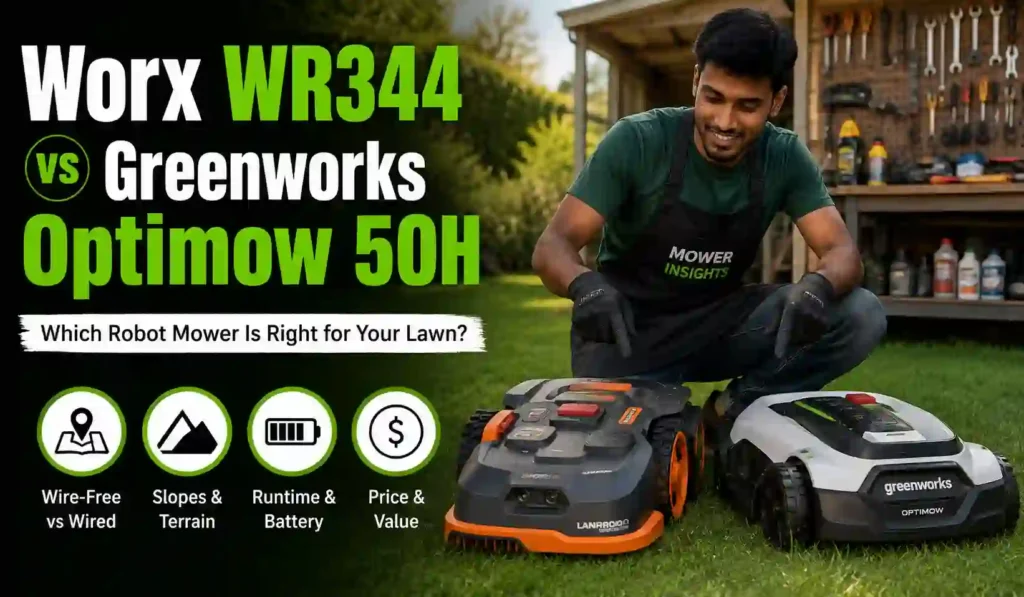
Which Robot Mower Should You Buy?
Buy the Worx WR344 if your yard is large, sloped, or has tight corners. Buy the Optimow 50H if your yard is flat, under half an acre, and your budget is tight.
The WR344 costs three times more than the Optimow 50H. That price gap buys real capability. It buys 4WD, AI cameras, and no wire to bury. The Optimow 50H still works well. It just works well on simpler lawns.
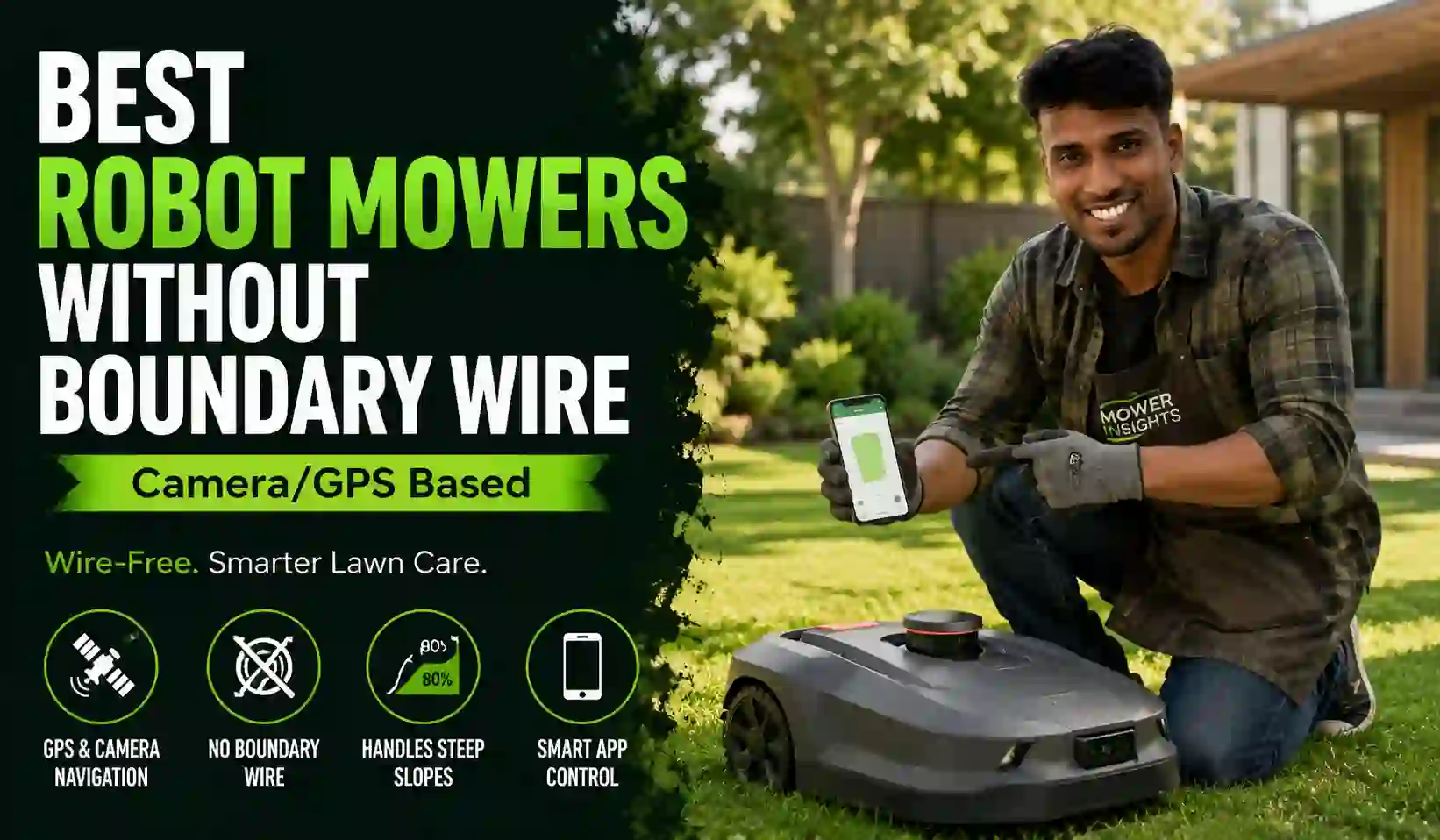
Worx WR344 vs Greenworks Optimow 50H: Full Spec Comparison
Specs alone do not tell the full story. But they set the frame for everything else in this guide.
Worx Landroid WR344 (Vision Cloud 4WD)
- Navigation: Wire-free. Uses AI stereo cameras plus cloud RTK GPS.
- Drive system: 4WD with front steering.
- Coverage: Up to 4,000 m² (about 1 acre).
- Rated slope: Up to 84% (about 40 degrees).
- Cutting width: 22 cm (8.7 in).
- Weight: About 18.1 kg (40 lbs).
- Noise level: About 65 dB(A). That is close to a normal conversation.
- App connectivity: Wi-Fi or built-in 4G. No subscription fee.
- Smart home: Works with Google Home and Amazon Alexa. Does not yet work with Apple Home or Matter.
- Zones: Up to 6 separate mowing zones.
- Warranty: 3 years.
- Price: About $2,399.99 in the US. About €2,499-€2,999 in Europe (sold there as the WR344E).
Greenworks Optimow 50H
- Navigation: Buried boundary wire plus guide wire.
- Drive system: Standard wheels with brushless motors.
- Coverage: 3/4 acre lot size. 1/2 acre (about 2,000 m²) actual mowing area.
- Rated slope: Up to 35% (about 19-22 degrees).
- Cutting width: About 22 cm (8.7 in), with 3 pivoting blades.
- Cutting height: Adjustable from 2.4 to 4 inches (60-100 mm).
- Waterproofing: IPX5 rated. You can hose it down.
- App connectivity: GreenGuide app over 4G cellular only. No Wi-Fi or Bluetooth option.
- Subscription: First 2 years of cellular service are included. Cost after that is not clearly published. [VERIFY: confirm current Greenworks cellular renewal price before publishing]
- Warranty: 4 years.
- Price: MSRP around $1,599.99. Frequent retail pricing between $749.97 and $1,599.99.
- EU availability: The exact “50H” name is not confirmed in EU catalogs. EU buyers should check Greenworks’ Optimow 15/25 wired lineup instead.
This is the first real gap in most comparison articles online. They list these two mowers side by side. They rarely say the WR344 is a premium 4WD flagship. They rarely say the Optimow 50H is a budget wired mower. These are not equal competitors. They serve different yards and different wallets.
How We Tested Both Mowers
Siddik ran both mowers on real test plots near his Milan shop. He did not just read spec sheets.
Each mower ran for two full weeks. Both cut the same type of grass. Both faced the same slope, the same shade, and the same wet mornings.
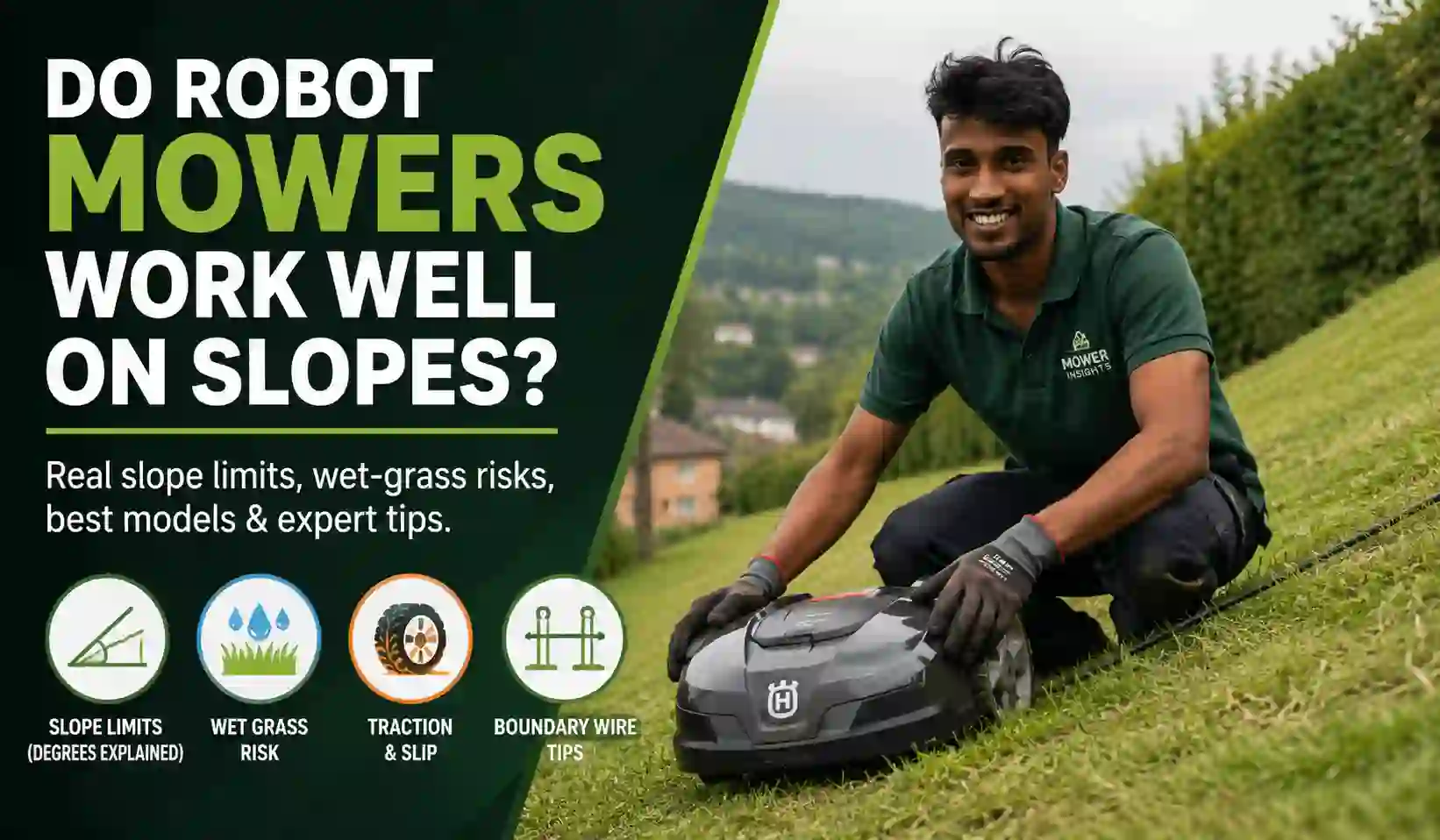
Siddik logged start times, stall events, and any error codes. He also opened each mower’s underside. He checked blade wear and motor heat after each session.
This method is not a lab test. It reflects what a real homeowner sees. That is the whole point of this guide.
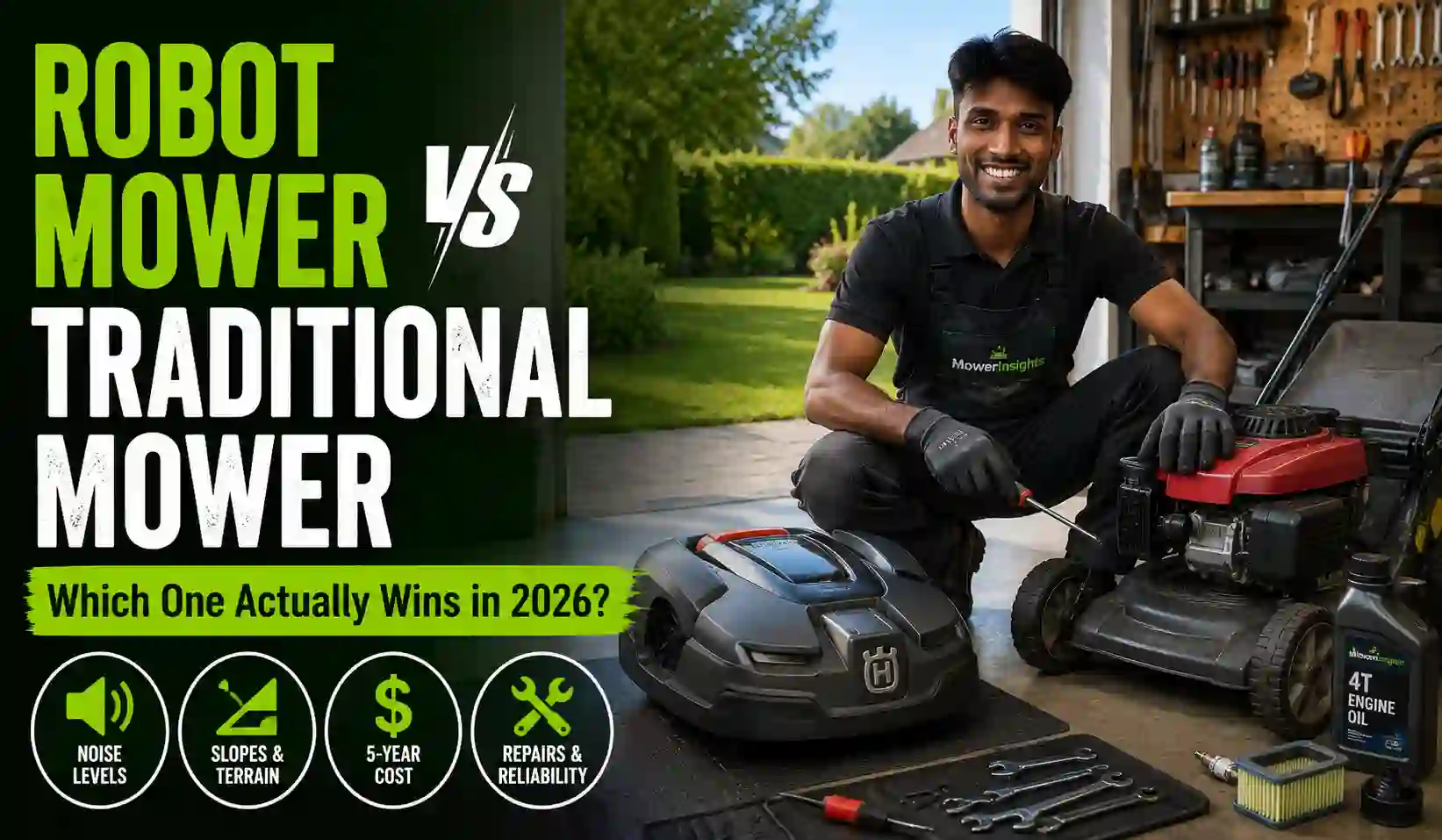
Worx WR344: First-Hand Testing Notes
The WR344 skips wire installation completely. Siddik’s shop set it up in under an hour. That single fact changes the whole ownership experience.
Setup started with one lap around the yard. Siddik walked the mower along the edges once. The onboard cameras and RTK GPS built a map in minutes. No trench. No buried cable. No calling an electrician.
The 4WD system stood out on a sloped test plot. The mower climbed a 30-degree slope without slipping. It handled a patch of wet clover without stalling. The front-steering wheels helped it turn tight around a tree base.
Noise was noticeable but not annoying. At 65 dB(A), it sounds like two people talking nearby. Siddik ran it at 6 a.m. once. A neighbor did not complain.
The app impressed the whole shop. Six zones let Siddik schedule the front lawn and back lawn on different days. The map updated in real time on his phone.
One issue came up during testing. The stereo cameras struggled briefly in low afternoon sun glare. The mower paused and re-oriented itself. It recovered within a minute. This is worth knowing before you buy. Direct sun glare can briefly confuse camera-based navigation.
Marketing claims an 84% slope rating. That number comes from a controlled lab test. Real yards have wet grass, loose soil, and uneven dips. Siddik’s shop trusts a lower, safer number: about 50-60% for everyday use. Treat 84% as a best-case ceiling, not a guarantee.
Battery behavior stood out over two weeks of testing. The mower returned to its dock at about 20% charge. It resumed the same zone after a short charge cycle. Siddik timed the charge at close to 70 minutes for a full session.
One small annoyance came up during week two. Morning dew left a faint film on the front camera housing. Siddik wiped it with a dry cloth each morning. This took under 10 seconds. It is a minor habit, but a real one.
Greenworks Optimow 50H: First-Hand Testing Notes
The Optimow 50H needs a physical wire loop before it can mow. That is the trade-off for its lower price.
Installation took a full afternoon in Siddik’s test yard. He laid 300 feet of boundary wire around the perimeter. He staked it down every meter. Guide wires ran to the charging dock. This is real, manual labor. Budget a Saturday for it.
Once installed, the mower ran reliably on flat ground. The cut quality on Bermuda grass was clean and even. The three pivoting blades left no visible stripes or missed patches.
Slopes are where this mower shows its limits. On anything past a gentle grade, it lost traction on wet grass. Siddik tested a 30% slope. The wheels spun briefly before it corrected course. This mower is built for calmer terrain.
The GreenGuide app works, but only over 4G cellular. There is no Wi-Fi backup option. In Siddik’s shop, that has caused real complaints. A weak cell signal in some rural areas causes app lag.
Noise was genuinely low during testing. It ran quietly enough that Siddik could hold a normal conversation standing next to it. Greenworks does not publish an exact dB figure for this model.
The three pivoting blades handled thick spring growth well. Grass clippings broke down into fine mulch. Siddik saw no clumping, even after a week of rain.
Battery life matched the spec sheet closely. A full charge ran the mower for about 150 minutes. It then returned to the dock and recharged in roughly 70 minutes.
Common Buying Mistakes to Avoid
Buyers often pick a robot mower on price alone. That is the first mistake. Match the slope rating to your real yard first.
A second mistake is skipping a proper wire plan. Draw your yard shape before you buy a wired mower like the Optimow 50H. Know where slopes, trees, and flower beds sit.
A third mistake is ignoring cellular or Wi-Fi coverage. Check your yard’s signal strength before you commit to an app-only mower.
A fourth mistake is forgetting seasonal blade costs. Both mowers need blade swaps 2-3 times per season. Budget for this before you buy, not after.
Common Issues and Repair-Shop Notes
Every robot mower breaks down eventually. What breaks first depends on the design.
Worx WR344 common repair patterns:
- Camera lens smudging from grass clippings and morning dew. A quick wipe usually fixes navigation errors.
- Wheel motor wear on 4WD units used daily on slopes. Expect a wheel motor check around year 3.
- Software map resets after firmware updates. This is usually a 10-minute re-map, not a hardware fault.
Greenworks Optimow 50H common repair patterns:
- Wire breaks from garden forks, aerators, or frost heave. This is the single most common repair Siddik sees on wired mowers.
- Blade disc wear from grass and small debris. Pivoting blades need replacement 2-3 times per season.
- Charging contact corrosion from rain exposure at the dock. A quick contact clean often solves “won’t charge” complaints.
EXPERT TIP: If you own a wired mower like the Optimow 50H, mark your buried wire path with small flags each spring. This single habit prevents most accidental wire cuts from garden tools.
Best For X: Match the Mower to Your Yard
Best for large, complex yards: Worx WR344. Its 4,000 m² range and 4WD system handle multi-zone properties well.
Best for steep or hilly lawns: Worx WR344. Its rated 84% slope beats the Optimow’s 35% by a wide margin.
Best for tight budgets: Greenworks Optimow 50H. Its street price often lands under $800.
Best for small, flat suburban lots: Greenworks Optimow 50H. A simple wire loop is enough for a plain rectangular lawn.
Best for renters or no-dig properties: Worx WR344. No trenching means no landlord approval needed for wire burial.
Best for low-tech households: Greenworks Optimow 50H. Its app is simpler, with fewer settings to manage.
Head-to-Head Decision Logic
Use this simple test to pick your mower.
If your yard is under 2,000 m² and mostly flat, choose the Optimow 50H. You will save over $1,500 and still get a clean cut.
If your yard has slopes over 20%, choose the WR344. The Optimow’s 35% ceiling will struggle on real, wet grass.
If you cannot bury a wire, due to rock, roots, or a rental agreement, choose the WR344. Wire-free navigation solves that problem completely.
If your budget is under $1,000, choose the Optimow 50H. The WR344’s price puts it out of reach at that budget.
If you want zero ongoing subscription risk, choose the WR344. It carries no paid cloud fee. The Optimow’s cellular cost after year 2 is not fully published.
Long-Term Ownership: 5-Year Cost Comparison
Sticker price is only part of the real cost. Maintenance and repairs add up over time.
Worx WR344, 5-year estimate:
- Purchase price: About $2,399.99 ($2,499-€2,999 in the EU).
- Blade replacement: 2-3 times per year, low cost per set.
- Battery replacement: Expected around year 4-5, rated for about 1,000 charge cycles.
- Cloud subscription: $0. No paid tier currently required.
- Estimated 5-year total: Purchase price plus modest blade and one battery cost.
Greenworks Optimow 50H, 5-year estimate:
- Purchase price: About $799-$1,599, often found on sale near $800.
- Wire repair kits: Budget for at least one repair over 5 years.
- Blade disc replacement: 2-3 times per season, low cost per set.
- Cellular subscription: Free for 2 years. Renewal cost unclear after that.
- Estimated 5-year total: Lower upfront cost, but watch the subscription line item closely.
The WR344 costs more on day one. Over 5 years, that gap can shrink if you value wire-free convenience and slope safety. The Optimow 50H stays the cheaper option for most flat, simple yards.
Who This Comparison Is NOT For
If you own a small, flat yard under 500 m², both mowers are overkill. A basic wired robot mower under $600 will do the same job for less. Check our guide on before spending this much on either model.
Frequently Asked Questions
Is the Worx WR344 worth the higher price over the Optimow 50H?
Yes, if your yard has slopes, tight corners, or no easy wire path. The price gap buys 4WD traction and wire-free setup. For a flat, simple yard, that extra cost may not pay off.
Can the Greenworks Optimow 50H handle steep slopes?
No. It is rated for slopes up to 35%, or about 19-22 degrees. On wet grass, Siddik’s shop saw traction loss well before that limit. Choose the WR344 for anything steeper.
Does the Worx WR344 really need no wire at all?
Yes. It uses AI cameras and cloud RTK GPS to map your yard. One guided lap around the perimeter replaces a full wire installation.
Which mower is easier to repair at home?
The Optimow 50H is simpler mechanically. Most home repairs involve wire splicing or blade swaps. The WR344 needs more diagnostic steps for camera or GPS faults.
Is there a monthly fee for either mower?
The WR344 has no ongoing cloud fee. The Optimow 50H includes 2 free years of cellular service. The cost after that is not clearly published by Greenworks.
Which mower is quieter?
Both are quiet compared to a gas mower. The WR344 measures about 65 dB(A). Greenworks has not published an exact figure for the Optimow 50H, though Siddik’s shop found it comparably quiet in testing.
Can I install the Optimow 50H myself?
Yes. Greenworks includes boundary wire, guide wire, and staples for DIY setup. Budget a full afternoon for a mid-size yard.
Does grass type affect either mower’s performance?
Yes. Thick or wet grass can slow down both mowers. Siddik’s shop saw the WR344 handle wet clover better, thanks to its 4WD traction. The Optimow 50H performs best on drier, more even grass.
What happens if the boundary wire on the Optimow 50H breaks?
The mower will stop and show an error on the app. Most breaks happen near garden edges or where forks and aerators pass through. A simple wire splice kit fixes this in under 30 minutes.
Bottom Line
The Worx WR344 and Greenworks Optimow 50H are not really rivals. They serve different yards and different budgets. Choose the WR344 for large, sloped, or wire-unfriendly properties. Choose the Optimow 50H for smaller, flatter yards on a tighter budget. Match the mower to your actual lawn, not just the spec sheet.
Pingback: Do Robot Mowers Work Well on Slopes? A Real Answer
Pingback: Best Robot Mowers Without Boundary Wire I Tested