Lawn mower carburetor overflowing is a common small-engine fuel problem. Gas drips from the carb vent, runs into the air filter, or pools under the engine. It looks alarming, and it is a fire risk, but the cause is usually one small part. This guide shows you how to find that part, fix it, and stop it from coming back.
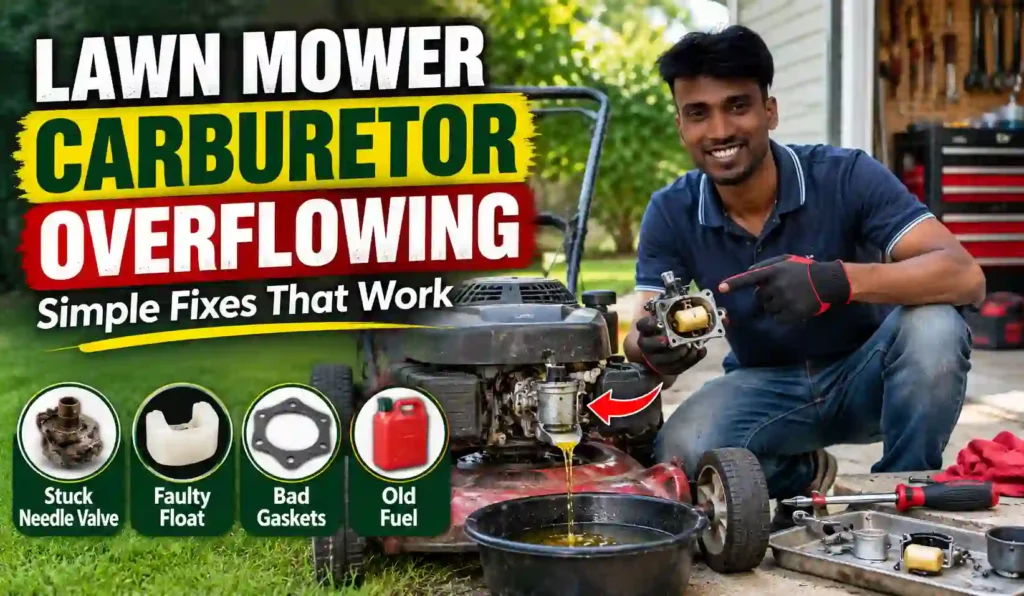
Why Is My Lawn Mower Carburetor Overflowing?
A lawn mower carburetor overflowing almost always points to a float needle valve that will not close. Fuel keeps flowing into the bowl, the bowl overfills, and the extra gas escapes through the vent or the intake. Shut off the fuel, tap the bowl gently with a screwdriver handle, then clean the carburetor and replace any worn needle or gasket. Check the oil for a gas smell before you run the engine again.
What Makes a Lawn Mower Carburetor Overflowing?
A carburetor overflows when its float bowl takes in more fuel than the engine burns, and the extra has nowhere to go but out. The float bowl is a small fuel chamber under the carburetor. A float and a needle valve keep the fuel level steady. When that shutoff fails, fuel keeps coming.
Think of the float like the one in a toilet tank. As the fuel rises, the float rises and pushes the needle valve shut. If the needle sticks open, the bowl never stops filling.
Most push mowers have the tank above the carburetor. Gravity pushes fuel toward the needle all the time while the fuel valve is open. A needle that barely holds during a run can seep once the mower sits parked.
Overflow is not the same as a flooded engine. A flooded engine has too much fuel in the cylinder, usually from too much priming or choke. An overflowing carburetor has fuel pouring out of the carb itself.
Here is what each sign usually means:
| Where Fuel Shows Up | What It Usually Means |
|---|---|
| Drip from the carb vent or overflow tube | The needle is not sealing and the bowl is overfilling |
| Gas soaking the air filter housing | Fuel is rising into the carb throat and spilling into the intake |
| Seep at the seam between bowl and carb body | A worn or shrunken bowl gasket |
| Raw fuel smell or drips at the muffler | Heavy overflow pushed fuel through the cylinder |
| High oil level or gas smell on the dipstick | Fuel got past the piston into the crankcase |
| Wet fuel line, primer bulb, or tank seam | A separate leak, not the carburetor |
Main Causes of a Lawn Mower Carburetor Overflowing
Six problems cause nearly every overflowing carburetor on a push mower or small riding mower. They are listed here from most likely to least likely. Work through them in order and you will usually find the fault by the third one.
1. A Float Needle Valve Stuck Open by Varnish or Debris
A stuck needle is the most common cause. Old fuel leaves a sticky varnish film, and small flecks of dirt can wedge between the needle and its seat. Either one holds the valve open so fuel never stops.
How to check it:
- Open the fuel valve and watch the vent or air filter area while you tap the bowl.
- If the flow stops after a tap, the needle was stuck.
- Look inside the bowl for varnish, grit, or a cloudy film.
2. A Worn or Damaged Needle and Seat
A needle and seat that wear out cannot seal, even when they are clean. The needle tip often has a small groove from years of contact with the seat. Rough or scratched seats do the same job badly.
How to check it:
- Look at the needle tip under good light for a ridge, groove, or flat spot.
- Check the seat for scratches or pitting.
- Replace the needle and seat together when you can, because they wear as a pair.
3. A Float That Is Stuck, Fuel-Soaked, or Set Wrong
The float must rise with the fuel to push the needle shut. A float that has absorbed fuel, has a tiny hole, or has a bent arm sits too low. The needle never gets pushed closed, and the bowl overfills.
How to check it:
- Shake the float. A float with fuel inside it will slosh or feel heavy.
- Make sure it swings freely on its pin and does not rub the bowl.
- Check the float height against your engine’s service manual, since some floats are adjustable and others are fixed.
4. Bad Gaskets, Including the Hidden Ones
A shrunken bowl gasket usually leaks at the seam rather than overflowing from the vent. Some carburetor designs also have a thin gasket or O-ring around the needle seat. If that part fails, fuel slips around the needle and floods the bowl even when the needle is fine.
How to check it:
- Look for fuel seeping at the bowl seam.
- Replace the bowl gasket every time you open the bowl.
- On carburetors with an internal seat gasket, use the exact kit for your carburetor model, because small differences matter.
5. Old or Bad Fuel
Old fuel is the root cause behind many stuck needles. Gas that sits for months turns to varnish. Pump gas that contains ethanol also absorbs moisture over time, which speeds up gumming and corrosion inside the carburetor.
How to check it:
- Smell the fuel. A sour or paint-thinner smell means it has gone bad.
- Look for dark color or water droplets in the bottom of a clear container.
- Drain old fuel into an approved container and refill with fresh gas.
6. Tipping the Mower or Overfilling the Tank
Fuel can spill into the carburetor and air filter when a mower is tipped the wrong way. An overfilled tank can also push fuel toward the vent. Both look like an overflow, but the carburetor itself may be fine.
How to check it:
- Think back: did you tip the mower with the carburetor side down?
- Check that the tank is filled below the fill line or neck.
- Clean up, let everything dry, and watch whether the leak returns.
Step-by-Step Solution for a Lawn Mower Carburetor Overflowing
You need basic hand tools and a few supplies for this job. Have these ready:
- Screwdrivers and a socket set
- Carburetor cleaner and compressed air
- A bowl gasket, or a carburetor repair kit made for your engine
- Clean rags and a container for spilled fuel
- Fresh fuel in a clean approved can
Step 1: Stop the Engine and Make the Mower Safe
Turn the engine off and pull the spark plug wire off the plug. Let the engine and muffler cool fully. Work outdoors on level ground, away from sparks, pilot lights, and anything hot.
Pro tip: Wipe up spilled gas right away and let the fumes clear before you start working.
Step 2: Shut Off the Fuel
Close the fuel valve if your mower has one. If it does not, pinch the fuel line with a hose clamp tool, or drain the tank into an approved gas can.
Common mistake: Clamping the line with regular pliers can cut or crush it. Use a proper clamp made for fuel hose.
Step 3: Confirm the Diagnosis With a Tap Test
Open the fuel valve briefly and watch the vent and air filter area. Tap the side of the float bowl a few times with a screwdriver handle. Do not hit it hard.
If the flow stops after tapping, the needle was stuck. Close the fuel valve again. A stopped leak is a confirmation, not a repair, because the varnish that caused it is still inside.
Step 4: Check the Basics First
Make sure the mower is level and the tank is not overfilled. Smell the fuel for a sour or varnish odor. Pull the air filter and look at it.
A paper filter soaked with gas should be replaced. A foam filter can be cleaned and dried.
Pro tip: If the fuel smells bad, drain it now so you do not refill the clean carburetor with the same gas.
Step 5: Remove the Float Bowl
Take a photo of the carburetor before you take anything off. Place a rag and a small container under the bowl. Remove the bowl bolt or screws and lower the bowl carefully.
Catch any fuel that spills out, and keep track of the old gasket. Some carburetors have a small jet that sits in the center bolt, so do not lose it.
Step 6: Inspect the Float, Needle, and Seat
Look at the float first. Shake it, check that it moves freely, and check for fuel inside. Remove the needle and look closely at its tip for a groove or flat spot. Then check the seat for scratches.
Compare the float height with the service manual for your engine if your float is adjustable. Write down what you find, because worn parts tell you what to replace.
Step 7: Clean Every Part
Remove rubber and plastic parts before you spray anything, since carburetor cleaner can damage them. Spray cleaner through the passages and jets, then blow them out with compressed air.
Common mistake: Poking jets with a wire or a drill bit. Even a light scratch can change how much fuel flows. Use cleaner and air only.
Step 8: Replace Worn Parts and Gaskets
Install a new bowl gasket every time. Replace the needle if the tip shows any wear. If the seat is worn and cannot be removed, replace the carburetor.
On many small mower engines, a new carburetor costs about the same as a repair kit plus the time it takes. Use the part number from your engine label, not a guess based on the mower brand.
Step 9: Reassemble and Refill With Fresh Fuel
Put the carburetor back together using your photo as a guide. Refill with fresh gas from a clean can. Adding an inline fuel filter between the tank and carburetor helps stop debris from reaching the needle.
Reconnect the fuel line and open the valve. Watch the carburetor for a few minutes before you start the engine. Any drip means stop and recheck the bowl gasket and needle.
Step 10: Check the Oil and Spark Plug, Then Start the Engine
Pull the dipstick. If the oil level is above the full mark or the oil smells like gas, change it before running the mower. Fuel thins oil and hurts engine parts.
If a lot of fuel reached the cylinder, remove the spark plug and pull the starter rope a few times to clear it. Dry or replace the plug. Then start the engine and watch the carburetor again while it runs.
Important Tips to Prevent a Lawn Mower Carburetor Overflowing
Clean fuel and a closed fuel valve prevent most repeat cases of a lawn mower carburetor overflowing. These habits are cheap and take little time.
- Use fresh fuel and add a fuel stabilizer, especially if the mower will sit for more than a month.
- Do not leave untreated gas in the tank through the off season, such as a northern winter or a long drought summer.
- Close the fuel valve whenever the mower is parked. If your mower has no valve, an inline shutoff valve is an inexpensive addition.
- Replace the inline fuel filter on schedule so debris never reaches the needle.
- Tip the mower with the air filter and carburetor facing up, so fuel and oil do not run into the intake.
- Keep the overflow tube free of kinks and pointed down and away from the muffler, as the manufacturer routed it.
Common Mistakes When Fixing an Overflowing Carburetor
These mistakes turn a simple repair of a lawn mower carburetor overflowing into a repeat repair. Avoid them and the fix is far more likely to last.
- Cranking the engine again and again while it is flooded, which can fill the cylinder with fuel.
- Replacing the needle but keeping a worn seat, so the new needle still cannot seal.
- Reusing the old bowl gasket, which has usually shrunk and hardened.
- Spraying cleaner on rubber or plastic parts that cannot take it.
- Skipping the oil check after a heavy overflow.
- Putting old fuel back in a clean carburetor, which brings the varnish back.

When to Get Professional Help
Stop and call a repair shop if the problem is beyond a simple clean and gasket swap. Some signs mean more than a carburetor job, and a wrong guess can cost you an engine.
- The oil is high or smells strongly of gas, and you are not sure how to drain and refill it safely.
- The mower floods again soon after you cleaned and rebuilt the carburetor with new parts.
- The needle seat is pressed into the body and looks damaged.
- You cannot identify the carburetor model or find the right kit.
- Fuel is also leaking from the tank, fuel line, or fittings.
- You smell fuel near the muffler or see any sign of fire or scorching.
Related Questions About a Lawn Mower Carburetor Overflowing
Why is gas coming out of my lawn mower air filter?
Gas in the air filter housing means the bowl overfilled and fuel rose into the carburetor throat. The cause is almost always a needle valve that is stuck or worn. Shut off the fuel, replace a soaked paper filter, and clean the carburetor.
Why is gas coming out of the muffler?
Fuel at the muffler means a heavy overflow pushed raw gas through the cylinder and into the exhaust. Fix the carburetor first. Then check the oil for gas, because fuel that got past the piston ends up in the crankcase.
Can I stop a lawn mower carburetor overflowing without taking the carburetor apart?
You can often stop it for a short time. Closing the fuel valve and tapping the bowl can free a stuck needle. That is a temporary fix, because the varnish or wear that caused the problem is still inside. A clean and inspection is the real repair.
Why does my lawn mower carburetor overflow when the engine is off?
A mower sitting parked keeps full fuel pressure on the needle if the fuel valve is open. A weak needle that holds while the engine runs can seep once it stops. Closing the fuel valve hides the problem, and replacing the needle and seat fixes it.
FAQs
Is it safe to start a mower that is leaking gas?
No. Do not start or crank a leaking mower. Raw fuel near a hot muffler or spark is a fire hazard. A cylinder full of fuel can also lock up when you crank it. Stop the fuel, let spills dry, and fix the leak before you start the engine.
How do I know if the carburetor float is bad?
Shake the float and listen for fuel sloshing inside. A bad float may also look warped, sit crooked, or rub the bowl. Check that it swings freely and compare its height to your engine’s service manual. If you see any of these signs, replace it.
Do I need to replace the whole carburetor?
Not always. A dirty carburetor often just needs cleaning and a new gasket. If the needle seat is worn and cannot be replaced, or the body is damaged, a new carburetor is the better fix. On many small engines it costs about the same as a full repair kit.
Can bad gas cause a carburetor to overflow?
Yes. Old fuel leaves varnish that can hold the needle valve open. Fresh fuel with a stabilizer is the best prevention. If your mower sat all winter with gas in the tank, expect to clean the carburetor before the first mow.
Can tipping the mower cause gas to run into the air filter?
Yes. Tipping the mower with the carburetor side down lets fuel and oil flow into the air filter and intake. Always tip with the air filter and carburetor facing up. If it already happened, replace a soaked paper filter and let everything dry.
Final Answer: Fixing a Lawn Mower Carburetor Overflowing
A lawn mower carburetor overflowing means the float needle valve is not shutting off the fuel. Shut off the fuel, confirm with a tap test, then clean the bowl, float, needle, and seat. Replace the gasket and any worn parts. Use fresh fuel, check the oil, and close the fuel valve when you park the mower.
Why Trust This Guide
MowerInsights.com is run by Siddik Kazi, who also operates a lawn mower repair service in Italy. This guide was reviewed by Siddik Kazi.
Sources and methodology: this guide is built from standard service procedures for float-type small-engine carburetors, analysis of owner and technician discussions of this problem, and a review of existing repair coverage. Check your engine’s service manual for exact float heights and part numbers before you order parts.