Quick Overview
- This guide covers how to mow wet grass without clogging in 11 steps, from prep to cleanup.
- Waiting about 24 hours after rain is best, and two quick tests tell you if the lawn is ready.
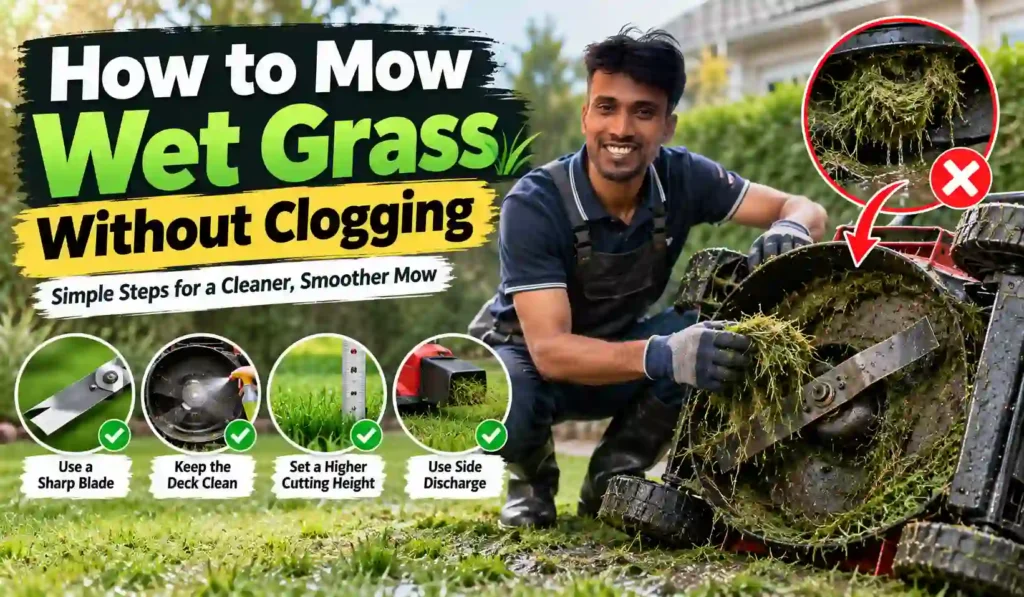
- Five changes do most of the work: a sharp blade, a clean sprayed deck, a cutting height near 4 inches, side discharge, and half speed.
- Never mow in falling rain, and never use a corded electric mower on wet grass.
- Plan for a slower job and extra cleanup time afterward.
How to mow wet grass without clogging is a problem most US homeowners meet after a rainy week in spring or fall. The grass keeps growing, the forecast stays gray, and the lawn gets taller each day. Wet clippings are heavy and sticky. They pack under the deck, block the chute, and stall the blade.
This guide gives you 11 steps that keep clippings moving. You will learn how to spot a lawn that is too wet, how to clear a clog safely, and how to clean up so your mower lasts.
Quick Answer: How to Mow Wet Grass Without Clogging
To mow wet grass without clogging, wait until the rain stops. Use a sharp blade, a clean deck coated with non-stick spray, and a cutting height near 4 inches. Switch from bagging to side discharge. Mow at about half your normal speed and overlap each pass. Clear any clog only with the engine off and the spark plug wire disconnected.
What You’ll Need for How to Mow Wet Grass Without Clogging
You need a sharp blade, a scraper, a silicone-based non-stick deck spray, and basic protective gear. Most homeowners already own half of this list. Gather everything before you start, so you never leave a half-mowed wet lawn to hunt for a tool.
Tools
- A plastic putty knife or a wooden stick scrapes caked clippings off the deck.
- A socket wrench removes the blade bolt.
- A blade file or sharpening kit restores the cutting edge.
- A stiff brush and a garden hose clean the deck.
- A leaf rake clears clumps after you finish.
Parts
- A straight, sharp blade with no bends or deep nicks is the most important part.
- A clean air filter keeps the engine breathing when it works harder.
- A side discharge chute is needed if your mower swaps it out for a bag or mulch plug.
Materials
- Silicone-based deck spray (sold as lawn mower deck spray or non-stick spray) stops clippings from sticking.
- Work gloves, closed shoes with good grip, and safety glasses protect you.
- Clean rags or a leaf blower dry the mower afterward.
Safety First When You Mow Wet Grass
Wet lawns are slippery, and water and electricity do not mix. Mow only when no rain is falling, wear shoes with grip, and keep corded mowers away from wet grass. Follow these rules every time.
- Never mow while rain is falling. Water can reach the engine and electrical parts and cause lasting damage.
- Keep corded electric mowers off wet grass. For battery mowers, read your owner’s manual, because wet-use ratings differ by model.
- Skip slopes until they dry. A fall next to a spinning blade is a serious injury.
- Wear closed shoes with deep tread, gloves, and safety glasses.
- Before you touch the deck or chute, shut off the engine and wait for the blade to stop. Then disconnect the spark plug wire, or remove the battery or safety key.
- Keep children and pets inside while you mow.
Before You Start: Check the Lawn and Your Mower
The best prep is patience. Many mower makers advise waiting about 24 hours after rain before you cut. If you cannot wait, run two quick tests on the lawn and look over the mower before you begin.
Run the Bounce Test and the Footprint Test
Both tests take under a minute.
- Bounce test: Press your hand on a patch of grass. If the blades feel damp and stay clumped, the lawn is too wet. If they feel dry and spring back, you can go ahead.
- Footprint test: Walk across the lawn. If your shoes leave deep marks in the soil, the ground is soft. A mower will leave ruts, so wait longer.
Why Wet Grass Clogs a Mower
A spinning blade works like a fan. It creates airflow that lifts clippings and pushes them out the chute. Dry clippings are light, so the air carries them away.
Wet clippings are heavy and sticky. They cling to the underside of the deck, like a wet paper towel stuck to a fan. The pile grows until the chute is blocked and the blade slows down. Every fix in this guide either cuts less grass at once, keeps clippings off the deck, or keeps the airflow strong.
Check Your Owner’s Manual
Look for notes on wet conditions, maximum slope, and how to switch between bagging, mulching, and side discharge. Manufacturer instructions override any general advice you read online.
Step 1: Pick the Driest Window You Can
The first rule of how to mow wet grass without clogging is to choose the driest hour available. Aim for mid-afternoon, after sun and wind have dried the blades. Avoid early morning, when dew still coats the lawn.
- Wait until the rain has fully stopped.
- Walk the yard and note any puddles. Plan to mow around them.
- Check the forecast. Do not start if more rain is due within the hour.
Common mistake: Mowing right after a shower “to beat the next one.” You end up with clumps, ruts, and a clogged deck.
Step 2: Choose the Right Mower and Mowing Mode
A lightweight gas push mower with side discharge handles wet grass best. Heavy mowers press deep ruts into soft soil. Mulching mode recirculates clippings under the deck, which makes clogs far more likely.
Switch Out the Mulch Plug
If your mower has a mulch plug or mulching blade, remove the plug and fit the side discharge chute. Your manual shows the exact method. Some mulch-only models have no discharge option, so wait for dry weather with those.
- Riding and zero-turn mowers cover ground fast but are heavy and can rut wet soil.
- Robotic mowers rated for rain handle light, frequent cuts well, but they struggle with tall, overgrown grass.
Pro tip: If you own two mowers, use the lighter one on wet days.
Step 3: Sharpen or Replace the Blade
A sharp blade slices wet grass cleanly. A dull one tears it and pushes it down, which leaves ragged tips and packs clippings under the deck. Sharpen the blade before any wet mow.
- Disconnect the spark plug wire, or remove the battery or key.
- Tip the mower with the air filter and carburetor facing up. Your manual may show a different safe side.
- Wedge a wood block between the blade and the deck. Wear gloves.
- Most blade bolts loosen counterclockwise. Remove the bolt and the blade.
- File along the original cutting angle until the edge is clean and bright.
- Hang the blade on a nail through its center hole. If one end dips, file the heavy end until it sits level.
- Reinstall the blade and tighten the bolt to the torque in your manual.
Common mistake: Reinstalling the blade upside down. The curved wing must face the deck.
Step 4: Disconnect Power and Scrape the Deck Clean
Old dried clippings give new wet ones something to grip. A bare deck lets clippings slide out. Clean the underside before you spray anything on it.
- Confirm the spark plug wire is off, or the battery is out.
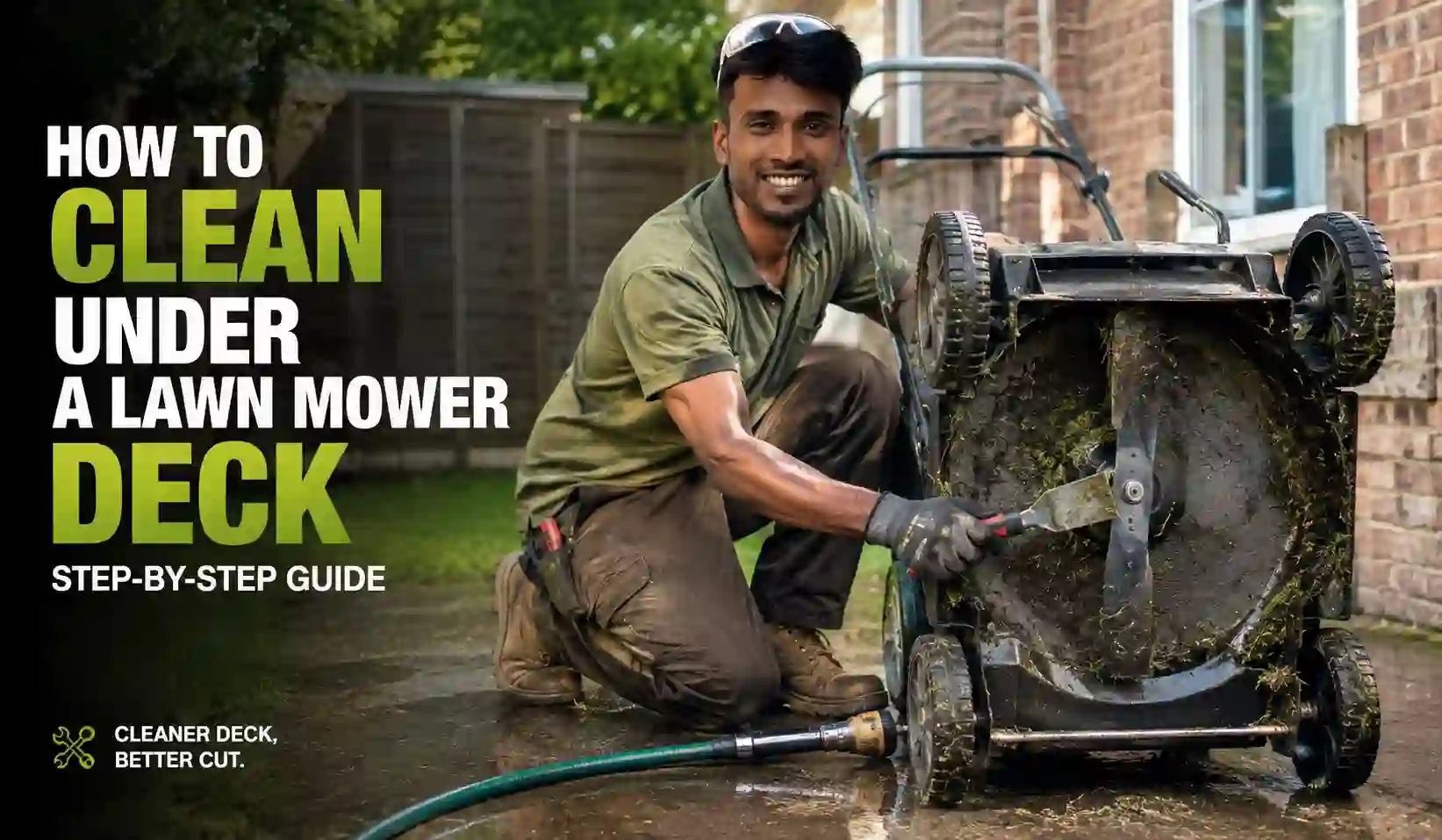
- Scrape caked grass off the deck and chute with a plastic scraper or a stick.
- Brush off loose debris, then rinse with a hose.
- Let the deck dry fully before the next step.
Pro tip: Scrape while the mower is tipped for blade work. You save one tipping round and one extra risk.
Step 5: Coat the Deck and Chute With Non-Stick Spray
Silicone-based deck spray creates a slick film that helps wet clippings slide off. It will not fix a dull blade or a tall cut, but it cuts the amount of buildup a lot. Apply it to a clean, dry deck.
- Spray the full underside of the deck and the inside of the discharge chute.
- Follow the drying time on the can label before you mow.
- Keep spray off belts, pulleys, tires, and the cutting edge of the blade.
Common mistake: Spraying over old crusted grass. The coating peels off with the buildup.
Step 6: Raise the Cutting Height and Follow the One-Third Rule
Set the deck one or two notches above your normal height, up to about 4 inches. A higher cut means less grass enters the deck at once. Never remove more than one-third of the blade height in a single mowing.
Use a Two-Stage Cut for Tall Grass
If the lawn is already very tall, do not drop to the normal height today. Instead:
- Make a first pass at the highest safe setting.
- Wait two to three dry days.
- Mow again at one notch lower, then a normal height at the next mow.
Some grass types, such as Bermuda, prefer a short cut, so check your grass type. Raise the deck for the wet day only, then step it back down over later mows.
Common mistake: Scalping the lawn to “catch up.” Cutting too short tears wet grass and floods the deck with clippings.
Step 7: Remove the Bag and Switch to Side Discharge
Open the side chute and take the bag off. A bag fills fast with heavy wet clippings, and the extra weight blocks airflow and pushes clippings back down. Side discharge lets the clippings exit freely.
- Point the chute away from walkways, flower beds, and the house.
- Spread clippings thin on the lawn. Thin layers dry and break down quickly.
- Plan to rake any clumps later (see Step 11).
Pro tip: If you must bag, see the bagging answer in the FAQs below.
Step 8: Knock Water Off the Grass
Less water on the blades means lighter, less sticky clippings. A garden hose works like a squeegee. Drag it across the lawn to knock beads of water off the blades.
- Hold the hose at both ends, with the middle low, and walk it across the grass in wide sweeps.
- Mow the sunniest, driest strip first.
- Skip any area with standing water or soft ground.
Common mistake: Mowing through puddles. This clogs the deck and leaves deep ruts that last for weeks.
Step 9: Mow Slowly With Overlapping Passes
This step is the heart of how to mow wet grass without clogging. Walk at about half your usual pace. Overlap each pass by up to 50 percent, so every strip gets cut twice. The second pass breaks up clumps and spreads clippings in an even layer.
- Make wide, gentle turns. Sharp turns tear wet grass and dig ruts.
- Change your mowing direction from one mow to the next.
- Glance at the chute every few minutes. If clippings slow down, stop.
Time cost: half speed doubles your time, and a 50 percent overlap doubles the passes. Together they can stretch the job up to four times longer than a dry day.
Common mistake: Pushing hard to “finish before dark.” Speed is the fastest way to clog the deck.
Step 10: Stop and Clear Clogs Safely
If the chute jams or the engine bogs down, stop right away. Never clear a clog with your hand or foot, even after the engine stops. Follow this order every time.
- Release the control bar and shut off the engine, or remove the safety key.
- Wait until the blade fully stops.
- Disconnect the spark plug wire, or remove the battery.
- Tip the mower with the air filter and carburetor facing up.
- Wearing gloves, scrape the deck and chute clear with a scraper or stick.
- Reconnect power, restart the mower, and resume at a slower pace.
Pro tip: After a clog, raise the deck one more notch for the rest of the job.
Step 11: Clean, Dry, and Rake After Mowing
Clean the mower right after a wet mow. Wet clippings left on the deck cause rust and mold, and they harden into crust that clogs the next job. Clean it even if the mowing went perfectly.
- Disconnect power, then scrape and brush the deck, blade, and chute.
- Dry everything with a rag, or blow it off with a leaf blower.
- Reapply deck spray once the metal is dry.
- Rake up clumped clippings. Thick piles block sunlight and trap moisture, which can lead to dead patches and lawn diseases such as red thread and dollar spot.
- If wheels left ruts, loosen the soil with a garden fork once the lawn dries.
Common mistake: Putting the mower away wet. Rust forms fast on a damp deck and blade.
Common Problems and Fixes
Most clogging trouble traces back to a short list of causes. When you test how to mow wet grass without clogging on your own lawn, use this table to find the fix fast.
| Problem | Likely Cause | Fix |
|---|---|---|
| Clippings pile up at the chute | Bag or mulch mode is on | Switch to side discharge and slow down |
| Engine strains or bogs down | Cutting too much grass at once | Raise the deck and follow the one-third rule |
| Strips of uncut grass remain | Flattened wet blades or a dull blade | Overlap passes up to 50 percent and sharpen the blade |
| Clumps lie on the lawn | Clippings too wet or speed too high | Rake clumps and mow slower next time |
| Wheel ruts appear | Soft soil or a heavy mower | Stop, wait for the soil to firm up, then aerate |
| Rust or crust on the deck | Clippings left on after mowing | Scrape, dry, and reapply deck spray |
Troubleshooting a Mower That Still Clogs
If the mower clogs even after you follow the steps, one of three problems is usually behind it. Stop mowing, check the blade, the deck, and the grass height, and make the matching fix below.
The Deck Keeps Packing Up Under the Mower
Check the blade first. A dull, bent, or worn blade moves less air and leaves clippings behind. Replace it if it is bent or has deep nicks. Then scrape the deck again and check that the chute opening is clear. If the grass is still very tall, go back to the two-stage cut in Step 6.
The Engine Stalls or Loses Power
A stall during a clog is normal. Clear the clog (Step 10), then check the oil level and the air filter before you restart. Run the mower at a higher deck setting for the rest of the job. If the engine will not restart, stop and see the professional section below.
The Lawn Looks Torn or Streaky After Mowing
Ragged tips and streaks come from a dull blade or high speed. Sharpen the blade, slow down, and increase your overlap. Do not mow again right away. Give the lawn a few days to recover, then cut at a normal pace once the grass is dry.
Expert Tips for How to Mow Wet Grass Without Clogging
These habits cut clogging risk before the first drop of rain falls.
- Mow more often during rainy stretches. Short grass is easier to cut, even when wet.
- Keep a spare sharp blade on the shelf. Swapping takes minutes, while sharpening in the middle of a rainy week does not.
- Cut a test strip about 10 feet long before you commit. If the chute clogs in that strip, stop and wait.
- Start in the sunniest, driest corner of the yard and finish in the dampest.
- Brush the deck clean after every mow, wet or dry. Buildup is much harder to remove after it dries.

When to Call a Professional
Call a repair shop if the problem is more than a clog. These signs mean it is time to stop doing it yourself.
- The engine will not restart after a stall, or it runs rough after a clog.
- You smell fuel, see smoke, or find oil in the air filter after tipping the mower.
- The blade is bent, cracked, or wobbles after hitting something hidden in the grass.
- The belt squeals or slips, or the blade does not spin at full speed.
- The mower clogs again and again with a sharp blade and a clean deck, which can point to a worn or damaged deck.
If the lawn floods after every storm, a landscaper can look at your drainage.
FAQs
How long does it take to mow wet grass without clogging?
Prep takes about 20 to 30 minutes (a MowerInsights estimate). The mowing itself can take up to four times longer than a dry day, because half speed doubles the time and a 50 percent overlap doubles the passes.
Can I skip a step when I mow wet grass?
You can skip the hose squeegee and the deck spray in a pinch, though the mower will clog sooner. Never skip the sharp blade, the higher cutting height, the switch to side discharge, or the power disconnect before clearing a clog. These four steps carry the most safety and performance value.
What if my mower still clogs after I follow every step?
Stop mowing and wait for drier weather. Check the blade for dull edges or bends, scrape the deck again, and raise the cutting height one more notch. If clogs continue on a dry day, the blade or deck may be damaged, so have a repair shop inspect it.
How to mow wet grass without clogging when your mower has a bag?
Remove the bag and use side discharge whenever your mower allows it. If you must bag, empty it at half full instead of waiting for it to fill, and mow at half speed. A full bag of wet clippings blocks airflow and clogs the chute quickly.
Is it safe to mow in the rain?
No. Falling rain can damage the engine, make footing slippery, and create an electric shock risk with any powered equipment. Wait for the rain to stop, then run the tests in the Before You Start section.
Can I use an electric mower on wet grass?
Never use a corded electric mower on wet grass, because of the shock risk. For battery mowers, follow your owner’s manual, since many makers advise against wet use and ratings differ by model.
Final Takeaway: How to Mow Wet Grass Without Clogging
The safest way to mow wet grass is to wait about 24 hours after rain. When you cannot wait, sharpen the blade, clean and spray the deck, raise the height to about 4 inches, and switch to side discharge. Then mow at half speed with overlapping passes. If a clog happens, shut off the engine, disconnect power, and scrape it clear. Clean and dry the mower afterward and rake any clumps.
Why Trust This Guide
Siddik Kazi runs a lawn mower repair and maintenance shop in Milan, Italy, and this guide comes from the same kind of workshop knowledge. Reviewed by Siddik Kazi.
This guide is built from mower manufacturer guidance, equipment dealer advice, published lawn-care coverage, and standard small-engine safety practice. Time estimates are labeled as MowerInsights estimates. Always check your own owner’s manual for model-specific limits.