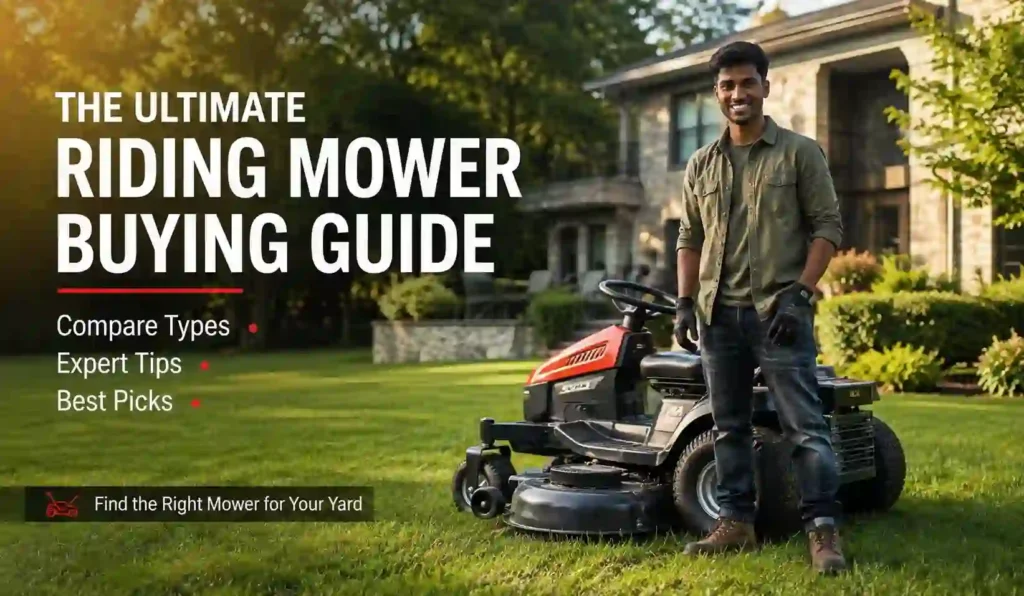
For most yards between 1 and 3 acres on mostly flat ground, a mid-range lawn tractor with a 42-46 inch deck is the right call. If your yard is over 2 acres with lots of trees or curves, a zero-turn cuts mowing time nearly in half. Under 1 acre with tight corners, a rear-engine riding mower or a large self-propelled push mower often beats a full riding mower on cost and storage space. Expect to pay $1,800-$3,500 for a solid lawn tractor, $3,000-$6,000+ for a zero-turn, and budget an extra $150-$300 a year for blades, belts, and filters no matter which type you buy.
Table of Contents
- How to Think About This Purchase
- Riding Mower Types Explained
- Top Picks by Use Case
- Buying Mistakes to Avoid
- Maintenance and Total Cost of Ownership
- Frequently Asked Questions
How to Think About This Purchase
Riding mower shopping goes wrong when people start with brand names instead of their own yard. Five factors decide the right machine before a single model name enters the conversation: acreage, terrain, deck width, power source, and storage space.
Yard Size: Do the Math, Not the Guess
A riding mower with a 42-inch deck covers roughly 1 acre in 45-60 minutes at a normal walking-speed pace, assuming minimal obstacles. That number drops fast with trees, flower beds, or a fenced dog run to mow around. As a rule of thumb:
- Under 0.5 acres: A riding mower is often overkill. A self-propelled push mower or rear-engine rider makes more sense.
- 0.5-2 acres: A standard lawn tractor with a 42-46 inch deck is the sweet spot.
- 2-5 acres: A zero-turn with a 48-54 inch deck cuts mow time significantly versus a tractor.
- 5+ acres: Commercial-grade zero-turns or a garden tractor with a wide deck and higher horsepower.
[IMAGE PLACEHOLDER: Aerial or wide shot comparing a small suburban lawn to a large 3-acre property, side by side, to illustrate acreage scaling]
Terrain and Slopes
Grade matters more than most listings admit. Most consumer riding mowers are rated safe up to a 15-degree slope (about a 27% grade), and that rating assumes mowing up and down the slope, never across it. Anything steeper, wetter, or bumpier than that calls for a mower with a lower center of gravity, four-wheel-drive capability, or in some cases a walk-behind mower with a sulky attachment instead.
[VERIFY: 15-degree slope safety rating – confirm against current ANSI B71.1 standard and specific manufacturer owner’s manuals before publishing]
Deck Width vs. Maneuverability
A wider deck cuts more grass per pass, which sounds like it always wins. It doesn’t. A 54-inch deck on a yard full of tight turns around trees and garden beds means constant three-point turns that eat back the time savings. As a rough guide: open, rectangular yards can run wider decks efficiently; yards with lots of obstacles do better with 42-46 inches even at the cost of a few extra passes.
Power Source: Gas, Battery, or Hybrid
Gas remains the default for anyone mowing more than an acre regularly, mainly because runtime isn’t a concern and refueling takes two minutes. Battery-electric riding mowers have improved a lot since 2023, and models from brands like Ryobi and Cub Cadet now cover 1-2 acres on a charge, but they cost more upfront and need a charging routine planned around mow day. For anyone who already owns battery yard tools from the same ecosystem, sharing batteries across a trimmer, blower, and mower is a real convenience, not just marketing.
Storage Space
A riding mower needs a dry, flat space at minimum 6 feet by 10 feet, and taller garden tractors or zero-turns with rollover protection bars need extra vertical clearance. Measure the garage or shed door before buying, not after delivery. This sounds obvious and gets skipped constantly.
Noise Level
Most gas riding mowers run somewhere between 85 and 95 decibels at the operator’s seat, loud enough that hearing protection is genuinely worth wearing for anything over a 30-minute mow. Battery-electric models typically run 15-20 decibels quieter, closer to a household vacuum than a gas engine. For anyone mowing early on weekend mornings in a neighborhood with close-set houses, that difference is worth factoring in alongside price and runtime.
Riding Mower Types Explained
Three main categories cover almost every homeowner situation: lawn tractors, zero-turn mowers, and rear-engine riders. (For a full side-by-side spec comparison across categories, see MowerInsights’ lawn mower types comparison guide.)
Lawn Tractors
The steering wheel and pedal layout most people picture when they hear “riding mower.” Lawn tractors are the most affordable riding option, typically $1,800-$4,500, and they’re the easiest to learn on. The trade-off is turning radius: even a “tight-turn” tractor needs more room to maneuver than a zero-turn, which shows up as extra time on yards with lots of obstacles.
Good fit for: Flat to gently sloped yards, 0.5-3 acres, buyers who want simple maintenance and lower upfront cost, first-time riding mower owners.
Not a good fit for: Yards with dozens of trees or tight corners, buyers prioritizing raw mowing speed.
Zero-Turn Mowers
Steered with two lap bars instead of a wheel, zero-turns pivot in place, which is where the name comes from. They cost more, typically $3,000-$8,000+ for residential models, but cut mowing time by 30-50% on open or moderately obstacled yards because there’s no wasted motion on turns. The learning curve is real. Most new owners need 30-60 minutes of practice before they stop overcorrecting.
Good fit for: 1.5+ acres, yards with moderate obstacles, buyers who mow weekly and value speed over sticker price.
Not a good fit for: Steep slopes (zero-turns generally have a lower slope rating than tractors due to their wheel layout), absolute beginners who won’t practice before their first real mow, tight budgets.
Rear-Engine Riders
A smaller, lighter riding mower with the engine mounted behind the seat instead of in front. Decks typically run 28-33 inches, closer to a large push mower than a tractor. They’re the cheapest riding option, often $1,500-$2,200, and the easiest to store, but underpowered for anything beyond a small, flat lawn.
Good fit for: Under 1 acre, flat yards, buyers who want to sit down but don’t need tractor-level power, tight storage situations.
Not a good fit for: Slopes, thick or tall grass, anyone who wants attachments like a bagger, cart, or snow blade – most rear-engine models have limited attachment compatibility compared to tractors.
Expert Tip: In the shop, the rear-engine riders that come in for transmission repair almost always have one thing in common – the owner used them on grass that was too tall or too thick for a first pass. These machines are built for weekly maintenance mowing, not for clearing overgrown grass. If the lawn has gotten away from you, mow it down in stages with the deck raised before running a rear-engine rider through it at normal height.
Top Picks by Use Case
Prices below reflect brand website or current Amazon listings as of this writing and should be reconfirmed close to publish date since dealer and seasonal promotions shift them regularly.
Best Overall: Cub Cadet XT1 Enduro Series LT42
A 42-inch lawn tractor with a 18 HP engine, hydrostatic transmission, and a reputation in repair shops for a genuinely durable deck spindle assembly compared to lower-tier competitors. Priced around $2,199 on Cub Cadet’s website.
Good fit for: 1-2.5 acres, buyers who want a no-drama first riding mower.
Best Zero-Turn for the Money: Troy-Bilt Mustang 42
A 42-inch zero-turn with a 22 HP Kohler engine, priced around $2,999 on Troy-Bilt’s site. It won’t match a commercial-grade Exmark or Scag on hour-for-hour durability, but for homeowner use under 3 acres it’s a genuine time-saver at a price well below premium zero-turn brands.
Good fit for: 1.5-3 acres, buyers moving up from a tractor who want faster mow times without a commercial price tag.
Best for Small, Tight Yards: Toro TimeCutter SS3225
A compact 32-inch zero-turn built for small properties with obstacles, priced around $3,299 on Toro’s website. The narrow deck fits through standard gates, which matters more than most buyers expect until they’re stuck mowing the backyard with a push mower because the tractor won’t fit through the side gate.
Good fit for: Under 1.5 acres with narrow access points, fenced backyards.
Best Rear-Engine Rider: Murray 30-inch Rear Engine Rider
Priced around $1,799 on Amazon, this is the budget entry point into riding mowers. It’s not going to impress anyone with power, but for a small flat lawn where the owner just wants to sit down, it does the job.
Good fit for: Under 0.75 acres, flat terrain, budget-conscious buyers.
Best Battery-Electric: Ryobi 42-inch Electric Riding Mower
Priced around $3,999 on Ryobi’s website, this runs on a 75Ah lithium battery pack and covers up to 2 acres per charge in ideal conditions. No oil changes, no spark plugs, no gas smell. The trade-off is charge planning: mowing a full 2 acres back-to-back on a rain delay isn’t happening without a backup battery.
Good fit for: 1-2 acres, buyers already in the Ryobi 40V ecosystem, anyone prioritizing low maintenance over raw runtime.
Comparison Table: Riding Mowers at a Glance
| Model | Type | Deck Width | Power | Price | Best For |
|---|---|---|---|---|---|
| Cub Cadet XT1 Enduro LT42 | Lawn Tractor | 42 in | 18 HP gas | ~$2,199 | 1-2.5 acres, first riding mower |
| Troy-Bilt Mustang 42 | Zero-Turn | 42 in | 22 HP gas | ~$2,999 | 1.5-3 acres, value zero-turn |
| Toro TimeCutter SS3225 | Zero-Turn | 32 in | 452cc gas | ~$3,299 | Tight yards, narrow gates |
| Murray Rear Engine Rider | Rear-Engine | 30 in | 10.5 HP gas | ~$1,799 | Under 0.75 acres, budget |
| Ryobi 42-in Electric | Lawn Tractor | 42 in | Battery | ~$3,999 | 1-2 acres, low maintenance |
Buying Mistakes to Avoid
Buying too much deck for the yard’s obstacle count. A wide deck on a yard full of trees and beds means more three-point turns, not less mowing time. Match deck width to how open the yard actually is, not just its total square footage.
Ignoring the garage door height. Zero-turns and garden tractors with ROPS (rollover protection structure) bars can be taller than expected. Measure clearance before buying, especially with the bar in the upright position if it doesn’t fold.
Skipping the slope rating. A mower rated for a 15-degree slope isn’t safe on a 20-degree slope just because it “seems fine.” Rollover accidents on slopes are one of the more common serious injuries tied to riding mowers, and the rating exists for a reason.
Assuming all attachments are universal. Baggers, mulching kits, carts, and snow blades are almost always brand- and model-specific. Confirm attachment compatibility before assuming a mower can be expanded later.
Underestimating maintenance cost. The purchase price is the start, not the whole bill. Blades need sharpening or replacing every season, belts wear out, and batteries in electric models degrade over years of use.
Maintenance and Total Cost of Ownership
Riding mowers are a bigger investment than push mowers, and the ongoing cost reflects that. Here’s what typically shows up in a repair shop, and what it costs.
Annual Routine Maintenance
- Oil change: $20-$40 in parts if done yourself, $50-$80 at a shop
- Blade sharpening or replacement: $15-$30 per blade, most decks use 1-3 blades
- Air filter: $10-$25
- Spark plug: $5-$15
- Belt inspection: free, but budget $30-$80 for eventual replacement
Total routine annual cost typically lands between $150-$300 for a well-maintained gas mower.
Common Repair Shop Visits
In the shop, the most frequent riding mower repairs by far are deck spindle bearings (worn out from mowing over roots or curbs repeatedly), drive belt failure (usually from age or a belt that was the wrong size for the model), and hydrostatic transmission issues on higher-mileage tractors. Deck spindle replacement typically runs $80-$150 per spindle including labor. A drive belt replacement is usually $60-$120. Hydrostatic transmission repair is the expensive one, often $300-$600, and on an older mower it’s sometimes cheaper to replace the machine than fix the transmission.
[Expert Tip: Spindle bearings wear out faster on mowers regularly used to mow over gravel driveways or rocky edges. If that’s part of the mowing route, budget for spindle replacement roughly every 3-4 years instead of the 6-8 years typical on a clean, grass-only lawn.]
Electric Riding Mower Costs
Battery-electric riding mowers skip oil changes, spark plugs, and air filters entirely, which meaningfully lowers routine cost. The trade-off shows up later: replacement battery packs for electric riding mowers typically run $400-$700 and are usually needed somewhere around year 5-8 depending on charge cycles and storage conditions.
[VERIFY: battery pack replacement cost range and expected lifespan – confirm against current Ryobi/Cub Cadet electric mower specs before publishing]
Resale Value
Lawn tractors from established brands (Cub Cadet, John Deere, Husqvarna) tend to hold value better than off-brand or big-box exclusive models, largely because parts availability and dealer service network affect what a used buyer is willing to pay. A well-maintained tractor with service records can retain 40-50% of its original value after 5 years; a neglected one with no maintenance history often sells for 20-25%.
Buyers shopping used should ask for maintenance records the same way they’d ask about a used car. A seller who can point to oil change dates, blade sharpening history, and any past repairs is usually selling a mower worth the asking price. A seller who can’t answer basic questions about the machine’s history is a signal to walk, or at minimum negotiate the price down to cover an inspection and likely near-term repairs.
Who This Guide Is NOT For
Anyone mowing under a quarter acre with a simple rectangular lawn is almost always better served by a self-propelled push mower. It costs less, stores easily, and a riding mower on that small a lawn spends more time turning around than actually cutting grass. Commercial landscapers mowing multiple properties daily also fall outside this guide’s scope. They need commercial-grade zero-turns built for 500+ hours a year, a different durability tier than anything covered here.
Trust & Testing Methodology
These recommendations are informed by Siddik Kazi’s repair-shop experience in Milan, where riding mowers of these types and comparable models come through regularly for maintenance and repair. Specific failure points, repair costs, and durability notes in this guide reflect patterns commonly seen in that shop work, cross-checked against publicly available manufacturer specifications. Where a specific claim couldn’t be independently verified from general knowledge, it’s flagged inline for reconfirmation before publishing.