What Is Safe Mowing in Extreme Heat?
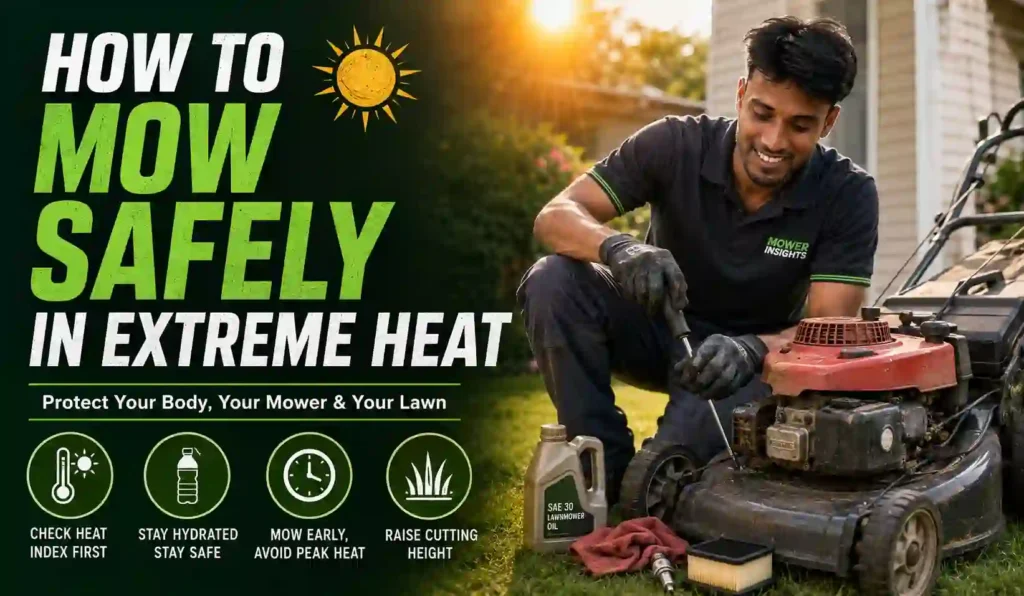
Safe mowing in extreme heat means protecting your body first. It also means protecting your mower and your lawn. Most guides only cover the lawn part. This guide covers all three. Below, you’ll get clear temperature limits. You’ll get a step-by-step routine. You’ll also get real heat-illness warning signs and mower failure points from a repair shop.
Quick Overview
- Stop mowing once the heat index hits 90°F. Above that, both grass stress and heat illness risk rise fast.
- Mow between 6 AM and 9 AM. This is the safest window for your body and your lawn.
- Raise your mower deck by one setting in summer. Taller grass shades the soil and protects the roots.
- Gas mowers can vapor lock above 95°F. Battery mowers lose runtime fast in direct sun.
- Know the signs of heat exhaustion before you start. Heavy sweating and dizziness mean stop right away.
What You Need Before You Mow
- A working thermometer or weather app with heat index.
- Water. At least one liter for a 30-minute mow.
- Light-colored, loose-fitting clothing.
- Sunscreen, SPF 30 or higher.
- A hat with a brim.
- Closed-toe shoes. Never sandals.
- Safety glasses or goggles.
Step 1: Check the Heat Index, Not Just the Temperature
Do this first. Check the heat index. Not just the air temperature. The heat index adds humidity into the number. It shows how hot it actually feels. A 92°F day with high humidity can feel like 105°F. That feels-like number is what stresses your body. At a heat index of 90°F or higher, stop planning to mow. Wait for a cooler day or a cooler hour. This single check prevents most heat-related mowing injuries.

Step 2: Pick the Safest Time Window
Mow between 6 AM and 9 AM. This window is cooler for you. It is also better for your lawn. Morning grass still holds overnight moisture. That moisture helps it recover fast after cutting. Avoid mowing between 11 AM and 4 PM. This is peak heat. It is also peak UV exposure. If mornings don’t work, try after 7 PM instead. Wait until direct sun has faded.
Step 3: Prep Your Body First
Drink 16 ounces of water before you start. Do not wait until you feel thirsty. Thirst means you’re already low on fluid. Eat a light snack too. Low blood sugar makes heat stress worse.
Put on light, loose clothing. Cotton or moisture-wicking fabric both work. Avoid dark colors. Dark fabric absorbs more heat. Apply sunscreen to your neck, arms, and face. Reapply every two hours if you’re outside that long.
Step 4: Prep Your Mower for Heat
Check your fuel level before starting. Hot weather speeds up fuel evaporation. Top off the tank if it’s low. Check your oil level too. Low oil makes an engine run hotter.
For gas mowers, let the engine cool between uses. A hot restart in extreme heat can cause vapor lock. Vapor lock means fuel turns to vapor in the line. The engine then struggles to start.
For battery mowers, don’t leave the battery in direct sun. Heat drains battery capacity fast. A pack that runs 40 minutes in spring may run half that time in extreme heat.
Check tire pressure too. Heat raises air pressure inside tires. Over-inflated tires wear unevenly and handle poorly on uneven ground.
Step 5: Raise Your Cutting Height
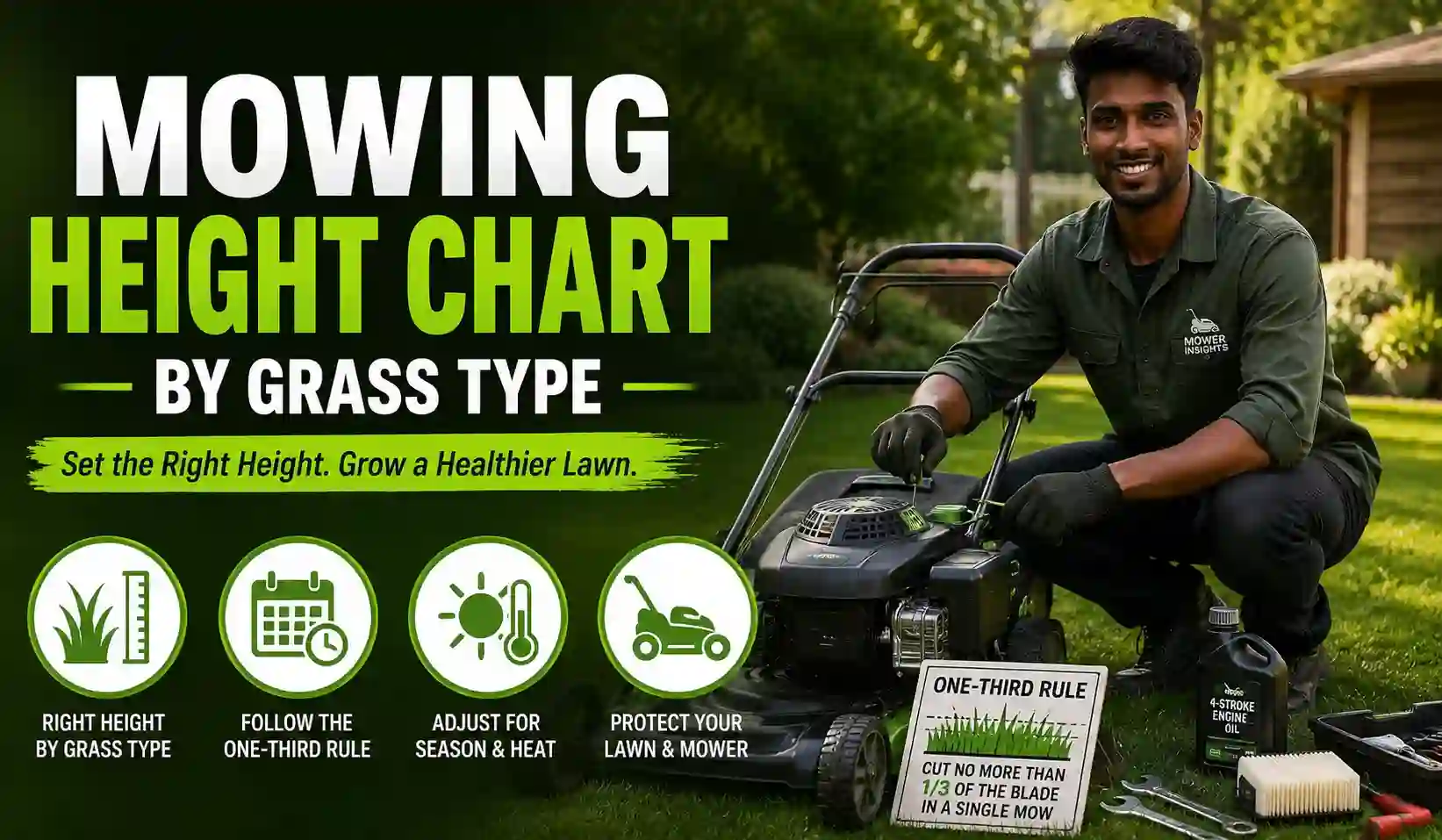
Move your deck up one notch for summer. Taller grass shades the soil underneath. Shaded soil holds moisture longer. This helps roots survive heat stress.
Never remove more than one-third of the blade length in a single cut. Cutting shorter than that stresses the plant. Stressed grass turns brown and struggles to recover.
Step 6: Mow at a Steady, Slower Pace
Push at a slower, steady pace in extreme heat. Rushing raises your own body temperature faster. It also strains a gas engine harder. A strained engine runs hotter and wears faster.
Take a break every 15 to 20 minutes. Step into shade. Drink water during each break. This matches general NIOSH work/rest guidance for hot conditions.
Step 7: Watch for Heat Illness Signs
Know these signs before you start mowing. Heavy sweating is an early warning sign. Dizziness or headache is another. Nausea or muscle cramps mean stop immediately. Confusion or a fast heartbeat means stop and get help fast.
If you notice any of these signs, stop mowing right away. Move to shade or an air-conditioned space. Drink water slowly. Do not go back to mowing that day.
Step 8: Cool Down and Store Your Gear
After mowing, move into shade or indoors. Drink more water over the next hour. Check your skin for sunburn. Rinse grass clippings off your mower deck once it’s cool.
Store gas mowers in a shaded, ventilated space. Heat buildup in a closed shed raises fire risk from fuel vapor. Store battery packs indoors at room temperature. Never leave a battery charging in direct sun.
Common Mistakes That Cause Problems
- Mowing at midday to “get it over with”: This is the single biggest mistake homeowners make. It raises injury risk and stresses the lawn most.
- Skipping water because the mow feels quick: Even a 20-minute mow in extreme heat causes real fluid loss. Drink water anyway.
- Cutting grass too short to “reduce the number of mows”: This backfires. Short grass burns and browns faster in extreme heat.
- Restarting a hot gas mower right after it stalls: This is a common cause of vapor lock in our repair shop. Let it cool for a few minutes first.
- Leaving a battery mower on a sunlit patio between uses: This shortens battery life over time. Store packs in shade or indoors.
Heat Exhaustion vs. Heat Stroke
These two conditions are not the same. Heat exhaustion comes first. It causes heavy sweating, weakness, and dizziness. Skin often feels cool and clammy despite the heat.
Heat stroke is more serious. It can follow untreated heat exhaustion. Signs include hot, dry skin and confusion. Body temperature can rise above 103°F. Heat stroke is a medical emergency. Call emergency services right away if you suspect it.
| Condition | Key Signs | What to Do |
|---|---|---|
| Heat Exhaustion | Heavy sweating, dizziness, cool clammy skin | Stop work, move to shade, sip water |
| Heat Stroke | Hot dry skin, confusion, very high body temp | Call emergency services immediately |
When to Skip Mowing and Call a Pro
Skip mowing entirely above a 100°F heat index. No lawn task is worth heat stroke risk. Wait for a cooler day instead.
Also skip mowing if your lawn looks dormant. Dormant grass turns a dull gray-brown. Mowing dormant grass adds stress it can’t recover from. Wait for green regrowth after rain or cooler weather.
If your schedule never allows for cool mowing windows, consider a local lawn service. A pro crew can mow during the safest hours for you. This isn’t a sales pitch. It’s a real option worth considering if extreme-heat mowing keeps landing on your plate at the worst hour of the day.
Troubleshooting: Mower Problems in Heat
| Symptom | Likely Cause | Fix |
|---|---|---|
| Gas mower won’t restart after stalling | Vapor lock from engine heat | Let engine cool 10-15 minutes, then restart |
| Battery mower shuts off early | Battery overheating in direct sun | Move to shade, let pack cool before resuming |
| Engine runs rough or surges | Fuel evaporation changing the air/fuel mix | Top off fuel, check air filter for clogs |
| Mower feels harder to push | Tire pressure too high from heat | Check pressure, release air to spec level |
| Grass clumps and clogs the deck | Mowing grass that’s too dry or too short | Raise deck height, mow at a slower pace |
Expert Tip From the Repair Shop
Most heat-related repair visits share one cause. The owner restarted a hot engine too soon. In our shop, this is the top reason for vapor lock complaints in summer. Wait five extra minutes before you turn the key again. That single habit prevents most of these repair visits.
Frequently Asked Questions
What temperature is too hot to mow the lawn?
A heat index of 90°F or higher is the general cutoff. Above that, both plant stress and personal heat risk rise sharply.
Can a lawn mower overheat in extreme heat?
Yes. Gas engines can vapor lock above roughly 95°F. Battery packs lose runtime and can shut down early in direct sun.
Is it safe to mow the lawn at 95 degrees?
It’s risky. At 95°F, heat exhaustion risk rises fast during physical work. Wait for a cooler window if possible.
What is the best time of day to mow in summer?
Early morning, between 6 AM and 9 AM, is the safest window. It’s cooler for you and better for grass recovery.
Should I mow shorter to avoid mowing as often in summer?
No. Cutting grass too short in extreme heat causes more stress, not less. Keep the deck raised instead.
Do battery mowers handle heat better than gas mowers?
They handle it differently, not better. Gas engines risk vapor lock. Battery packs risk overheating and reduced runtime in direct sun.