Quick Answer
- Stihl BG 50 vs BG 56 comes down to three things: starting ease, fuel capacity, and price. The BG 56 costs about $60 more.
- Both blowers share the same 27.2 cc engine, the same 13 N blowing force, and the same 159 mph top air speed.
- The BG 56 adds Stihl’s Easy2Start pull system, a larger fuel tank, and a multi-function control handle.
- The BG 50 is about 1.4 lbs lighter and is the more affordable pick for light, occasional yard cleanup.
- Pick the BG 56 if you blow leaves often or have arm or shoulder trouble with a hard-pull cord. Pick the BG 50 if you want the lowest price for occasional use.
What a Homeowner Actually Needs to Know
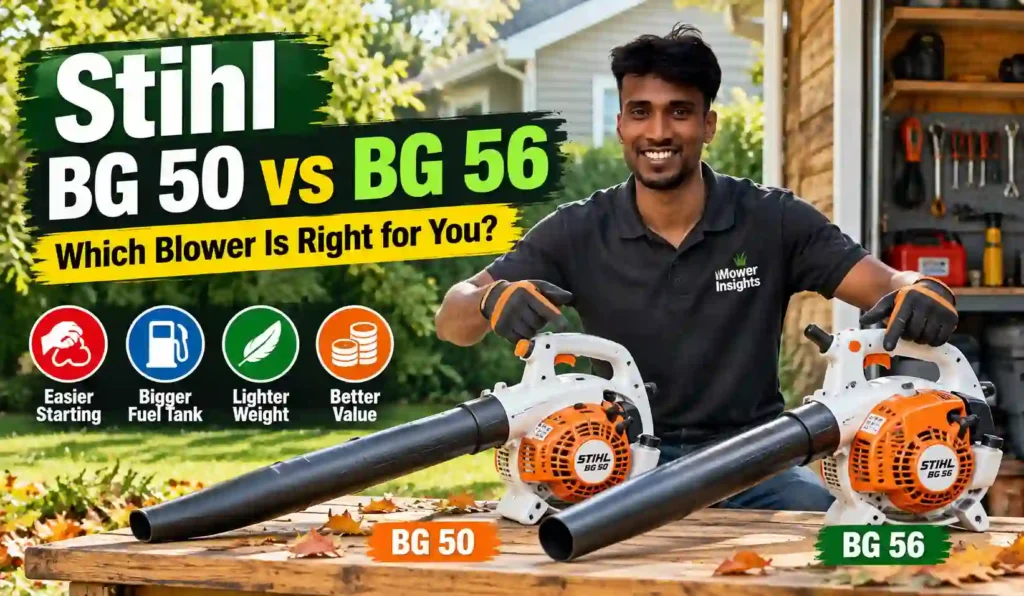
Stihl BG 50 vs BG 56 is one of the most common questions homeowners ask when shopping for a handheld gas blower. Both models sit at the entry level of Stihl’s blower lineup, and on paper they look almost identical. The engine size, the blowing force, and the top air speed are the same on both machines.
The real differences show up in daily use, not in the spec sheet. Starting effort, fuel tank size, and control layout separate these two blowers, and each one changes who the tool actually fits. This guide breaks down every difference that matters and tells you which one to buy based on how you use a blower.
Stihl BG 50 vs BG 56: At a Glance
| Spec | BG 50 | BG 56 |
|---|---|---|
| Engine displacement | 27.2 cc | 27.2 cc |
| Engine output | 0.9 bhp | 0.9 bhp |
| Blowing force | 13 N | 13 N |
| Max air velocity | 159 mph | 159 mph |
| Air volume at nozzle | 412 cfm | 412 cfm |
| Weight (no fuel) | 7.9 lbs | 9.3 lbs |
| Fuel tank capacity | 14.5 oz | 18.3 oz |
| Starting system | Manual pull, purge pump primer | Easy2Start pull, purge pump primer |
| Control layout | Basic handle | Multi-function control handle |
| Sound pressure level | 70 dB(A) | 70 dB(A) |
| Typical price | Around $180 | Around $240 |
The blowing power is identical. Everything below the fold of that table is what actually decides which one you should buy.
Where the BG 50 and BG 56 Actually Differ
Starting System: Pull Cord vs Easy2Start
The BG 50 starts the standard way. You engage the choke, prime the purge pump, and give the cord a firm pull. It’s a normal small-engine start, and most homeowners handle it without trouble.
The BG 56 uses Stihl’s Easy2Start system. Instead of one hard, fast yank, you use a longer, gentler pull. The system reduces the compression resistance you feel on the pull, so starting takes noticeably less arm strength. If you deal with shoulder pain, wrist issues, or you just find small-engine pull cords frustrating, this is the single biggest reason to pay more for the BG 56.
Weight and Comfort During Use
The BG 50 weighs 7.9 lbs without fuel. The BG 56 weighs 9.3 lbs without fuel, a 1.4 lb difference. That gap sounds small until you’re holding either blower out at arm’s length for 20 minutes clearing a driveway or a long walkway.
For short jobs under 15 minutes, the weight difference barely registers. For longer sessions, or for anyone with wrist or shoulder sensitivity, the BG 50’s lighter body is easier on the arm over time.
Fuel Capacity and Runtime
The BG 50 holds 14.5 oz of fuel. The BG 56 holds 18.3 oz, about 26% more. Since both engines burn fuel at a similar rate, the BG 56 runs longer between refills.
For a small yard where the job takes 10 minutes, this difference doesn’t matter. For a larger property, a long gravel driveway, or a job that regularly runs past 20 minutes, the BG 56’s bigger tank means fewer stops to refuel and remix.
Control Handle and Ease of Use
The BG 50 uses a basic top handle with straightforward throttle control. The BG 56 uses Stihl’s multi-function control handle, which groups the throttle, stop switch, and choke control within reach of one hand position. You never have to move your grip to adjust the engine.
This matters most if you’re switching settings mid-job, such as choking down for a cold restart after refueling. For a blower you run at one steady speed from start to finish, the difference is minor.
Noise and Vibration
Both blowers measure the same 70 dB(A) sound pressure level in Stihl’s US specifications, so neither one is noticeably quieter in daily use. Vibration levels are also close between the two models, since they share the same engine platform. Neither blower needs special hearing protection beyond standard ear protection recommended for any gas-powered outdoor tool.
Price and Value
The BG 50 typically runs about $180. The BG 56 typically runs about $240, a roughly $60 premium. Prices may vary by retailer and change over time.
That $60 buys you the easier starting system, the bigger fuel tank, and the multi-function handle. It does not buy you more blowing power. If none of those three upgrades matter for how you’ll use the blower, the BG 50 delivers the same performance for less money.
Choose Based on How You’ll Use It
- Occasional cleanup, small yard (under a quarter acre): the BG 50 is the better buy. You won’t run it long enough to feel the smaller tank, and the lower price makes sense for light-duty use.
- Weekly use, larger yard or long driveway: the BG 56 pays for itself in fewer refuel stops and less arm fatigue over a longer job.
- Shoulder, wrist, or grip issues: the BG 56’s Easy2Start system is worth the extra cost on its own.
- Tightest possible budget: the BG 50 gives you the same 13 N of blowing force and the same 159 mph top speed for about $60 less.
- Renters or infrequent users who store the blower most of the year: the BG 50’s simpler design has fewer parts that can develop starting issues from sitting unused between seasons.
Maintenance: No Real Difference
Both blowers share the same 27.2 cc engine platform, so long-term upkeep is nearly identical. Expect the same air filter cleaning schedule, the same spark plug replacement interval, and the same 50:1 fuel-to-oil mix ratio on both models. The BG 56’s Easy2Start mechanism adds one extra component compared to the BG 50’s standard pull system, but it rarely needs service beyond what a normal pull-start assembly needs.
Store both models with the fuel tank empty or treated with a fuel stabilizer between seasons. Running either blower dry of fuel before winter storage prevents the stale-fuel starting problems that cause most handheld blower complaints.
Frequently Asked Questions
Is the Stihl BG 56 more powerful than the BG 50?
No. Both blowers produce the same 13 N of blowing force and the same 159 mph top air speed. The BG 56 costs more for easier starting, a bigger fuel tank, and a multi-function handle, not for extra power.
Which one is better for a small yard?
The BG 50 is the better fit for a small yard. Its lighter weight and lower price make sense when jobs run under 15 minutes and you don’t need the bigger fuel tank.
Is the Easy2Start system on the BG 56 worth the extra cost?
For anyone with shoulder, wrist, or grip issues, yes. The gentler pull noticeably reduces starting effort compared to a standard pull cord. If starting effort isn’t a concern for you, the BG 50 starts just as reliably with a standard pull.
Can I put an Easy2Start kit on my BG 50?
No. Easy2Start is built into the engine’s starter assembly at the factory and isn’t sold as an add-on part for the BG 50.
How much heavier is the BG 56 than the BG 50?
The BG 56 weighs 9.3 lbs without fuel, compared to 7.9 lbs for the BG 50, a difference of 1.4 lbs.
Do the BG 50 and BG 56 use the same fuel mix?
Yes. Both use the same 27.2 cc two-stroke engine and take the same 50:1 gas-to-oil mix ratio.
Which blower runs longer on a full tank?
The BG 56 runs longer. Its 18.3 oz tank holds about 26% more fuel than the BG 50’s 14.5 oz tank.
Final Buying Advice
Buy the BG 50 if you want the lowest price and only need a blower for quick, light cleanup jobs around a small yard. Buy the BG 56 if you blow leaves often, have a larger property, or want the easier Easy2Start pull system. Neither blower outperforms the other in raw power, so the right pick depends entirely on how often you’ll use it and how much starting effort matters to you.
Why Trust This Guide
This comparison is based on Stihl’s published specifications for both models, cross-checked against multiple authorized dealer listings for current US pricing, alongside hands-on experience servicing small two-stroke engines like the ones in both blowers.