Quick Answer
The one-third rule is simple. Never cut more than one-third of the grass blade at once. If you keep your lawn at 3 inches, mow it before it gets to 4.5 inches. Do not wait until it hits 6 or 7 inches. If you cut off too much at once, the grass loses too much leaf. This stresses the roots. It can bring disease. It can turn your yard yellow-brown for a week. In our repair shop, we see this a lot. Mowers come in with scorched, ragged decks. Most owners let the grass grow too long, then hacked it back in one pass.
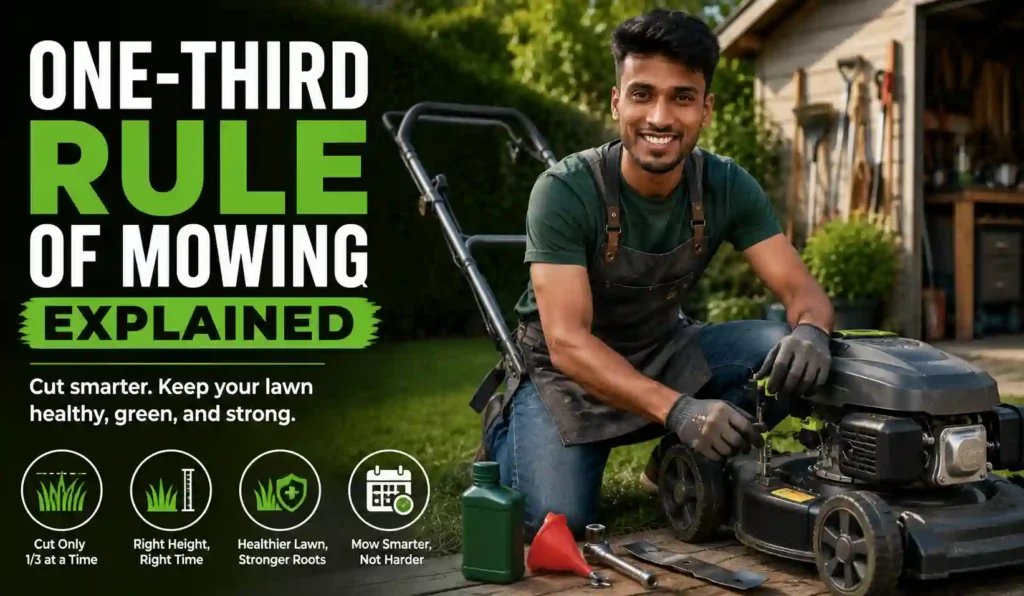
What the One-Third Rule Actually Means
The one-third rule limits how much grass you cut off at one time. If your lawn is 3 inches tall, mow it before it gets to 4.5 inches. That way, you take off no more than 1.5 inches. The math is easy. Take your normal mowing height. Multiply it by 1.5. That gives you the tallest your grass should get before the next cut.
This is not a made-up rule. It comes from how grass grows and feeds itself. Each blade works like a small solar panel. Cut off too much at once, and the plant loses most of its power source. It needs that power to heal from the cut.
Grass height needs change by type. Cool-season grasses like Kentucky bluegrass and tall fescue do well between 2.5 and 4 inches. Warm-season grasses like Bermuda and zoysia stay shorter, often 1 to 2 inches. No matter your target height, the one-third rule still applies.
How We Tested This
This guide comes from real repair shop work, not just books. Siddik tracks which mowers come in with scorched blades. He sees clogged decks and stalled engines too. This often happens after someone cuts overgrown grass in one pass. He checks these patterns against turf science on mowing height and root growth. The tips below mix hands-on repair work with solid plant science. None of it is guesswork.
Why Cutting Too Much at Once Hurts Your Lawn
Cut off more than a third of the blade, and you shock the plant. It has to burn stored energy just to survive. It cannot spend that energy on new growth. The grass pulls resources from its roots to rebuild leaves up top. That root loss is the real harm. Most people do not see it right away. Weeks later, the lawn thins out. It may turn brown in patches.
Grass stores food in its lower stem and roots. Those reserves fuel new growth after each cut. A light trim barely touches those stores. A hard, scalping cut drains a much bigger share at once. Do this again and again, and the plant never fully refills its tank before the next big cut.
Four problems tend to show up after a lawn gets scalped:
- Yellowing or browning within days. The cut tips die back. Growth slows a lot while the plant reroutes its energy.
- Shallower roots over time. Repeat heavy cuts train the grass to grow less root. This makes it worse at handling drought and heat.
- More weeds. A thin lawn lets more light hit bare soil. That is exactly what weed seeds need to sprout.
- Higher disease risk. Fresh, ragged cuts across a lot of the blade give fungus more spots to get in. This is worse in humid weather.
At the shop, we see this most in early spring and after vacations. Someone lets the lawn grow for three weeks. Then they mow it down to normal height in one pass. The mower usually survives just fine. The lawn often does not. It can take two to three rough weeks to bounce back.
How to Calculate Your Mowing Height by Grass Type
Your mowing height starts with your grass type. Each grass has its own ideal range and growth speed. The table below gives solid starting points. Your exact number will shift with season, sun, and soil.
| Grass Type | Ideal Mowing Height | Mow Before It Reaches | Growth Season |
|---|---|---|---|
| Kentucky Bluegrass | 2.5-3.5 in | 3.75-5.25 in | Spring, fall |
| Tall Fescue | 3-4 in | 4.5-6 in | Spring, fall |
| Perennial Ryegrass | 2-3 in | 3-4.5 in | Spring, fall |
| Bermuda Grass | 1-1.5 in | 1.5-2.25 in | Summer |
| Zoysia Grass | 1-2 in | 1.5-3 in | Summer |
| St. Augustine | 2.5-4 in | 3.75-6 in | Summer |
To use this table, find your grass type. Take its ideal height. Multiply that by 1.5. That gives your max height before the next mow. Keep tall fescue at 3.5 inches? Mow again once it hits about 5.25 inches. Wait past that mark, and your next cut breaks the one-third rule. It will not matter how careful you are with the deck height after that.
Here is a detail most people miss. The one-third rule applies every single time you mow. It is not a once-a-season thing. Keep letting the lawn get too long between cuts, and you break the rule again and again. That stress adds up fast.
How Often You Should Actually Be Mowing
How often you mow depends on growth speed, not the day on your calendar. In peak growth times like spring and early summer, cool-season lawns often need a cut every 5 to 6 days. That keeps you inside the one-third limit. In slow growth times, like mid-summer heat or early fall, you can often stretch that out to 10 to 14 days.
A fixed “mow every Saturday” plan works fine on average weeks. But it fails during growth spurts after rain and warm weather. It also wastes a trip on slow weeks when the grass barely grew. A better plan is to check the height first. Do not just circle a day on the calendar.
Growth speed also shifts with fertilizer timing. Feed your lawn nitrogen in April, and it may grow fast enough to need two mows in one week. If you fertilize on a set schedule, plan on mowing more for one to two weeks after each feeding.
Practical next step: Keep a cheap folding ruler in your mower’s storage bin or garage. Before each mow, check the tallest patch of grass against your max height. Do not just guess.
What Happens When You Break the Rule (And How to Recover)
Break the one-third rule once, and it will not kill a healthy lawn. It will set it back for one to three weeks. The exact time depends on grass type, weather, and soil health. If you already scalped your lawn, focus on the recovery plan. Do not panic.
Here is the sequence that works:
- Do not mow it again right away to “fix” it. Let the grass rest for at least a week before the next mow, even if it looks uneven.
- Water deep, but not often. Give it one inch of water per week. Split that into one or two sessions. This grows deep roots instead of shallow ones.
- Skip fertilizer for about two weeks. A stressed lawn cannot handle a nitrogen boost well right after a scalp. It can make the stress worse.
- Watch for signs of disease. Round brown patches or slimy blades in wet weather can mean fungus got in through the fresh cuts. Use a labeled fungicide if it spreads.
- Ease back to your normal height. Once new growth shows up, go back to your usual height and pace. Do not cut it even shorter to “even it out.”
Expert tip: Say a riding mower’s deck dipped low in one spot. Raise the deck one full notch above normal for the next two mows over just that patch. This gives the hurt grass extra leaf to heal with before you drop the height back down.
The Soil Side of Scalping Recovery
Grass recovery depends on more than just the mower. What happens under the soil matters too. Packed-down soil blocks water and air from the roots. That is bad timing, since the roots need both to rebuild. Does your lawn get a lot of foot traffic or heavy gear on it? Aerate it in early fall or spring. Do this outside the scalp recovery window. It helps the roots bounce back faster next time.
Soil pH matters too, and people often skip this step. Grass in soil with a pH under 6.0 or over 7.5 often cannot pull in nutrients well. This holds true even with good watering and no fertilizer. A basic soil test kit from a garden center gives you an answer in a day. It will tell you if pH is the hidden reason your lawn is not bouncing back.
What This Looks Like on the Mower’s End
A scalped lawn is not just a plant problem. The mower often takes a hit too. Drag a deck through grass far past the one-third mark, and you add real strain to the blade spindle and belt. The blade itself often comes out dull or nicked after fighting thick, wet growth. After any heavy overgrowth cut, pull the blade. Check the edge before your next mow. A chipped or bent edge tears grass instead of slicing it. That adds more stress on top of the height stress your lawn is already under.
Common Mistakes Homeowners Make With Mowing Height
The top mistake we see is mowing on a fixed calendar day, no matter how tall the grass really is. The second most common slip is dropping the deck lower “just this once” to cut down on clippings after a missed mow. This makes the scalping problem worse, not better.
- Mowing wet grass at normal height. Wet blades bend under the deck instead of standing up straight to get a clean cut. This leads to torn, uneven cuts even with the right height set.
- Never changing height with the seasons. Cool-season grass often does better mowed a bit taller in summer heat. Taller grass shades its own roots. Keep the same height all year, and you miss out on that.
- Cutting right after heavy rain to “catch up.” Wet soil packs down under mower wheels. Wet clippings clump up and smother the grass below instead of breaking down.
- Using a dull blade on fast-growing grass. A dull blade tears the grass instead of slicing it. This stresses the plant even if the height cut is within the one-third rule.
- Bagging every single cut. Leave the clippings in place, as long as they do not clump. This puts nitrogen back into the soil. It also cuts down how often you need to fertilize.
Tools That Make the One-Third Rule Easy to Follow
A mower with a quick, tool-free deck height lever makes it far easier to follow the one-third rule week to week. You will not fight your gear each time your target height shifts. Most mid-range gas and battery push mowers today use one lever to move all four wheels at once. This is worth checking for if you are shopping for a new machine.
A sharp blade matters just as much as the right height. A well-sharpened blade needs a touch-up about every 20 to 25 hours of mowing time under normal use. Sharpen it more often if you often cut through twigs, acorns, or sandy soil, since these dull the edge fast. In the shop, a dull blade is one of the top reasons a lawn looks ragged, even when the owner follows the height rule the right way.
Got a bigger yard? A mower with a wide cutting deck covers more ground per pass. This makes it far easier to stick to a 5 to 10 day mowing cycle. A small deck often stretches that interval out, since the job just takes too long.
How Microclimate and Season Change the Math
The same lawn can grow at very different speeds in different spots. Sun, slope, and season all play a role. This means the one-third rule can call for different mowing gaps across one single yard. A front lawn with full sun and regular water can outgrow a shaded, dry back section by two or three days in the same week.
Shaded spots under trees tend to grow slower. Keep them a bit taller than sunny patches of the same grass type. More leaf helps the plant make up for less light. Slopes and south-facing spots dry out faster too. They often need a slightly higher mow height. Taller grass shades its own roots and holds soil water better than a tight, short lawn.
Season shifts the growth curve more than almost anything else. Cool-season grasses grow fastest in spring, then again in early fall. They slow way down or go near-dormant in peak summer heat. Warm-season grasses do the opposite. They grow fastest in summer and slow down hard once nights drop below about 55°F (Cornell University Turfgrass Program, 2023). [VERIFY: confirm this temperature threshold against current extension data before publishing] Match your mowing pace to these curves instead of a fixed year-round schedule. This is one of the simplest ways to stay inside the one-third rule without much thought.
Mower Type and How It Affects Your Ability to Follow the Rule
Not every mower makes the one-third rule easy to follow. The type of machine you run changes how much room you have for error. Reel mowers are common on very short warm-season lawns. They cut with a scissor action. They do well with frequent, light trims. They struggle hard if the grass gets even a bit too long, since they are not built to remove much height in one pass.
Rotary mowers, whether gas, corded, or battery, give you far more room for height changes. They are the more practical pick for most homeowners on a shifting mow schedule. Battery mowers often have a simple, single-lever height set. This makes it fast to raise the deck for an overgrown pass, then drop it back for normal mowing. This matters more than most people think when you adjust height often instead of leaving it set all season.
Riding mowers and zero-turns cover ground fast. This helps big yards stay on a tighter mow schedule. But their wide decks can cut unevenly on rolling ground if the deck is not level. An unlevel deck can quietly break the one-third rule in low spots, even when the height dial reads correctly. Check your deck level at the start of each season.
Safety Notes for Tall-Grass Mowing
Mow grass that is well past the one-third limit, and you add real strain to the engine and blade. It also raises the risk of the deck clogging mid-cut, which can stall the blade fast. Always mow overgrown grass in two passes at two different heights. Do not force it in one pass at your normal height.
Raise the deck to its highest setting for the first pass over tall grass. Drop it to your normal height for a second pass a day or two later. This two-step method still respects the one-third rule at each pass, even though the grass started out too tall.
Check for hidden debris before you mow grass that has grown tall. Sticks, rocks, and toys are much easier to miss in long grass. They can damage a blade or fly out as a hazard. Always wear closed-toe shoes and safety glasses. Keep the discharge chute pointed away from people, pets, and windows.
When to Call a Lawn Care Pro Instead of DIY-ing It
Call a pro if your lawn sat uncut for more than a month. Call one too if you face more than about a quarter acre of overgrown grass. The same goes if the ground is too rough for a push mower to handle safely. Very overgrown grass, especially past 10 to 12 inches tall, often needs a brush cutter or field mower first. Bring in a regular mower once the height drops to a workable range.
Call a pro too if scalp damage does not get better within three weeks of a proper recovery routine. That can point to a deeper issue. It could be packed soil, a fungal infection through the cut wounds, or a pH problem that blocks recovery even with the right water and mowing.
Good fit for DIY: a lawn under a quarter acre, grass no more than double its target height, and a mower with the height range you need.
Not a good fit for DIY: grass over a foot tall, slopes too steep for a walk-behind mower, or recovery that has not improved after several weeks of good care.
Frequently Asked Questions
What is the one-third rule in lawn mowing?
The one-third rule says never remove more than one-third of a grass blade’s height in a single mow. If your lawn sits at 3 inches, mow it before it hits 4.5 inches.
What happens if I cut more than one-third of the grass?
Cutting off more than a third at once stresses the plant. It pulls energy from the roots to regrow leaves. This often brings yellowing, thinning, and higher disease risk for one to three weeks.
How tall should I let my grass get before mowing?
That depends on your grass type and target height. Multiply your ideal mowing height by 1.5. For a lawn kept at 3 inches, that max height is about 4.5 inches.
Can I fix a lawn I already scalped?
Yes, in most cases. Skip mowing for about a week. Water deep once or twice a week. Hold off on fertilizer for two weeks. Watch for signs of disease. Most lawns bounce back within one to three weeks.
Is it better to mow more often at a lower setting or less often at a higher one?
Mow more often at your correct height. This beats letting grass grow tall, then cutting it low. Frequent, light cuts stay within the one-third rule. They put far less stress on the plant.
Does the one-third rule apply to all grass types the same way?
The rule applies to every grass type, but the exact numbers shift. Warm-season grasses like Bermuda stay shorter than cool-season grasses like tall fescue. So their one-third mark is a smaller number of inches, even though the percent rule stays the same.
Bottom Line
The one-third rule is not just a tip to consider. It is the line between a lawn that stays thick and green all season and one that spends weeks in recovery. Check your grass height before you mow. Do not just pick a fixed day of the week. Keep your blade sharp. If your lawn ever gets away from you, cut it down in two passes, not one. That single habit stops most of the scalp damage we see come through the shop each spring.
Pingback: How Short Should You Cut Your Grass? A Height Guide by Type