Quick Overview
- Point your mower’s discharge chute at the lawn. Never point it at pavement. This one fix solves most clipping problems.
- Mow the border strip next to your sidewalk or driveway last. Aim that final pass inward, toward the yard.
- A mulching blade cuts clipping mess a lot. Clippings drop down into the grass. They do not fly out to the side.
- Dry grass clumps less than wet grass. Mow in the afternoon. Let morning dew burn off first.
- A leaf blower clears stray clippings in under two minutes. Never hose clippings into a street or storm drain.
Grass clippings on a sidewalk are not just messy. They can wash into storm drains when it rains. They can also make wet pavement slick and unsafe to walk on. Most of the fix comes down to three things. Chute direction. Mow pattern. Blade choice. This guide walks through each one. It also covers the mistakes we see most often in our repair shop, and how mower type, grass type, and even weather change the fix.
In Brief
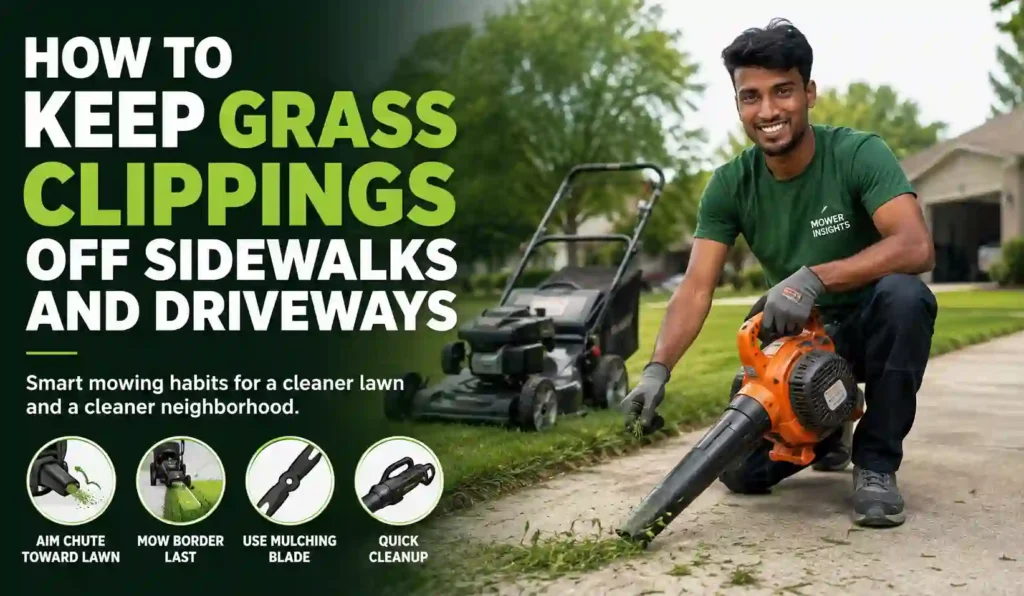
Point your mower’s discharge chute toward your lawn. Mow the pavement-side strip last. Discharge that strip inward, away from the sidewalk or driveway. Switch to a mulching blade if your mower allows it. Mow when the grass is dry. These five habits fix most clipping problems in one pass. The rest comes down to matching the fix to your mower type and your grass.
Why Clippings End Up on Pavement
Clippings land on pavement for one main reason. The mower’s discharge chute points the wrong way. Most walk-behind mowers throw clippings to the side. Some throw them out the back instead. If that side faces the sidewalk, clippings fly right onto it.
Wet, tall, or thick grass makes the problem worse. Wet clippings clump together. They land in heavy patches, not a thin, even spread. Tall grass gets cut in bigger chunks, too. Big chunks travel farther out of the chute than small ones.
Wind plays a role as well. A steady breeze can carry light, dry clippings much farther than a still day would. If your driveway sits downwind of your usual mowing direction, you will see more stray clippings there, no matter how careful you are.
In our shop, the mowers that throw the most clippings onto pavement almost always share one thing. A bent or missing chute deflector. That single part controls discharge angle more than almost anything else on the deck. A cracked ten-dollar flap can undo an otherwise perfect mowing routine.
What You Need Before You Start
- Your mower, with the discharge chute or deflector in good working shape
- A mulching blade or mulching plug, if your mower supports one (optional, but effective)
- A lawn edger or string trimmer, for the pavement border
- A leaf blower or a stiff push broom, for cleanup
- About 10 extra minutes on your normal mowing day
Step-by-Step: Keep Clippings Off Sidewalks and Driveways
Step 1: Check Your Discharge Chute Direction
Look at your mower before you start mowing. Find the discharge chute. On most walk-behind mowers, it sits on the right side of the deck. Some models discharge from the rear instead.
Walk your planned mowing path in your head first. Picture where the chute will point on each pass. Plan to keep it aimed at grass at every point along your driveway or sidewalk.
Check the deflector flap while you’re at it. If it’s bent, straighten it by hand. If it’s cracked or missing, replace it before you mow. A broken deflector cannot control clipping direction at all, no matter how careful your mowing pattern is.
Step 2: Choose the Right Discharge Mode
Most mowers offer three modes. Side discharge throws clippings out to the side. Mulching cuts clippings small and drops them into the lawn. Bagging collects clippings in a catcher bag.
Mulching causes the least mess near pavement, by a wide margin. Clippings fall straight down instead of flying outward. This matters most on lawns with long, straight pavement edges.
Bagging removes the mess completely. The trade-off is a catcher bag that fills up fast, especially on a large lawn or during peak growing weeks in spring.
Side discharge still works fine, if you aim it well. It just needs more attention to chute direction than the other two modes.
Step 3: Mow the Pavement Border Last, and Aim Inward
Save the strip next to your sidewalk or driveway for last. Mow it in a direction that discharges toward your yard, not away from it. This single change fixes more pavement-clipping problems than any other step in this guide.
Walk this final strip slowly. A slow pass gives the blade time to cut cleanly all the way through the grass. A clean cut throws far less debris than a rushed, ragged one.

If your mower has a variable speed control, drop it down a notch for this last strip. The extra second or two per pass costs you almost nothing.
Step 4: Add a Discharge Deflector or Chute Blocker
A deflector flap redirects clippings downward, instead of outward. A chute blocker stops discharge completely for that pass. Both parts install in minutes, often without any tools at all.
These parts usually cost under $30 for most residential mowers. They pay for themselves the first time you skip sweeping the driveway by hand.
Some newer models use a pedal-operated chute door instead of a fixed flap. You tap the pedal near the pavement, and it closes the chute automatically. It reopens once you’re back over grass.
Step 5: Edge the Pavement Border Before You Mow
Overgrown grass at the pavement edge gets caught oddly by the blade. It often flies farther than grass cut in the middle of the lawn. Run an edger or string trimmer along the border first, before you start mowing.
Edging also stops grass from creeping onto the pavement itself over time. That’s a separate problem from flying clippings, but the two often show up together, and fixing one helps the other.

Step 6: Mow When the Grass Is Dry
Wait for morning dew to dry before you mow. Wet clippings stick together in clumps. Clumps land heavier than loose, dry clippings, and they travel differently once they leave the chute.
Dry grass also cuts cleaner overall. A clean cut produces smaller, lighter clippings. Smaller clippings settle back into the lawn canopy, instead of scattering out onto pavement.
If you must mow after rain, wait as long as your schedule allows. Even one extra hour of drying time can make a real difference in how much lands on the driveway.
Step 7: Clean Up Stray Clippings the Right Way
Some clippings will still land on pavement, even with a near-perfect setup. Use a leaf blower to push them back onto the lawn. This takes under two minutes for most driveways.
A stiff push broom works too, if you don’t own a blower. Sweep clippings back onto the grass, not into the street.
Never hose clippings into the street or a storm drain. Clippings that wash into drains can pollute local streams and lakes. Several cities have specific rules against this exact habit.
Does Your Mower Type Change the Fix?
Push mowers and self-propelled walk-behinds behave the same way here. Chute direction and mow order matter most for both. The steps above apply to nearly every walk-behind model on the market.
Riding mowers and zero-turn models throw clippings farther and faster. Their higher blade tip speed pushes debris a longer distance from the deck. Border passes matter even more on these machines. Slow down noticeably for that final pass along any driveway or sidewalk.
Robot mowers rarely cause this problem at all. Most models mulch constantly, cutting a small amount of grass on every pass instead of a lot at once. Tiny clippings fall straight down and disappear into the lawn. If pavement clippings are a constant headache, this is one real reason some owners switch.
Does Grass Type or Season Change the Fix?
Thick, dense grass varieties clump more than thin, fine-bladed ones. St. Augustine and tall fescue tend to produce heavier clippings than fine fescue or Bermuda. If you have a dense grass type, mulching helps even more than usual.
Spring growth spurts make this worse for almost every lawn. Grass grows fast after rain and mild temperatures. Faster growth means more leaf material cut per pass, which means more clippings overall.
During a spring growth spurt, mow more often instead of cutting more height at once. Removing less material per mow keeps clipping volume manageable, and it’s better for the grass itself.
Common Mistakes That Cause This Problem
- Mowing the border strip first. This throws clippings onto clean pavement right before you’re finished. Save this strip for last instead.
- Ignoring a bent deflector flap. A bent flap quietly changes discharge angle. Check it at the start of every mowing season, not just when there’s an obvious problem.
- Mowing wet grass to save time. Wet grass clumps and can clog the deck. Clumped clippings shoot out unevenly, often straight toward pavement.
- Cutting too much height at once. Removing more than one-third of blade height overloads the chute. An overloaded chute throws clippings farther than normal.
- Using a dull blade. A dull blade tears grass instead of slicing it cleanly. Torn grass produces ragged clippings that fly farther and clump more.
We sharpen or replace more blades in early spring than at any other time of year. A fresh edge alone noticeably reduces stray clipping spread, even before any other change.
The Real Cost of Ignoring This
Skipping this fix costs more than a messy driveway. Loose clippings tracked indoors on shoes can stain carpet and grout over time. Clippings left on pavement also stain concrete if they sit through a few rain cycles.
Some cities issue warnings or fines for clippings left in the street or washed into a storm drain. Rules vary a lot by city and county. Check your local public works page for the exact language that applies to you.
There’s a mower-health cost too. A bent or missing deflector often means other deck hardware nearby has taken hits as well. Left unchecked, this can lead to a bent spindle or an out-of-balance blade over a full season.
Safety Notes
Never remove a discharge deflector to “see better” while mowing. An open chute can launch rocks and other debris at high speed. This is a real injury risk, not just a mess problem.
Keep bystanders and pets away from the discharge side of the mower. This matters most near driveways, where people often walk, park, or stand while talking to a neighbor.
Turn the mower off before adjusting any chute or deflector by hand. Never reach toward a moving blade or a spinning deck, even for a quick fix.
When to DIY vs When to Call a Mower Shop
Most chute direction and mowing pattern fixes are simple DIY tasks. Anyone can adjust a deflector flap by hand in a few seconds. Anyone can change their mowing order in five minutes, with no tools at all.
Call a repair shop if the deflector is cracked, warped, or missing entirely. A shop can match the exact replacement part for your specific model. This avoids buying the wrong part twice, which happens often with universal-fit listings online.
Also call a shop if clippings shoot out unevenly on every single pass, even in dry grass. This pattern often points to a bent blade or a damaged deck, not just a chute pointed the wrong way.
Troubleshooting Table
| Symptom | Likely Cause | Fix |
|---|---|---|
| Clippings shoot far onto the driveway | Deflector missing or bent | Replace or straighten the deflector flap |
| Clumps of wet grass on the sidewalk | Mowing right after dew or rain | Wait until the grass is fully dry |
| Clippings pile up at the pavement edge every pass | Border strip mowed too early | Mow the border strip last, aim inward |
| Grass grows over the pavement edge | No recent edging done | Edge the border before each mow, or every 2 weeks |
| Uneven clipping spray on every pass | Dull or bent blade | Sharpen or replace the blade |
| Clippings still scatter on windy days | Wind carrying light, dry debris | Mow the pavement border early, before wind picks up |
Frequently Asked Questions
Why do grass clippings keep landing on my driveway?
Your mower’s discharge chute is likely pointed toward the driveway. Check the chute direction. Mow that border strip last, and aim it inward, toward your lawn.
Does a mulching mower stop clippings from landing on pavement?
Yes, in most cases. A mulching blade cuts clippings small and drops them straight down into the lawn. This produces far less flying debris than side discharge does.
Is it illegal to blow grass clippings into the street?
In many cities, yes. Clippings can clog storm drains and pollute local waterways. Check your city’s public works or environmental department page for the exact local rule.
What’s the best way to clean clippings off a sidewalk?
Use a leaf blower to push clippings back onto the lawn. This takes under two minutes and avoids wasting water. Never hose clippings into a street or a storm drain.
Should I mow toward or away from my driveway?
Always discharge clippings away from the driveway, toward the lawn. Save the driveway-side strip for your last pass. Aim the chute inward on that final pass.
How often should I edge along my driveway?
Edge every one to two weeks during peak growing season for most lawns. This keeps grass from creeping onto pavement, and it reduces ragged, far-flying clippings at the border.
Can a bagging mower solve this problem completely?
Yes, bagging removes nearly all loose clippings from the yard. The trade-off is more frequent bag emptying, especially on a larger lawn cut on a normal weekly schedule.
Do robot mowers have this problem too?
Rarely. Most robot mowers mulch constantly, cutting a small amount on every pass instead of a lot at once. Tiny clippings drop straight down and disappear into the lawn.
Will a new blade actually reduce clippings on my driveway?
Yes, more than most people expect. A sharp blade slices grass cleanly instead of tearing it. Clean cuts produce lighter, smaller clippings that settle into the lawn instead of flying out.