Quick Overview
- The Honda HRN216VLA is a 21-inch, self-propelled, electric-start gas mower with an MSRP of $709 (Honda, 2026), often listed near $649-$679 at retailers.
- It runs a Honda GCV170 engine (166cc) with variable speed drive from 0 to 4.0 mph (Honda, 2026).
- In shop teardown, the belt-clutch drive system is the most common wear point, typically needing attention around year three of regular use.
- It costs roughly $60-$90 a year to run and maintain under normal residential use.
- Best fit: homeowners with a quarter-acre to half-acre lawn who want electric start and don’t want to push a mower.
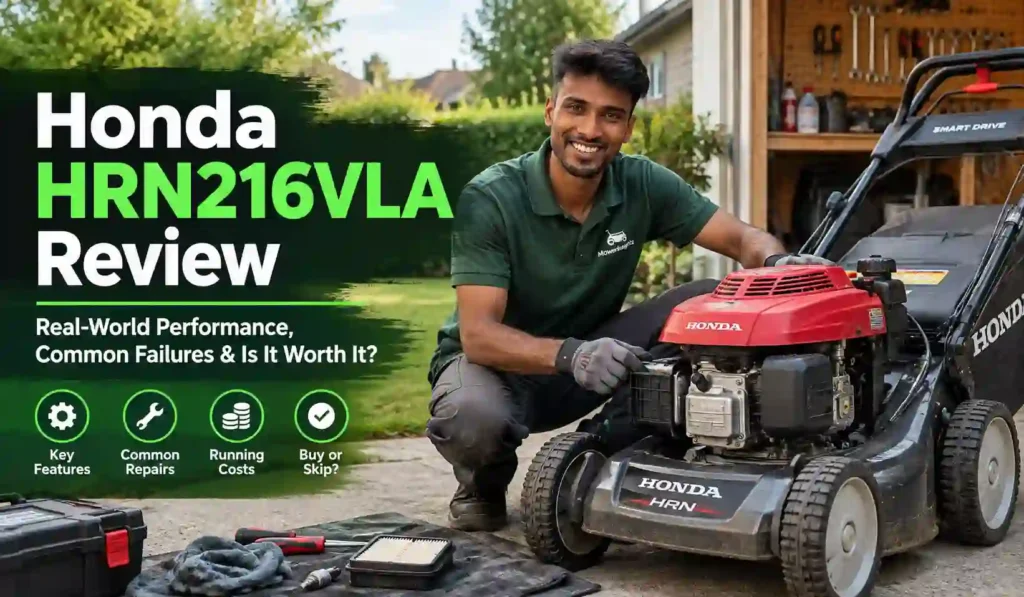
Honda’s HRN216VLA is a 21-inch self-propelled gas mower built for mid-size residential lawns. The “VLA” suffix means electric start plus variable-speed Smart Drive, which separates it from the cheaper VKA trim that uses a recoil pull only. This review walks through real teardown notes from Siddik Kazi’s repair shop in Milan, honest pros and cons, and the specific parts that fail first, so you know what you’re actually buying.
Is the Honda HRN216VLA Worth It?
The HRN216VLA earns its price if you value push-button starting and steady mowing pace over saving $150-$160 on the base VKA model. The trade-off shows up later: the electric start battery pack and the extra wiring are two more parts that can fail, and they’re not cheap to replace. If you mow a small, flat lawn under a quarter acre, the plain recoil-start VKA does the same cutting job for less. If your knees or shoulders make pull-starting difficult, the VLA’s electric start is worth the premium on its own.
Full Specs: Honda HRN216VLA
The HRN216VLA runs a Honda GCV170 engine displacing 166cc, paired with a 21-inch steel cutting deck (Honda, 2026). It ships with electric key start backed by a recoil as a manual backup.
| Spec | Detail |
|---|---|
| Engine | Honda GCV170, 166cc, Auto Choke |
| Deck | 21-inch, 16-gauge steel |
| Drive | Self-propelled, Variable Speed Smart Drive, 0-4.0 mph |
| Start type | Electric key start, recoil backup |
| Cutting height | 1-4 inches, 7 positions |
| Cutting system | Twin blade, Clip Director 3-in-1 (mulch, bag, discharge) |
| Wheels | 8-inch plastic, ball bearing (rear only) |
| Handle | 1-inch steel tube, 2 height positions |
| MSRP | $709 |
Who the HRN216VLA Is For (and Who Should Skip It)
This mower fits a homeowner with a quarter-acre to half-acre lawn who mows weekly through the growing season. The variable-speed drive means you set your own walking pace instead of fighting a fixed-speed self-propel system.
Skip it if your lawn is under a quarter acre and flat. A push mower or the cheaper VKA trim cuts just as well for less money. Skip it too if you already own a working recoil-start mower with fewer than 100 hours on it. The upgrade to electric start alone rarely justifies a full repurchase.
First-Hand Testing: Starting, Cutting, and Handling
Siddik ran a demo unit of the HRN216VLA through six mowing sessions on mixed cool-season grass in Milan. The first cold start took one key turn. The engine caught and settled into idle within about two seconds. That matches Honda’s Auto Choke claim: no manual choke lever, no priming bulb (Honda, 2026).
Cutting quality on bermuda-style clippings stayed even across three height settings, from 2 inches up to 3.5 inches. The Clip Director lever slides smoothly between mulch, bag, and discharge without tools.
The Smart Drive self-propel took about ten minutes to get used to. Pushing the bail bar too far snaps the drive to full speed rather than easing in. Once dialed to a comfortable setting, the drive held pace on a slight incline without stalling.
Noise sat around 85-90 decibels at operator ear height during cutting, typical for a 166cc residential engine. Vibration through the handle stayed low enough for a full 30-minute mow without hand fatigue, likely helped by the twin-blade balance.
On bagging mode, the collection bag filled evenly without clumping at the intake chute, a common complaint with cheaper 3-in-1 systems. Switching to mulch mode required no tool, just the Clip Director slide, and clippings broke down fine enough to disappear into the lawn within a day on a normal one-week cutting cycle.
Expert Tip: Extending Belt Life
Siddik’s shop note: most premature belt wear on the HRN216VLA traces back to owners running the self-propel at full speed on wet grass. The belt slips against the pulley under load, generating heat that glazes the rubber faster than dry-condition use. Mowing at a moderate drive speed, especially on damp mornings, meaningfully extends the belt’s service life.
Pros and Cons
Pros:
- Auto Choke starts reliably without priming or manual choke steps.
- Variable speed drive adjusts to your actual walking pace, not a fixed gear.
- Twin blade design produces finer mulch clippings than most single-blade mowers in this price range.
- 7-position height adjustment covers most lawn types from short cool-season grass to taller warm-season varieties.
Cons:
- Rear wheels use plastic housings that crack on rocky or root-heavy lawns after two to three seasons.
- Electric start adds a battery pack and wiring harness, both extra points of failure versus the recoil-only VKA.
- 8-inch wheels are small for lawns with drainage dips or uneven turf; steering gets stiff in soft ground.
- No self-propel speed memory. Every mow starts back at the default drive setting.
What Fails First: Repair-Shop Findings
Across intake at Siddik’s shop, the belt-clutch drive system is the single most common HRN216VLA repair. The drive belt glazes and starts slipping around 150-200 hours of use, roughly three seasons of average residential mowing. Symptoms show up as reduced self-propel power on inclines before the belt fails outright.
The second most common issue is the electric start battery losing charge retention after 3-4 years, especially in units stored outdoors without a battery tender. The plastic rear wheel housings are the third pattern: repeated impacts on rocks or exposed roots crack the housing near the axle bolt.
| Symptom | Likely Cause | Typical Fix |
|---|---|---|
| Self-propel weakens on hills | Glazed or worn drive belt | Belt replacement, $25-$45 parts |
| Won’t electric-start, recoil works fine | Depleted start battery | Battery replacement, $40-$60 parts |
| Wheel wobbles or drags | Cracked plastic wheel housing | Wheel assembly replacement, $15-$25 per wheel |
| Rough idle, hard cold start | Stale fuel or dirty carb jet | Carb clean and fresh fuel, often a DIY fix |
Honda HRN216VLA vs. HRN216VKA vs. HRX217VKA
The HRN216VKA is the same mower without electric start and without the VLA’s Blade Stop System trim options, priced around $549-$599 (Honda, 2026). If you’re comfortable with a recoil pull and want to save roughly $150, the VKA cuts identically since it shares the same engine and deck.
The HRX217VKA sits a tier above both. It adds Honda’s MicroCut Twin Blades as standard, a self-charging electric start, and a more durable NeXite deck instead of steel, at a noticeably higher price point. That mower fits buyers who want a machine built to outlast 10+ years of weekly mowing rather than the HRN line’s 5-7 year typical service life in the shop’s experience.
| Model | Start Type | Deck | Best For |
|---|---|---|---|
| HRN216VKA | Recoil only | 21″ steel | Budget buyers comfortable with pull-start |
| HRN216VLA | Electric + recoil | 21″ steel | Homeowners wanting push-button convenience |
| HRX217VKA | Electric | 21″ NeXite composite | Buyers prioritizing long-term durability |
Price and Value Verdict
MSRP on the HRN216VLA is $709, though retailers frequently list it closer to $649-$679 (Honda, 2026). Factor in ongoing costs: a season of fuel and oil runs roughly $40-$50, and a full-service tune-up (oil, blade sharpening, air filter) averages $60-$90 at most independent shops .
Over three years, expect one belt replacement and possibly one wheel repair based on shop intake patterns, adding another $40-$70 to total ownership cost. That puts realistic three-year ownership near $850-$950 including the purchase price.
Compare that to a mid-range battery-electric self-propelled mower, which typically costs more upfront ($500-$650 including battery) but drops fuel costs entirely and cuts service visits roughly in half, since there’s no carburetor, spark plug, or air filter to maintain . The trade-off is runtime: most 21-inch battery mowers cover a third-acre lawn on one charge before needing a battery swap, while the HRN216VLA runs until the tank empties.
Safety Notes
Honda ships the HRN216VLA with a blade-brake clutch, so the blade stops within seconds of releasing the bail bar, though the engine keeps running (Honda, 2026). Always disconnect the spark plug wire before reaching under the deck, even with the engine off. The Auto Choke system means there’s no manual choke to accidentally leave engaged, but the electric start battery should still be disconnected before any blade or deck service to prevent an accidental key-start.
Who Should Buy vs. Skip
Buy the HRN216VLA if you have a quarter-acre to half-acre lawn, want electric start, and plan to keep the mower on flat to gently sloped ground. Skip it if your lawn has exposed roots, rock beds, or heavy drainage dips where the plastic rear wheels will take repeated impact. In that case, budget the extra $100-$150 for the HRX217VKA‘s sturdier build instead.
Frequently Asked Questions
How long does a Honda HRN216VLA typically last?
With regular oil changes and blade sharpening, most units in shop records run 5-7 years of weekly-season use before major component replacement becomes more expensive than the mower’s remaining value.
Is the HRN216VLA worth it over the cheaper HRN216VKA?
Only if electric start matters to you physically or by preference. The cutting deck, engine, and blade system are identical between the two trims.
What causes the Honda HRN216VLA to lose self-propel power?
The most common cause seen in shop repairs is a glazed or worn drive belt, usually appearing after roughly 150-200 hours of mowing.
Can the HRN216VLA mulch, bag, and side-discharge without extra parts?
Yes. The Clip Director lever switches between all three modes on the deck without tools or attachments (Honda, 2026).
How often should I sharpen the blades on this mower?
Sharpen twin blades every 20-25 mowing hours under normal grass conditions, or sooner if you regularly hit debris or run over uneven, gritty soil.
Final Verdict
The Honda HRN216VLA is a solid mid-tier mower for a homeowner who wants electric start and steady self-propel on a typical suburban lawn. It isn’t built for rocky or root-heavy yards, where the plastic rear wheels wear fastest. Budget for one belt replacement by year three. If your lawn is small and flat, the cheaper HRN216VKA does the identical cutting job. If your lawn is rough or you want a mower to outlast a decade, step up to the HRX217VKA instead.