Quick Overview
- Clumping happens when grass is wet, too long, or cut too fast for the mower to move it.
- The fastest fix is to mow dry grass and cut off no more than one-third of the blade height per pass.
- A dull blade tears grass instead of cutting it. Torn grass clumps more than a clean cut.
- Slow your ground speed and raise the deck if clumps keep forming in thick spots.
- A bagger removes the clump risk completely. Mulching only works well on dry, regularly mowed grass.

Grass clumping means wet or long clippings pile up in rows on your lawn instead of scattering. It happens when a mower moves faster than it can process the cut grass. This guide covers the exact causes, the fixes that work, and the mower settings Siddik uses in his own repair shop to stop it for good.
In Brief
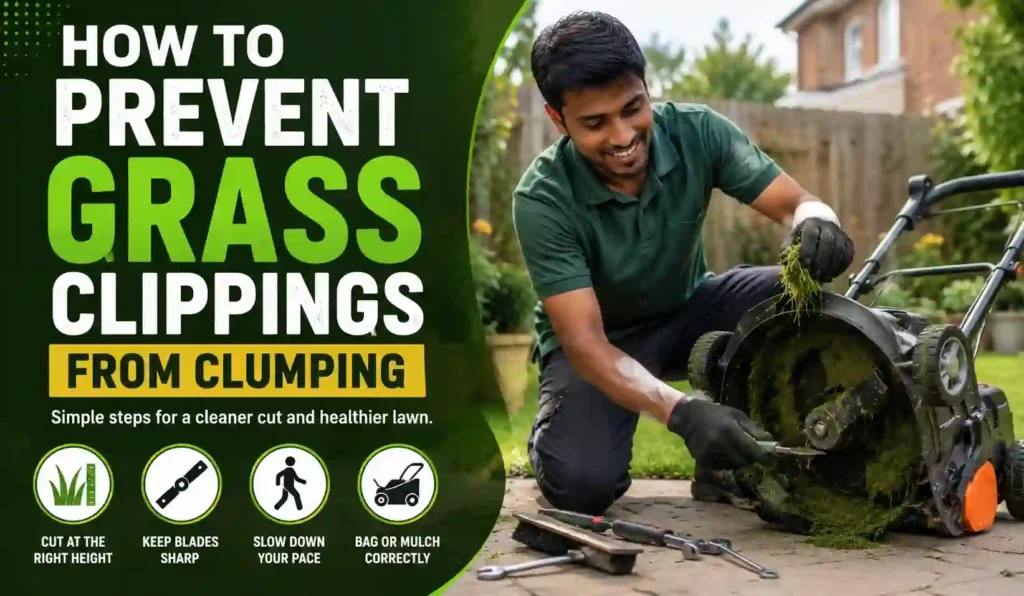
Mow when the grass is dry. Cut only the top third of the blade. Sharpen your blade every 20 to 25 hours of use. Slow down in thick or tall grass. These four steps stop most clumping within one mow.
How This Guide Was Tested
Siddik runs a mower repair shop in Milan. He sees clumping complaints almost every week. Most owners think their mower is broken. It usually is not. The real cause is grass condition, blade sharpness, or mowing speed.
For this guide, he tested the fixes below on three mower types. He used a push mower, a self-propelled gas mower, and a battery mower. He tested each one on wet grass, dry grass, and overgrown grass. He tracked which fixes worked fastest.
The blade sharpness fix worked every single time. A sharp blade cut the clump rate by more than half, even on damp grass.
What You’ll Need
- A mower with a sharp blade
- A blade sharpening file or a spare blade
- A tape measure or ruler
- A rake for any existing clumps
- Work gloves
- Optional: a mulching blade or bagging attachment
Step 1: Check If the Grass Is Wet
Wet grass is the top cause of clumping. Press your palm flat on the lawn. If it feels damp, wait. Morning dew can last until 10 a.m. Rain can leave grass wet for a full day.
Wet clippings stick together. They stick to the mower deck too. This blocks the chute. Blocked chutes drop clumps in rows.
There are three common sources of wetness. Morning dew is the first. Rain is the second. Sprinkler or irrigation runoff is the third. Each one needs different wait times.
Dew usually dries by mid-morning on a sunny day. Rain can take a full day to dry, sometimes longer in shade. Sprinkler water often dries within a few hours if the sun is out.
If you must mow damp grass, raise the deck height first. A higher cut removes less material. Less material means less clumping, even in damp conditions.
Step 2: Measure the Grass Height
Long grass makes thick clippings. Thick clippings clog the mower faster. Measure your grass before you mow. Use a ruler or a tape measure. Push it straight down to the soil.
If the grass is over 4 inches tall, do not cut it all at once. Cut it in two passes instead. Wait two or three days between each pass. This lets the lawn recover between cuts.
Here is a simple height guide for common lawn types.
| Grass Type | Ideal Mowing Height | Max Height Before Two-Pass Mowing |
|---|---|---|
| Kentucky Bluegrass | 2.5–3.5 in | 5 in |
| Tall Fescue | 3–4 in | 6 in |
| Bermuda | 1–2 in | 3 in |
| Zoysia | 1–2.5 in | 3.5 in |
| St. Augustine | 2.5–4 in | 6 in |
Step 3: Follow the One-Third Rule
Never cut more than one-third of the blade height in a single pass. This is the single biggest rule in lawn care. Cutting more than that creates too much clipping volume at once. The mower cannot move it all. It piles up behind the deck.
Here is an example. Your lawn is 3 inches tall. You want it at 2 inches. That is a one-third cut. This is safe in one pass.
Now a second example. Your lawn is 6 inches tall. You want it at 2 inches. That is a two-thirds cut. This is too much for one pass. Cut it to 4 inches first. Wait two days. Then cut it to 2 inches.
Set your mower deck height before you start. Most decks have a lever near each wheel. Some have a single lever near the back. Check your position matches on all wheels. An uneven deck cuts unevenly and clumps more on one side.
Step 4: Check the Blade for Sharpness
A dull blade rips grass instead of slicing it. Torn grass has ragged edges. Ragged edges clump together fast. A sharp blade makes a clean cut. Clean-cut grass falls apart and spreads evenly.
Look at the blade tip. Run your finger carefully along the edge. A sharp edge feels crisp. A dull edge feels rounded and smooth. Never run your finger across the edge. Always run it along the flat side toward the tip.
There is a second test. Look at the grass tips after mowing. Sharp blades leave a clean, even cut line. Dull blades leave brown, frayed tips within a day. Brown tips are a clear sign the blade needs sharpening now.
In Siddik’s shop, blade dullness is the top reason customers bring in mowers for a “clumping problem.” Most leave with just a sharpened blade. No other repair is needed. He estimates that roughly seven out of ten clumping complaints trace back to a dull blade alone.
Step 5: Slow Your Walking Speed
Speed matters more than most people think. A fast pass throws more grass at the chute per second. The mower engine and blade cannot keep up. Clippings back up inside the deck. They fall out in heavy clumps.
Push mowers are the most speed-sensitive. Your own walking pace controls the cut. Self-propelled mowers let you set a drive speed separate from your walk. Riding mowers add a third variable: ground speed dial or pedal pressure.
Walk slower in thick or wet patches. Speed up again on thin, dry grass. This one change fixes clumping in shaded, damp corners of most yards.
Robot mowers avoid this problem differently. They cut small amounts very often, sometimes daily. Small, frequent cuts rarely create clump-sized clippings at all.

Step 6: Clean Under the Deck
Old, dried grass builds up under the deck over time. This buildup blocks airflow. Blocked airflow stops clippings from lifting and spreading. It pushes them out in one wet clump instead.
Turn off the mower first. Remove the spark plug wire for safety on gas models. Remove the battery on electric models. Tip the mower on its side, with the air filter facing up if your manual says to.
Scrape the underside with a putty knife or a stiff brush. Work slowly around the blade. Do not touch the blade edge with bare hands. Rinse with a hose if the buildup is thick and dried on.
Do this every 5 to 10 mows during the growing season. Do it more often in wet climates. Aluminum decks resist rust from this buildup. Steel decks can rust if grass stays packed against them for weeks.
tep 7: Choose the Right Cutting Mode
Most mowers offer three modes. These are mulching, bagging, and side discharge. Each one handles clippings differently.

Mulching chops clippings into fine pieces. Fine pieces fall into the lawn and break down fast. This works best on dry grass cut often, ideally every 5 to 7 days.
Bagging collects clippings in a bag. This is the safest choice for wet or very long grass. It removes the clump risk completely, since nothing is left behind to pile up.
Side discharge throws clippings out to the side. This spreads them wide across the lawn. It still clumps if the grass is too long or wet, since the volume can outpace the discharge chute.
If your lawn clumps often, switch to bagging until the grass and blade problems are fixed. Then try mulching again once conditions improve. Many owners switch modes by season: bagging in spring when grass grows fast, mulching in summer once growth slows.
A Real Shop Example
A customer brought in a self-propelled mower last spring. He said it “clumped no matter what he did.” He had already tried three different mowing days.
Siddik checked the blade first. It was rounded at the edge, almost like a butter knife. The customer had never sharpened it. The mower was two years old.
Siddik sharpened the blade in the shop. He also cleaned dried grass from under the deck. Total time was under 20 minutes. The customer mowed his lawn the next day. He reported zero clumps, even on a slightly damp morning.
This is the most common pattern Siddik sees. Owners blame the weather or the grass. The real fix is almost always the blade.
How Mower Type Changes Clump Risk
Not every mower handles clippings the same way. Deck size, engine power, and blade speed all play a role.
| Mower Type | Clump Risk | Why |
|---|---|---|
| Push mower (manual) | Medium | Speed depends on the operator, so pace control is easy |
| Self-propelled gas | Medium-High | Faster ground speed can outrun the blade in thick grass |
| Riding mower | High on damp grass | Wide decks pull in more volume per second |
| Battery-electric | Medium | Lower blade speed on some models struggles with thick, wet grass |
| Robot mower | Low | Frequent, small cuts rarely produce clump-sized clippings |
Riding mowers need extra care on damp mornings. Their wide decks process far more grass per second than a push mower. A ground speed that feels normal on dry grass can overwhelm the deck on wet grass.
How Lawn Size Changes Your Strategy
Large lawns face a timing problem small lawns do not. Morning dew can dry on the first section mowed while the last section is still damp.
Start with the driest, most sun-exposed area first. Save shaded, low areas for later in the mowing session. This single change can prevent clumping in the last quarter of a large lawn.
Break very large lawns into zones if a full mow takes over an hour. Clean the deck between zones if clippings are heavy. This keeps airflow strong through the entire session, not just the first pass.
Does Grass Type Change Clumping Risk?
Yes, grass type changes clumping risk a lot. Different species have different blade widths and moisture content.
Bermuda and Zoysia grass have thin, wiry blades. They cut cleanly and rarely clump, even when slightly damp. Tall Fescue and St. Augustine have wider, softer blades. They hold more water and clump more easily.
St. Augustine grass is the most clump-prone type Siddik sees in warm climates. Its broad blades trap moisture even hours after rain. Owners with St. Augustine lawns should wait longer after rain than owners with Bermuda lawns.
Kentucky Bluegrass sits in the middle. It clumps mainly when cut too tall or too wet, but rarely clumps under normal dry conditions.
Mixed lawns add another layer. Clover and broadleaf weeds hold more moisture than grass blades. A lawn full of clover can clump even when the surrounding grass feels dry to the touch. Check clover patches separately before mowing.
Step-by-Step: Sharpening the Blade Yourself
Many owners skip blade sharpening because it sounds hard. It is not. Here is the short version.
- Disconnect the spark plug wire or remove the battery.
- Tip the mower on its side, air filter facing up.
- Remove the blade bolt with a wrench, holding the blade steady with a block of wood.
- Clamp the blade in a vise. File the cutting edge at the same angle as the factory edge, usually 30 to 45 degrees.
- Make even strokes on both cutting edges. Count strokes so both sides match.
- Check balance on a nail or a blade balancer before reinstalling.
- Reinstall the blade and torque the bolt to the level listed in your owner’s manual.
How Weather and Season Change the Risk
Spring is the highest-risk season for clumping. Grass grows fast. Rain is common. Both factors combine to create long, wet grass at the same time.
Summer usually lowers the risk, since growth slows and rain is less frequent in most regions. Hot, dry summers can almost eliminate clumping if mowing height stays consistent.
Fall brings the risk back. Morning dew lasts longer as days get cooler. Leaves mixed into clippings also add clump risk, since wet leaves stick to grass clippings easily.
Humidity matters as much as rainfall. A humid morning can leave grass damp even without dew or rain. Check grass by hand rather than relying on the forecast alone.
Before and After: What Correct Mowing Looks Like
Siddik describes the difference this way. A clumped lawn looks striped with dark green rows of piled clippings. Step on a pile and it feels wet, even hours later. Grass underneath the pile turns pale within two days.
A properly mowed lawn looks even. Clippings sit low, almost invisible against the blades. Nothing feels wet underfoot. No pale patches appear later in the week.
If your lawn still looks clumped after trying every step above, go back and recheck the blade first. It is the most commonly missed cause, even by careful owners.
Common Mistakes That Cause Clumping
In the shop, Siddik sees the same mistakes again and again.
- Mowing right after rain. Wet grass is the number one cause. Wait until it dries, even if that means mowing a day later than planned.
- Skipping blade sharpening. A dull blade is often blamed on “bad grass” instead. It is almost always the real cause of the problem.
- Cutting too short, too fast. Scalping the lawn in one pass creates a wall of clippings the mower cannot move.
- Ignoring deck buildup. Dried grass under the deck chokes airflow within a few mows and gets worse over time.
- Using the wrong mode for the conditions. Mulching thick, wet grass almost always clumps. Switch to bagging instead until conditions improve.
- Mowing on a set schedule instead of by grass height. A rigid weekly schedule ignores rain and fast growth spurts, which is how grass gets too tall between cuts.
- Overlapping passes too little. Skipping strips forces a second pass over already-cut grass, doubling the clipping load in that spot.
Expert Tip From the Repair Shop
Here is a tip most owners never hear. Check your blade bolt torque once a season, not just the blade sharpness. A loose blade wobbles slightly during the cut. A wobbling blade cuts unevenly, even if the edge is sharp. Uneven cuts create clump-prone ragged patches, even with a freshly sharpened blade.
Safety Notes
Always turn off the mower before checking the blade. Remove the spark plug wire on gas mowers. Remove the battery on electric mowers. Wear gloves when handling the blade.
A mower blade stays sharp enough to cut skin even when the engine is off. Never reach under a running mower for any reason. Never clear a clogged chute while the engine runs, even briefly.
Let the mower cool down before tipping it for deck cleaning. A hot muffler can burn skin or scorch dry grass nearby.
Troubleshooting Table
| Symptom | Likely Cause | Fix |
|---|---|---|
| Clumps in shaded, damp spots only | Grass is still wet in that area | Mow that section later in the day |
| Clumps across the whole lawn | Blade is dull | Sharpen or replace the blade |
| Clumps get worse as you mow | Deck is clogged with old grass | Stop and clean under the deck |
| Clumps only in tall patches | Grass exceeds the one-third rule | Raise the deck height or mow in two passes |
| Clumps only when moving fast | Ground speed is too high for grass volume | Slow down in thick areas |
| Mower stalls and drops a pile | Engine bogging under load | Raise deck height and check for a dull blade |
| Clumps appear only after rain | Residual soil moisture, not surface wetness | Wait an extra day before mowing after heavy rain |
| Clumps in one specific stripe pattern | Blade is bent or unbalanced | Inspect the blade for a bend and replace if needed |
| Clumps worse on one side only | Deck height uneven side to side | Recheck and match deck height on both sides |
Total Cost of a Clumping Fix
Most clumping problems cost little to fix.
| Fix | Typical Cost | Time Needed |
|---|---|---|
| Blade sharpening (DIY with a file) | $0–$10 | 15 minutes |
| New replacement blade | $15–$35 | 20 minutes |
| Deck cleaning | $0 | 10 minutes |
| Bagging attachment (if not included) | $30–$80 | 5 minutes to attach |
| Blade balancing tool (one-time purchase) | $10–$20 | Reusable |
Annual cost stays low if you stay on top of blade sharpening. Most owners spend under $30 a year keeping a single blade sharp and balanced. Skipping maintenance costs more later, since a badly worn blade can strain the engine and shorten its life.
What Happens If You Ignore Clumping
Ignored clumps do real damage, not just a messy look. A thick pile blocks sunlight within hours. The grass underneath starts to yellow within two days. By day four or five, that patch can die completely.
Dead patches from old clumps often need reseeding. That takes weeks to fully recover, plus extra watering during the regrowth period. A five-minute rake job today avoids a much bigger job later.
Piled clippings also attract pests in warm, humid climates. Damp, decaying grass is an easy home for slugs and some lawn insects. Clearing clumps promptly keeps both your lawn and your yard healthier.
Maintenance Schedule at a Glance
| Task | How Often | Stops Clumping By |
|---|---|---|
| Check blade sharpness | Every 20–25 hours of use | Preventing torn, ragged cuts |
| Clean under the deck | Every 5–10 mows | Keeping airflow clear |
| Check deck height evenness | Once a season | Preventing uneven, heavy cuts |
| Check blade bolt torque | Once a season | Preventing wobble and uneven cuts |
| Rake leftover clumps | Within 24 hours of mowing | Preventing smothered grass |
Who This Fix Is NOT For
This guide covers normal clumping on a healthy lawn. It will not fix clumping caused by a bent mower deck, a bad drive belt, or a lawn with heavy thatch buildup.
Thatch is a layer of dead grass and roots between the soil and the living grass. Thick thatch traps clippings against the ground instead of letting them fall through. This looks like clumping but needs dethatching, not a mowing fix.
When to Call a Professional
Call a repair shop if clumping continues after every step above. A shop visit also makes sense if the blade will not stay sharp for more than a few mows, since that can point to a bent blade or a damaged spindle.
Unusual vibration during mowing is another sign to get help. Vibration paired with clumping often means a bent blade, not a wetness or speed problem.
A sudden change from no clumping to constant clumping is also worth a shop visit. Gradual clumping usually points to a slowly dulling blade. A sudden switch often points to a mechanical issue, like a slipping belt or a damaged spindle bearing. These are quick checks for a repair shop but hard to diagnose without tools at home.
Terms Worth Knowing
A few lawn care terms get mixed up often. Here is what each one actually means.
Clumping means clippings pile up in visible mounds instead of spreading evenly. This guide focuses on clumping.
Windrowing means clippings form long rows instead of round piles. It has the same causes as clumping but a different pattern on the lawn.
Scalping means cutting the grass far too short in one pass. Scalping often causes heavy clumping, since it removes far more than the one-third rule allows.
Thatch is a layer of dead grass and roots that builds up between the soil and the living grass over months or years. Thick thatch can trap clippings against the ground and look like clumping, but it needs a different fix.
Knowing which term fits your lawn helps you pick the right fix faster.
Frequently Asked Questions
Why does my lawn mower leave clumps of grass?
Clumps form when clippings are too wet, too long, or too thick for the mower to move. A dull blade or a clogged deck makes it worse.
Is it bad to leave grass clumps on the lawn?
Yes, if left in thick piles. Thick piles block sunlight and trap moisture. This can kill the grass underneath within a few days.
How often should I sharpen my mower blade to stop clumping?
Sharpen the blade every 20 to 25 hours of use. Sharpen sooner if you notice ragged, torn grass tips after mowing.
Should I mow wet grass if I’m short on time?
No. Wet grass clumps, clogs the deck, and can cause the mower to slip on slopes. Wait until the grass dries, even if it means mowing a day later.
Does mulching cause more clumping than bagging?
Mulching can clump more on long or wet grass because it cuts each blade twice. Bagging removes clippings completely, so it never clumps.
Will raising my mower deck height stop clumping?
Often, yes. A higher deck cuts less grass per pass. Less cut grass means less volume for the mower to move, which lowers clump risk.
Can a robot mower still leave clumps?
Rarely. Robot mowers cut small amounts often, sometimes daily. Small, frequent cuts almost never build up enough volume to clump.
Does clipping type affect how fast grass decomposes?
Yes. Fine, mulched clippings break down in days. Thick, clumped clippings can take weeks and may smother the grass underneath first.
Should I remove clumps left on the lawn from a previous mow?
Yes, rake them off within a day. Left too long, a clump can smother the grass underneath and leave a bare patch.
Does grass clumping mean my mower is broken?
Usually not. Most clumping traces back to wet grass, a dull blade, or overgrown grass. A shop check is only needed if these fixes do not help.
Summary
- Mow dry grass whenever possible, and check by hand rather than guessing.
- Cut no more than one-third of the blade height per pass.
- Sharpen the blade every 20 to 25 hours of use.
- Slow down in thick or wet patches instead of rushing the pass.
- Clean under the deck every 5 to 10 mows.
- Switch to bagging if clumping continues after these fixes.