Quick Overview
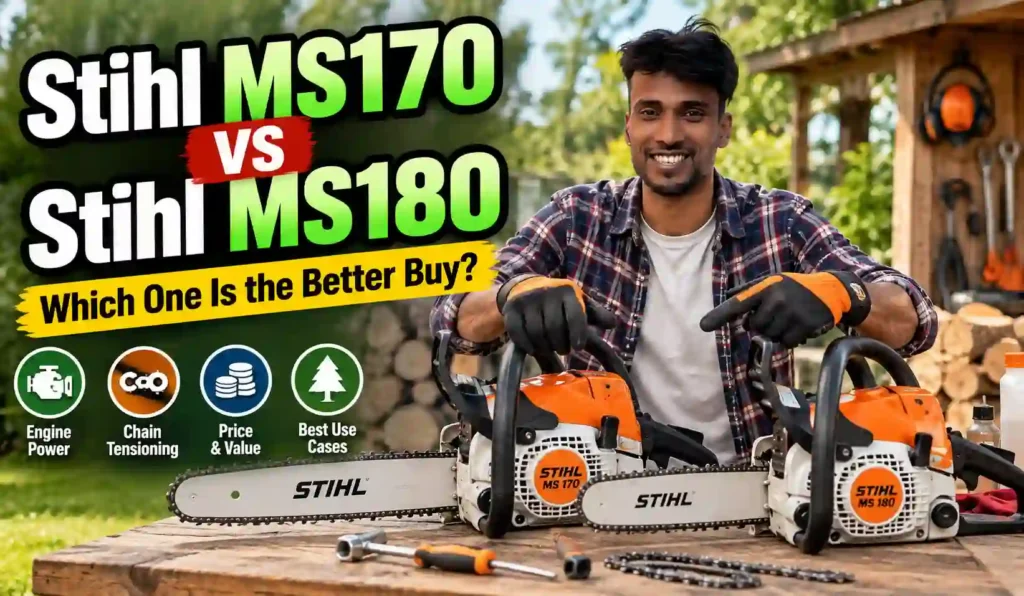
- Stihl MS170 vs MS180 comes down to one thing: the MS180 has a slightly larger engine and easier chain tensioning, for about $40 more.
- The MS170 costs around $199.99 and covers light yard work – trimming, small branches, occasional firewood.
- The MS180 costs around $239.99 and has more power in reserve for firewood cutting and thicker limbs.
- Both saws use the same 16-inch bar range, the same fuel and oil tank sizes, and weigh almost the same.
- For most homeowners doing occasional yard cleanup, the MS170 is the smarter buy. For anyone cutting firewood regularly, the MS180 earns its higher price.
What Is the Real Difference Between the MS170 and MS180?
Stihl MS170 vs MS180 is a close call because both saws share the same frame, the same bar range, and the same target buyer: a homeowner who needs a chainsaw a few times a year, not a logger.
The real gap is the engine. The MS170 runs a 30.1cc engine that puts out 1.2 kW (about 1.6 to 1.7 bhp). The MS180 runs a slightly larger 31.8cc engine at 1.5 kW (about 2.0 bhp). That difference sounds small on paper, but it shows up when the wood gets thicker or the chain has to work through a knot.
The MS180 also has a side-access chain tensioner, which most owners find faster to use than the MS170’s front lateral tensioner. Everything else – weight, fuel tank, oil tank, safety features – is nearly identical between the two.

Stihl MS170 vs MS180: Full Spec Comparison
| Spec | Stihl MS170 | Stihl MS180 |
|---|---|---|
| Displacement | 30.1cc | 31.8cc |
| Engine power | 1.2 kW (1.6-1.7 bhp) | 1.5 kW (2.0 bhp) |
| Powerhead weight | 8.6 lbs | 9.0 lbs |
| Guide bar length | 12 to 16 inches | 12 to 16 inches |
| Chain type | 3/8″ PMM3 Oilomatic | 3/8″ PMM3 Oilomatic (Rollomatic bar) |
| Fuel tank capacity | 8.5 oz | 8.5 oz |
| Chain oil capacity | 4.9 oz | 4.9 oz |
| Chain tensioner | Front lateral | Side-access, tool-free adjustment |
| Starting system | Standard recoil pull | Standard recoil pull (Easy2Start on C-BE variant) |
| Price | Around $199.99 | Around $239.99 |
Engine and Power
The MS180’s engine has more usable power, and that comes from both displacement and output.
The MS170’s 30.1cc engine works fine for branches under 6 inches thick and light trimming. Push it into a 12-inch log and you will feel it labor, especially with a dull chain. The MS180’s 31.8cc engine handles that same log with less strain, because the extra 0.3 kW gives the chain more torque to keep its speed under load.
Neither saw is built for daily firewood cutting at scale. Stihl rates both for occasional use, and both will overheat or wear out fast if you run them like a professional saw.
Best for: the MS170 suits trimming and cleanup. The MS180 suits anyone who cuts a cord of firewood or more per year.
Weight and Handling
Both saws weigh close enough that most people will not notice a difference holding them.
The MS170 weighs 8.6 lbs without bar, chain, or fuel. The MS180 weighs 9.0 lbs in the same condition. That 0.4-lb gap disappears once you add a full tank of gas and bar oil, which adds roughly 1 lb to either saw.
Both use the same anti-vibration handle system, so arm and hand fatigue during longer sessions feels similar between the two.
Best for: if raw weight is your only concern, the MS170 has a very slight edge, but it is not enough to decide on alone.
Bar Length and Cutting Capacity
Both saws share the exact same recommended bar range: 12 to 16 inches. Stihl ships most US units of both models with a 16-inch bar.
A 16-inch bar means a maximum cutting diameter close to 16 inches in a single pass, though 12 inches or less is the comfortable, safe working range for either saw’s engine. The MS180’s stronger engine handles a full 16-inch bar with less bogging on thicker cuts than the MS170 does at the same bar length.
Best for: if you plan to run the full 16-inch bar regularly on real wood, not just branches, the MS180’s extra power matches that bar size better.
Starting System and Ease of Use
The MS180’s side-access chain tensioner is the single biggest quality-of-life difference between these two saws.
On the MS170, adjusting chain tension means loosening the bar nuts and turning a screw on the front of the bar – workable, but slower and easier to get wrong for a first-time owner. The MS180 puts that adjustment on the side of the saw body, so you can retension the chain without removing the bar cover.
Both saws use a standard recoil pull start in their base gas configuration. Stihl also sells an MS180 C-BE variant with the Easy2Start system, which reduces the pull effort needed to start the engine – useful for anyone with limited grip strength.
Best for: first-time chainsaw owners will find the MS180 noticeably easier to live with day to day.
Fuel and Chain Oil Capacity
Both saws use identical tank sizes: an 8.5 oz fuel tank and a 4.9 oz chain oil tank. Runtime per tank is close between the two, though the MS180’s slightly thirstier engine burns through fuel a little faster under heavy load.
Neither tank size supports more than about 20 to 30 minutes of continuous cutting, which fits their occasional-use design.
Price and Value
The MS170 typically runs around $199.99, and the MS180 typically runs around $239.99 – roughly a $40 gap. Prices may vary by retailer and change over time.
That $40 buys a larger engine and the side-access tensioner. For a homeowner who uses the saw twice a year for storm cleanup, that $40 may not pay for itself. For someone who cuts firewood every fall, it is a reasonable upgrade cost spread over years of use.
Hands-On Performance Notes
I have serviced both models in my shop, and the wear patterns tell a consistent story. Owners bring in the MS170 most often for chain and bar issues from cutting wood that was too thick for the engine to handle cleanly – the chain dulls faster when the engine bogs down mid-cut. MS180 owners bring their saws in less for that specific issue, but the side-access tensioner does loosen with heavy use and needs periodic tightening.
Neither saw fails prematurely when used within its intended range. Most of the repair visits I see on both models come from running them past what a homeowner saw is built for, not from a manufacturing flaw.
Stihl MS170: Pros, Cons, and Rating
Rating: 7.8/10
| Category | Score |
|---|---|
| Power for cutting | 7.0/10 |
| Build quality | 8.0/10 |
| Ease of use | 7.5/10 |
| Value for price | 8.5/10 |
| Vibration and comfort | 8.0/10 |
What worked:
- Lower upfront cost makes it an easy entry point
- Light enough for shorter homeowners or first-time saw owners to control
- Handles branches and light cleanup without complaint
What didn’t:
- Engine bogs down on wood thicker than about 8 inches
- Chain tensioning takes longer than the MS180’s side-access system
Best for: homeowners who need a chainsaw a few times a year for trimming and storm cleanup, not firewood production.
Stihl MS180: Pros, Cons, and Rating
Rating: 8.1/10
| Category | Score |
|---|---|
| Power for cutting | 8.5/10 |
| Build quality | 8.0/10 |
| Ease of use | 8.0/10 |
| Value for price | 8.0/10 |
| Vibration and comfort | 8.0/10 |
What worked:
- Noticeably more torque through thicker branches and small logs
- Side-access tensioner saves real time during a cutting session
- Easy2Start variant available for easier pull-starting
What didn’t:
- Costs about $40 more than the MS170
- Still not built for daily, heavy-duty firewood cutting
Best for: homeowners who cut firewood seasonally or regularly deal with limbs over 8 inches thick.
Which One Should You Choose?
- Occasional yard cleanup, small branches: the MS170 covers this without paying for power you will not use.
- Seasonal firewood cutting: the MS180’s extra torque earns back its $40 price gap.
- First-time chainsaw owner: the MS180’s side-access tensioner makes routine maintenance less intimidating.
- Tight budget, light use only: the MS170 is the more sensible purchase.
- Storm cleanup after big limbs come down: the MS180 handles thicker wood with less strain on the engine.
Maintenance and Long-Term Cost
Both saws share nearly identical maintenance needs and parts costs, since they use the same chain pitch, the same oil system, and similar air filters.
Expect to sharpen or replace the chain every 10 to 15 hours of cutting on either saw, more often if you hit dirt or rocks. Bar oil and 2-stroke fuel mix are the two ongoing costs, and both saws use the same tank sizes, so consumable costs stay roughly equal between them.
The MS180’s side-access tensioner does add one more moving part that can wear over years of heavy use, though this is a minor, inexpensive fix when it happens.
Frequently Asked Questions
Is the Stihl MS180 worth $40 more than the MS170?
Yes, if you cut firewood regularly or deal with branches over 8 inches thick. For light trimming and occasional cleanup, the MS170 does the job for less.
Can the MS170 handle firewood cutting?
It can cut firewood, but the smaller engine works harder and dulls the chain faster on thicker rounds. It is better suited to branches and light cleanup.
Do the MS170 and MS180 use the same bar and chain?
Yes. Both use a 3/8″ PMM3 Oilomatic chain and support the same 12 to 16-inch bar range, so parts are interchangeable between them.
Which saw is easier for a beginner to use?
The MS180, mainly because of its side-access chain tensioner, which is faster and less fiddly than the MS170’s front tensioning screw.
How long does a tank of fuel last on either saw?
Both hold 8.5 oz of fuel, giving roughly 20 to 30 minutes of continuous cutting, depending on wood density and how hard the engine works.
Is there a cheaper alternative to both saws?
Stihl’s homeowner line does not go below the MS170 in gas models. Battery-powered options exist at similar price points but trade runtime for lower noise and no mixed fuel.
Final Verdict
The Stihl MS170 vs MS180 choice comes down to how much wood you actually cut. The MS170 wins on price and suits anyone doing light branch work and yard cleanup a few times a year. The MS180 wins on power and ease of use, and its side-access tensioner alone makes it worth the extra $40 for a first-time owner. If you are unsure which camp you fall into, the MS180 has enough headroom to handle both light and moderate cutting without feeling underpowered.
Why Trust This Guide
I run a lawn mower and small-engine repair shop in Milan, Italy, and chainsaws come through that same shop regularly for chain, bar, and engine work. This comparison is built from that hands-on repair experience alongside the manufacturer’s published specifications for both models. Pricing reflects current US retail listings at the time of writing and may shift over time.