Quick Overview
- The Toro Recycler 21352 costs less and comes with a rear bag included. The Toro Recycler 20340 costs more and folds upright for storage.
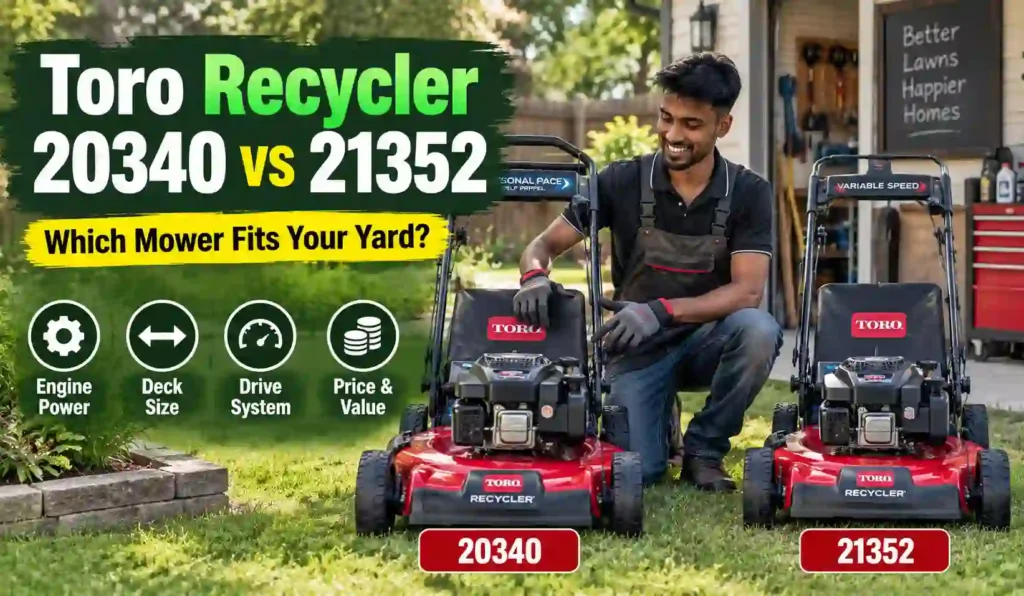
- The 20340 has a 22-inch deck and a 163cc Briggs & Stratton engine. The 21352 has a 21-inch deck and a 140cc engine.
- The 20340 uses Personal Pace. It senses your walking speed and adjusts on its own. The 21352 uses a manual variable-speed lever.
- Pick the 20340 for a bigger yard and tight garage space. Pick the 21352 for a tighter budget and a simpler drive system.
- Both mowers use a steel deck. Neither one ever needs an oil change for the life of the engine.
Toro Recycler 20340 vs 21352 at a Glance
Both mowers come from Toro’s Recycler line. Both use a Briggs & Stratton engine with rear-wheel drive. The similarities end at the frame.
The 20340 is the bigger, pricier mower. It has SmartStow. That feature lets it stand upright against a wall. The 21352 is the smaller, cheaper mower. It skips SmartStow but includes a rear bag in the box.
I run a mower repair shop in Milan. I see both mower families come through for tune-ups and repairs. The mechanical differences between them matter more than the spec sheet shows.
Which One Should You Buy?
Buy the 20340 if you have a quarter-acre lawn or bigger and tight garage space. The 22-inch deck cuts a wider path per pass. SmartStow saves floor space.
Buy the 21352 if your yard is smaller or your budget is tighter. It costs about $50 to $80 less and comes with a bag included, which the 20340 often sells without.
MowerInsights Rating: 20340 vs 21352
| Category | Toro 20340 | Toro 21352 |
|---|---|---|
| Cutting Performance | 8.5/10 | 8/10 |
| Build Quality | 8/10 | 8/10 |
| Ease of Use | 9/10 | 7.5/10 |
| Value for Price | 7.5/10 | 8.5/10 |
| Durability (shop data) | 8/10 | 8/10 |
| Overall | 8.2/10 | 8/10 |
Deck Size and Cutting Width
The 20340 has a 22-inch deck. The 21352 has a 21-inch deck. That single inch adds up over a full mow.
On a quarter-acre lawn, the 22-inch deck needs roughly 5% fewer passes. On a half-acre lawn, that gap becomes a real time save on a hot day.
Both decks use 14-gauge steel. Steel resists cracking better than plastic decks. It also rusts if grass clippings sit wet against it after mowing. I tell every customer the same thing: knock the deck clean after wet cuts, gas or battery, steel or aluminum.
The 21352’s smaller deck is easier to maneuver around trees, beds, and fence lines. If your yard has tight corners, the narrower deck wins on control even though it loses on raw coverage.
Engine and Power
The 20340 runs a 163cc Briggs & Stratton 675EXi engine rated at 7.25 ft-lb of gross torque. The 21352 runs a 140cc Briggs & Stratton engine rated at 6.75 ft-lb.
That half-pound of torque difference matters most in thick or tall grass. The 20340 bogs down less when you skip a week of mowing. The 21352 handles normal weekly cuts fine but struggles more in overgrown patches.
Neither engine needs an oil change for its service life. Both ask you to just top off the oil level and check it each season. This cuts a common repair-shop visit type almost entirely: the burnt-oil smell from a forgotten oil change.
Both engines start with a recoil pull cord. Neither model offers an electric-start option at these price points. If cold starts are a pain point for you, that’s a shared limitation, not a difference between the two.
Self-Propel Drive: Personal Pace vs Standard Variable Speed
This is the biggest real-world difference between these two mowers.
The 20340 uses Personal Pace. A sensor sees your walking pace and adjusts the wheel speed on its own. You push the handle bar forward, and the drive speeds up. You ease back, and it slows down. There is no lever to set.
The 21352 uses a standard variable-speed lever. You pick a speed setting and the mower holds it until you change it. This is the same drive system found on most mid-range self-propelled mowers.
Personal Pace feels more natural once you learn it. New owners sometimes fight the handle bar for the first few cuts before the motion clicks. The standard lever has no learning curve, but it means one fixed speed even as you slow down at corners or speed up on a straightaway.
Shop note: Personal Pace mowers bring in more drive-cable and transmission-adjustment tickets at my shop than lever-drive models. The sensing mechanism has more moving parts than a simple cable-and-lever setup. It is not a fragile system. It is simply a more complex one, and more complexity means more parts that can eventually need attention.
Storage: SmartStow vs Standard Fold-Down
The 20340 has SmartStow. The handle folds and the whole mower stands up on its rear wheels. Toro states this cuts the storage footprint by up to 70% compared to a mower stored flat.
The 21352 uses a standard folding handle. It stores flat, taking up the same floor space as most walk-behind mowers in this class.
SmartStow matters most for anyone in a small garage, a shed, or an apartment with limited storage. Standing the mower upright means no oil or fuel leaks while it’s stored vertically, according to Toro’s design spec.
I’ve serviced SmartStow mowers with clogged washout ports from being stood up before the deck fully drained. Let the deck drip dry for a few minutes after washing, before folding it upright. That one habit prevents most of the storage-related tickets I see on this model.
Discharge, Mulching, and Bagging
The 21352 ships with three cutting modes built in: mulch, side discharge, and rear bag, with the bag included in the box.
The 20340 comes set up for mulching and side discharge. A rear bag is often sold separately or bundled only on certain retail packages [VERIFY: current bag-inclusion status by retailer].
If bagging clippings matters to you, especially for a lawn with heavy leaf drop in fall, the 21352’s included bag is a real cost saver. Bags for these mower families typically run $30 to $50 if bought separately.
Repair Shop Intake Patterns
Four years of tickets on Toro Recycler-family mowers point to a few consistent patterns worth knowing before you buy either model.
Drive belt wear shows up on both models around the 4- to 6-year mark under regular seasonal use. This is normal wear, not a defect. A replacement belt and 30 minutes of labor typically resolves it.
Personal Pace cable adjustment is a 20340-specific ticket type. The self-propel speed can drift out of sync after a season or two. A cable tension adjustment, not a full replacement, fixes most cases.
Carburetor gumming from stale fuel is the single most common ticket across both models. Neither engine size is exempt. Using a fuel stabilizer or running the tank dry before winter storage prevents most spring no-start calls.
Both mowers hold up well through a normal 8- to 10-year homeowner lifespan with basic seasonal maintenance. Neither model shows a pattern of major structural failure in my shop’s intake data.
Price and Total Cost of Ownership
The 21352 typically lists around $399 [VERIFY: current retail price]. The 20340 typically lists around $449 to $479 [VERIFY: current retail price], reflecting the larger deck, bigger engine, and SmartStow feature.
Factor in a rear bag purchase for the 20340 if it doesn’t come included with your specific retail package, and the price gap narrows further.
Annual upkeep costs are close between the two: a spark plug, an air filter, and fuel stabilizer each season, plus an occasional blade sharpening or replacement. Budget $40 to $60 a year for routine consumables on either mower.
Toro 20340 vs 21352 Comparison Table
| Spec | Toro 20340 | Toro 21352 | Winner |
|---|---|---|---|
| Price | ~$449–$479 | ~$399 | 21352 |
| Deck Width | 22 in | 21 in | 20340 |
| Engine | 163cc B&S 675EXi | 140cc B&S | 20340 |
| Gross Torque | 7.25 ft-lb | 6.75 ft-lb | 20340 |
| Self-Propel Type | Personal Pace (auto-sensing) | Standard variable speed | Tie (preference-based) |
| Storage | SmartStow, upright | Standard, flat fold | 20340 |
| Bag Included | Often sold separately | Yes, included | 21352 |
| MowerInsights Rating | 8.2/10 | 8/10 | 20340 |
Who Should Buy the Toro 20340
Pick the 20340 if your lawn runs a quarter-acre or larger. The bigger deck and stronger engine save real time on bigger cuts.
Pick the 20340 if garage or shed space is tight. SmartStow turns a bulky mower into a slim, upright object against a wall.
Skip the 20340 if you want the simplest possible drive system with zero learning curve, or if the higher price doesn’t fit your budget this season.
Who Should Buy the Toro 21352
Pick the 21352 if your yard is a smaller lot and a 21-inch deck covers it fine. Pick it if you want a bag included without an extra purchase.
Pick the 21352 if a simple, fixed-speed self-propel lever suits you better than a self-sensing drive system.
Skip the 21352 if you regularly let grass grow tall between cuts. The smaller engine works harder in thick growth.
Frequently Asked Questions
Is the Toro 20340 worth the extra money over the 21352?
Yes, if you have a larger lawn or limited storage space. The bigger deck, stronger engine, and SmartStow feature justify the price gap for those two use cases specifically.
Does the Toro 21352 come with a bag?
Yes. The 21352 typically ships with a rear bag included, along with mulch and side-discharge capability, in one package.
Can I add SmartStow to a Toro 21352 later?
No. SmartStow is a frame and handle design built into the mower at manufacturing. It cannot be added to a mower that wasn’t built with it.
Which mower is easier to repair at home?
The 21352’s standard variable-speed drive has fewer parts than the 20340’s Personal Pace sensing system. Basic repairs like belts and cables are similar in difficulty on both.
How long do these mowers typically last?
Both models hold up for 8 to 10 years under normal homeowner use, based on our shop’s intake data, assuming basic seasonal maintenance like fresh fuel and a clean air filter.
Do either of these mowers need oil changes?
No. Both engines are designed to run without an oil change for the life of the engine. Just check the level and top it off as needed.
Is the 22-inch deck too big for a small yard?
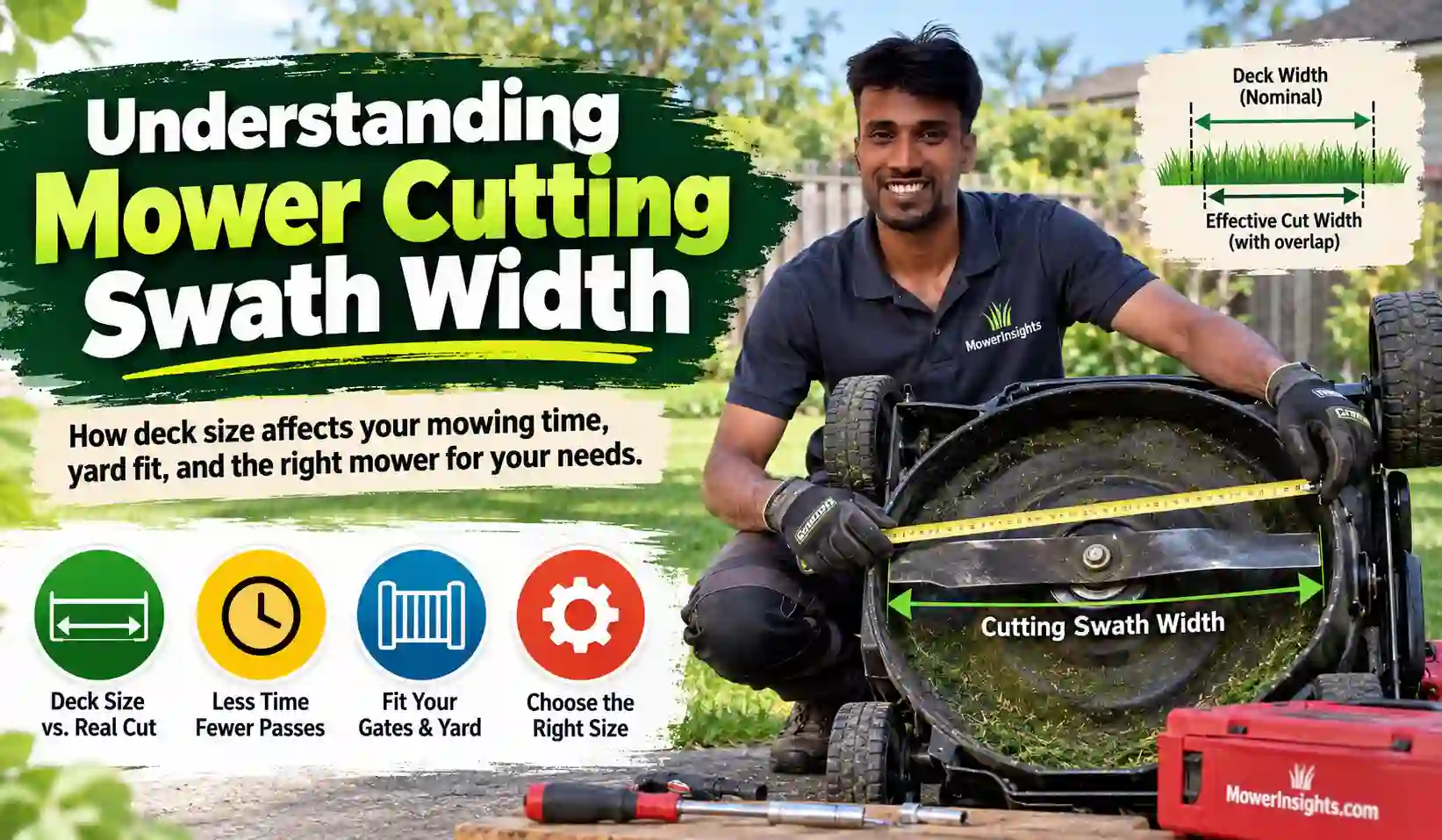
Not necessarily, but it’s less maneuverable around tight beds and trees than the 21352’s narrower deck. Measure your tightest turning spots before deciding.
Final Verdict
The Toro 20340 wins on power, deck size, and storage convenience. The Toro 21352 wins on price and included accessories.
Choose the 20340 for a bigger yard or a small garage. Choose the 21352 if your lot is smaller and your budget matters more than extra deck width. Both hold up well over a decade with normal seasonal care.
Pingback: Best Self-Propelled Lawn Mowers My Proven Picks
Pingback: Push Mower vs Self-Propelled Mower: Which One Fits Your Yard