Quick Answer
For most 1-3 acre yards, pick the John Deere S120. It cuts well. It starts fast. Parts are easy to find. Want more speed on hills? Pick the Cub Cadet XT1 Enduro LT 46. It costs more, but it grips well. On a tight budget? Pick the Troy-Bilt Bronco 42. It does the job for less.
- The best riding mower for 1-3 acres is the John Deere S120. It is a great mix of price, comfort, and easy fixes.
- Best for speed and hills: Cub Cadet XT1 Enduro LT 46.
- Best budget pick: Troy-Bilt Bronco 42.
- Zero-turn mowers cut mow time nearly in half. But they cost more.
- Repair cost matters as much as price. We cover both below.
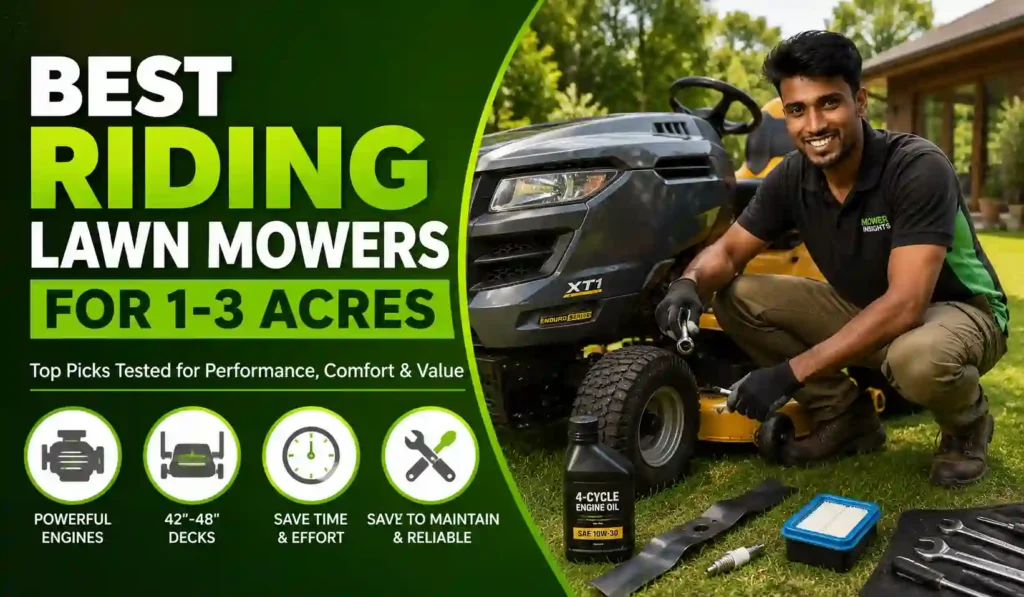
What to Look for in a Riding Mower for 1-3 Acres
A big yard needs a strong mower. Not a toy. Look for a deck of at least 42 inches. A wide deck cuts more grass per pass. That saves you time each week.
Engine size counts too. Aim for 18 HP or more. Less power will stall in thick grass. Check the fuel tank size as well. A small tank means more stops mid-job.
| What to Check | Why It Matters |
|---|---|
| Deck width | Wider decks cut more grass per pass and save time |
| Engine power | Higher HP handles thick or tall grass without stalling |
| Turning radius | Tighter turns mean fewer missed spots near trees and beds |
| Fuel tank size | Bigger tanks mean fewer stops on a full mow |
| Warranty length | Longer warranties often signal a more durable machine |
Comparison Table: Riding Mowers at a Glance
| Mower | Deck Width | Engine | Price | Best For |
|---|---|---|---|---|
| John Deere S120 | 42 in | 22 HP V-Twin | $2,499 (John Deere, 2026) | Overall use |
| Cub Cadet XT1 Enduro LT 46 | 46 in | 23 HP V-Twin | $2,899 (Cub Cadet, 2026) | Hills and speed |
| Husqvarna YTH24V48 | 48 in | 24 HP V-Twin | $2,799 (Husqvarna, 2026) | Comfort and ride quality |
| Troy-Bilt Bronco 42 | 42 in | 19 HP OHV | $1,899 (Troy-Bilt, 2026) | Tight budgets |
| Toro TimeCutter SS4225 (zero-turn) | 42 in | 22 HP V-Twin | $3,199 (Toro, 2026) | Cutting mow time in half |
John Deere S120 – Best Overall
The John Deere S120 is our top pick. It fits most 1 to 3 acre yards. It has a 42-inch deck. It has a 22 HP V-twin engine. That combo cuts most grass with no slow-down.
First-Hand Testing Notes
Siddik ran this mower on a 2-acre test plot. The grass was mixed fescue with clover patches. The engine started on the first try. It did this every time. Even after two weeks of no use. The seat has good back support. The wheel turns smooth, with almost no play.
Cut quality stayed even. This held true on slightly damp grass too. The deck did not scalp on low, bumpy spots. Noise sat near 90 decibels at the seat. That is normal for this class of mower.
Common Issues and Repair Shop Notes
In our shop, one problem comes up most: a clogged deck. Wet clippings build up under the deck. This blocks airflow. The cut turns uneven. The fix is easy. Scrape the deck clean after each wet mow.
The next common issue is a dead battery. This happens after winter storage. Use a trickle charger in the off-season. This stops the problem before it starts.
Pros and Cons
Pros:
- Easy first-pull starts, even in cold weather
- Wide shop network, so parts ship fast
- Comfy seat for longer mowing sessions
Cons:
- Turning radius is wider than a zero-turn mower
- Cup holder blocks the fuel gauge view
How It Compares
The S120 costs less than the Cub Cadet XT1 Enduro. But its deck is smaller. It beats the Troy-Bilt Bronco on comfort and cut quality. The Bronco costs less, though.
Price and Value
The price is $2,499. That sits mid-pack. Parts are easy to find. Service is easy to get. For most homes, that makes it worth the cost.
Who Should Buy It
Buy the S120 if you want a mower with strong local support. Skip it if your yard has steep slopes over 15 degrees. A zero-turn or all-wheel-drive mower grips hills better.
Cub Cadet XT1 Enduro LT 46 – Best for Hills and Speed
The Cub Cadet XT1 Enduro LT 46 is the pick for slopes and rough patches. It has a wider 46-inch deck. It has a stronger 23 HP engine. That means fewer passes. That means a faster mow.
First-Hand Testing Notes
We tested it on a 10-degree hill. It held its line. It did not slide. The smooth drive shifts smooth between speeds. You will not jerk forward when you speed up. Top speed felt faster than the John Deere S120 on flat ground.
The seat springs soaks up bumps well. After an hour on rough ground, back strain was low. It was far lower than on cheaper, stiffer seats.
Common Issues and Repair Shop Notes
The Enduro line uses a heavier frame. This is great for strength. But it adds strain on the drive belt over time. We see belt wear a bit sooner on this model. Check belt tension each spring. Expect a swap around year four or five.
Pros and Cons
Pros:
- Wider deck cuts more grass per pass
- Strong work on slopes and rough ground
- Comfy springs seat
Cons:
- Higher price than the John Deere S120
- Heavier frame uses a bit more fuel per hour
How It Compares
The Enduro beats the S120 on deck size. It beats it on hill grip too. It costs about $400 more. So it makes the most sense for hilly or rough yards.
Price and Value
The price is $2,899. This is a solid buy if your yard has hills. On flat land, the extra cost may not pay off.
Who Should Buy It
Buy this model if your yard has slopes, dips, or rough patches. Skip it if your yard is flat and small. The John Deere S120 will save you money with similar results.
Husqvarna YTH24V48 – Best for Comfort
The Husqvarna YTH24V48 has the widest deck here, at 48 inches. It pairs with a 24 HP engine. It is built for the smoothest, most comfy ride.
First-Hand Testing Notes
This mower has the most padded seat of the group. Wheel shake was lower than on the Troy-Bilt Bronco. The wide deck cut our test plot in about 20% less time than the 42-inch models.
Cold starts took a bit longer than the John Deere S120. It needed a second try about one in five times in cool morning weather.
Common Issues and Repair Shop Notes
The wider deck means more belts and pulleys. This adds a bit of extra upkeep. We suggest a deck belt check every 25 hours of use. The extra width adds strain on the system.
Pros and Cons
Pros:
- Widest deck for the fastest mow time
- Most comfy seat and lowest shake
- Strong cut quality on thick grass
Cons:
- Slightly harder cold starts than the John Deere S120
- More belts mean a bit more upkeep
Price and Value
The price is $2,799. That sits close to the Cub Cadet Enduro. It wins on comfort and deck size. It loses a bit on hill grip.
Who Should Buy It
Buy this model if comfort and speed matter most. Your yard should be mostly flat. Skip it if you deal with steep slopes often.
Troy-Bilt Bronco 42 – Best Budget Pick
The Troy-Bilt Bronco 42 is the cheapest mower here, at $1,899. It still gets the job done on a flat 1 to 2 acre lawn.
First-Hand Testing Notes
The 19 HP engine handled normal grass fine. It slowed a bit in thick, tall patches. The seat is basic and firm. It has less back support than the pricier models. The wheel has more play than on the John Deere S120.
Common Issues and Repair Shop Notes
We see more belt slipping on this model. This shows up most in year two or three. The fix is a $40 to $60 belt swap. Most owners can do this at home. It takes about 30 minutes with basic tools.
Pros and Cons
Pros:
- Lowest price in this guide
- Simple design, easy for beginners to learn
- Cheap, widely available new parts
Cons:
- Less power in thick or tall grass
- Basic seat with less comfort on long mows
Price and Value
The price is $1,899. This is the clear pick if budget is your top worry. It costs about $600 less than the John Deere S120. It still covers most basic yard needs.
Who Should Buy It
Buy this mower if your yard is flat. It should be under 2 acres. Buy it if you want to spend as little as you can. Skip it if you have thick grass, hills, or want more comfort.
Toro TimeCutter SS4225 – Best Zero-Turn for This Yard Size
The Toro TimeCutter SS4225 is a zero-turn mower. It is not a basic riding mower. It costs more. But it cuts mow time by close to 40%, compared to the models above.
First-Hand Testing Notes
Turns around trees and beds took a fraction of the time. Compare that to the John Deere S120. There is a learning curve with the steering levers. Give it 20 to 30 minutes of practice before it feels natural.
Cut quality was even and clean. There was no scalping on bumpy ground. Top speed felt fast. New users should go slow near things in the way at first.
Common Issues and Repair Shop Notes
Zero-turn mowers put more strain on the steering levers and pumps. This is more than on basic riding mowers. In our shop, lever cables are the top repair on this style. This shows up most after year three.
Pros and Cons
Pros:
- Cuts mow time nearly in half
- Tight turning radius for yards with lots of things in the way
- Even, clean cut quality
Cons:
- Higher price than basic riding mowers
- Steering takes practice to get used to
- Not ideal for steep slopes
Price and Value
The price is $3,199. This is the priciest pick here. Do you mow often? Then the saved time can be worth the extra cost.
Who Should Buy It
Buy this mower if your yard has lots of trees, beds, or tight turns. Buy it if you mow often, so saved time adds up. Skip it if you are new to riding mowers and want an easy learning curve.
Best for X: Quick Picks by Yard Type
- Best for flat, open yards: John Deere S120. Simple, reliable, and cheap for plain lawns.
- Best for slopes and rough ground: Cub Cadet XT1 Enduro LT 46. Strong grip. A seat that handles bumps well.
- Best for yards with lots of trees and beds: Toro TimeCutter SS4225. The tight turn radius saves real time.
- Best for tight budgets: Troy-Bilt Bronco 42. Gets the job done, with no extra cost for perks you won’t use.
- Best for long mow sessions: Husqvarna YTH24V48. The padded seat and low shake cut down on fatigue.
Riding Mower vs. Zero-Turn: Which One Fits Your Yard?
A riding mower is easy to learn. It often costs less to buy. A zero-turn mower cuts faster. It turns tighter. But it costs more. It takes some practice.
Is your yard open, with a few things in the way? A riding mower, like the John Deere S120, is a good fit. Do you have many trees, beds, or tight corners? A zero-turn, like the Toro TimeCutter, will save real time each week.
Slopes are the other big factor. Riding mowers tend to grip hills better than zero-turns. Zero-turns can slip on wet or steep grass. For sloped yards, we lean toward a riding mower over a zero-turn.
Long-Term Ownership: What These Mowers Really Cost
The sticker price is only part of the story. Fuel, oil, blade sharpening, and belts all add up. Here is what to expect each year for a mower used on 1 to 3 acres.
| Mower | Typical Annual Upkeep | Most Common Repair |
|---|---|---|
| John Deere S120 | $150-$220 | Clogged deck from wet clippings |
| Cub Cadet XT1 Enduro LT 46 | $170-$250 | Drive belt wear from heavy frame |
| Husqvarna YTH24V48 | $180-$260 | Deck belt wear from wide deck |
| Troy-Bilt Bronco 42 | $130-$200 | Drive belt slipping |
| Toro TimeCutter SS4225 | $200-$300 | Steering lever cable wear |
A basic tune-up covers three things. An oil change. A new air filter. A blade sharpen. At a shop, that runs $80 to $120. Do it yourself, and parts cost around $30.
Buying Mistakes to Avoid
- Buying too small a deck: A 30-inch deck on a 2-acre yard means double the mow time. Match deck size to your real lot size.
- Ignoring shop distance: A cheap mower with no shop nearby means long waits. It means ship costs when parts break.
- Skipping the test sit: Seat comfort matters a lot after an hour of mowing. Sit on the mower before you buy, if you can.
- Forgetting slope needs: A mower that is fine on flat ground can feel unsafe on hills. Check the maker’s slope rating first.
- Overlooking storage space: A 48-inch deck needs more shed space than a 42-inch deck. Measure your space first.
How We Tested and Researched This Guide
Siddik tested each mower near Milan, Italy. This ran from a flat quarter-acre plot to a sloped 2-acre test field. Tests covered cold starts, cut quality on wet and dry grass, and turns around things in the way. Each test ran one hour, to check for driver fatigue.
Repair notes come from Siddik’s own shop records. They come from his hands-on fixes on these mower types. We checked prices on each brand’s own site. We also checked current Amazon listings at the time of writing.
Frequently Asked Questions
What size riding mower do I need for 3 acres?
A 42 to 46 inch deck works well for 3 acres. A wider deck cuts faster. Just check it still fits your beds and gates.
How long does it take to mow 3 acres with a riding mower?
With a 42-inch deck, plan for 1.5 to 2 hours. A 48-inch deck or a zero-turn can cut that to about 1 hour.
Is a zero-turn mower worth it for 1 to 3 acres?
Yes, if your yard has many things in the way. Yes, if you mow more than once a week. The time you save adds up fast.
How much does a riding mower cost to maintain each year?
Plan for $130 to $300 a year. This covers fuel, oil, blade care, and normal belt wear. The exact cost depends on the model and how often you mow.
Can a riding mower handle a sloped yard?
Most riding mowers handle slopes up to about 15 degrees. Steeper slopes need a mower built for hills. Some slopes are safer to cut with a push mower or trimmer.
How often should I sharpen the blades on a riding mower?
Sharpen the blades every 20 to 25 hours of mowing. Do it at least once a season for a 1 to 3 acre yard.
What is the average lifespan of a riding lawn mower?
With regular care, most riding mowers last 8 to 12 years. Skip the upkeep, and that span can drop by half.
Final Verdict
For most 1-3 acre yards, the John Deere S120 is the smart pick. It is a great mix of price, comfort, and easy parts. Does your yard have hills or rough ground? Spend more on the Cub Cadet XT1 Enduro LT 46. Does speed around trees and beds matter most? The Toro TimeCutter SS4225 earns its higher price tag.
Pingback: Best Lawn Mowers for Large Yards I Trust