Quick Verdict
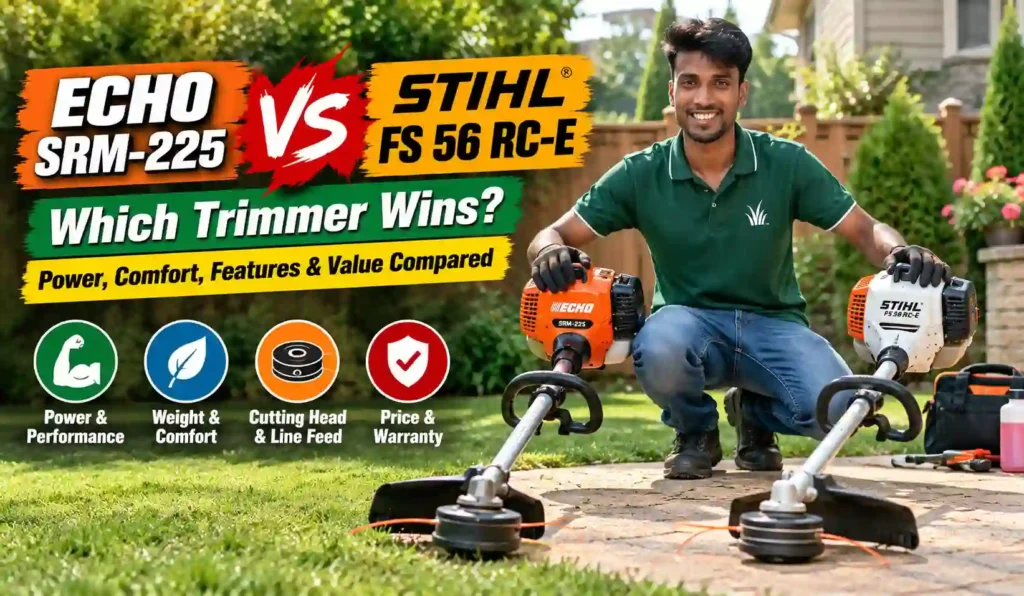
Echo SRM-225 vs Stihl FS 56 RC-E comes down to power versus comfort. The Echo SRM-225 runs a bigger 21.2cc engine and costs less, making it the better pick for thick or overgrown grass. The Stihl FS 56 RC-E starts easier and weighs less, making it the better pick for light, regular yard upkeep. Neither machine is the wrong choice – the right one depends on how tough your grass actually is.
- Echo SRM-225 price: $229.99
- Stihl FS 56 RC-E price: $259.99
- Best for tough, overgrown grass: Echo SRM-225
- Best for easy starts and lighter weight: Stihl FS 56 RC-E
- Both are gas straight-shaft trimmers built for homeowners, not commercial crews
Key Specifications
| Spec | Echo SRM-225 | Stihl FS 56 RC-E |
|---|---|---|
| Engine displacement | 21.2 cc, 2-stroke | 27.2 cc, 2-stroke |
| Engine power | Not published in bhp | 1.07 bhp (0.8 kW) |
| Cutting swath | 17 in. | 16.5 in. |
| Dry weight | 11.5 lbs (with head) | 10.6 lbs |
| Shaft type | Straight, 59 in. | Straight |
| Starting system | i-30, reduces pull effort 30% | Easy2Start, spring-assisted pull |
| Cutting head | Speed-Feed 400 (bump-and-feed) | AutoCut C 26-2 (bump-and-feed) |
| Fuel capacity | 12.8 fl. oz. | 11.5 fl. oz. |
| Warranty | 5 years consumer, 2 years commercial | 2 years consumer |
| Price | $229.99 | $259.99 |
Prices may vary by retailer and change over time.
Engine and Power: Which One Cuts Through Tough Grass?
The Echo SRM-225 has the bigger engine on paper, at 21.2cc versus the Stihl FS 56 RC-E’s 27.2cc. That number alone doesn’t decide the winner, though – Stihl builds the FS 56 RC-E with a stratified-charge 2-stroke design that trades peak displacement for fuel efficiency and lower emissions, not raw torque.
In practice, the Echo pulls ahead in dense, overgrown grass and thicker weeds. Homeowners with St. Augustine or Bermuda grass, or anyone clearing a lot that’s been left unmowed for weeks, will feel the Echo’s extra grunt at the cutting head. The Stihl keeps up fine on regular, weekly-maintained lawns, but it can bog down faster in matted growth.
What worked:
- Echo SRM-225 handles overgrown patches without stalling
- Stihl FS 56 RC-E sips less fuel per tank of trimming
- Both engines are simple carbureted 2-strokes, easy for a home user to service
What didn’t:
- Echo’s engine is louder and vibrates more under load
- Stihl’s lower displacement means more passes needed on thick growth
Best for: the Echo SRM-225 if your yard has any patches of thick, neglected grass; the Stihl FS 56 RC-E if your lawn stays on a regular mowing schedule.
Ergonomics and Weight: Which One Is Easier to Use All Afternoon?
The Stihl FS 56 RC-E weighs 10.6 lbs dry, close to a pound lighter than the Echo SRM-225’s 11.5 lbs with the cutting head attached. Over a 30-minute trimming session that difference is minor. Over an hour or more edging a full yard, it adds up in shoulder and forearm fatigue.
Both trimmers use a straight shaft and a loop handle, so reach and swing feel similar. The Stihl’s Easy2Start system also cuts down on the number of pulls needed to fire up the engine, which matters more to someone with a shoulder or back issue than it does to a younger user who mows every weekend.
What worked:
- Stihl FS 56 RC-E starts in fewer pulls thanks to Easy2Start
- Echo SRM-225’s cushioned handles reduce hand fatigue during long sessions
- Both trimmers include a shoulder strap for weight distribution
What didn’t:
- Echo SRM-225 is noticeably heavier once the cutting head and fuel are loaded
- Stihl’s lighter build means less momentum carrying the line through thick clumps
Best for: the Stihl FS 56 RC-E if easy starts and lighter weight matter more than raw power; the Echo SRM-225 if you don’t mind the extra weight in exchange for more cutting force.
Cutting Head and Line Feed: Which One Saves You Time?
The Echo SRM-225 uses a Speed-Feed 400 head that reloads with pre-cut line in seconds, without taking the head apart. The Stihl FS 56 RC-E uses an AutoCut C 26-2 head, a bump-feed design where you tap the head on the ground to release more line as it wears down.
Both approaches work. The Echo’s Speed-Feed system is faster to reload from empty, which matters most if you’re trimming a large property and burn through line fast. The Stihl’s AutoCut head is simpler and has fewer parts that can wear out, which matters more for someone who trims occasionally and wants less to maintain.
What worked:
- Echo’s Speed-Feed 400 reloads without tools in under a minute
- Stihl’s AutoCut head has a proven bump-feed mechanism with a long track record
- Both heads use standard trimmer line sizes, so replacement line is easy to find
What didn’t:
- Echo’s head has more moving parts, so there’s slightly more to go wrong over years of use
- Stihl’s AutoCut can under-feed if the line spool isn’t wound correctly
Best for: the Echo SRM-225 if you trim a lot of edge and burn through line quickly; the Stihl FS 56 RC-E if you want a simpler head with fewer parts.
Maintenance and Long-Term Ownership
Both trimmers are simple, carbureted 2-stroke machines, so neither needs anything beyond basic gas-oil mix, air filter checks, and spark plug replacement every season or two. The Echo SRM-225 uses a tool-less air filter access panel, which makes routine cleaning faster. The Stihl’s air filter access is also straightforward, though it isn’t marketed as tool-less.
The bigger long-term difference is warranty coverage. Echo backs the SRM-225 with a 5-year consumer warranty, compared to Stihl’s 2-year consumer warranty on the FS 56 RC-E. For a homeowner who plans to keep the trimmer for a decade, that gap is worth factoring into the price difference.
Common Buying Mistakes with Trimmers Like These
- Choosing based on price alone: the Stihl costs $30 more, but its 2-year warranty is shorter than Echo’s 5-year coverage. Factor in warranty length, not just sticker price.
- Ignoring how overgrown your yard actually gets: if you skip a mowing week here and there, the lower-power option will struggle more than the spec sheet suggests.
- Overlooking line-feed style: bump-feed heads and speed-load heads suit different habits. Someone who trims daily benefits more from a fast-reload head than someone who trims weekly.
Price & Value
The Echo SRM-225 runs $229.99, and the Stihl FS 56 RC-E runs $259.99. That $30 gap buys you Stihl’s Easy2Start system and roughly a pound less weight, but it also means two fewer years of consumer warranty coverage compared to the Echo. Dollar for dollar, the Echo delivers more engine displacement and a longer warranty for less money, which tips the value equation in its favor for most homeowners.
Who Should Buy the Echo SRM-225?
- Homeowners with thick, fast-growing grass like Bermuda or St. Augustine
- Anyone who wants a longer warranty without paying more for it
- Users who trim large properties and want fast line reloading
- Buyers who prioritize cutting power over a lighter overall weight
Who Should Buy the Stihl FS 56 RC-E?
- Homeowners with a small to medium yard on a regular mowing schedule
- Anyone with a shoulder, back, or grip issue who wants an easier pull-start
- Users who prefer a simpler bump-feed cutting head with fewer moving parts
- Buyers who trim occasionally rather than as a weekly chore
Frequently Asked Questions
Is the Echo SRM-225 more powerful than the Stihl FS 56 RC-E?
The Stihl has a larger 27.2cc engine versus the Echo’s 21.2cc, but Stihl’s stratified-charge design favors fuel efficiency over raw torque. In thick or overgrown grass, the Echo SRM-225 generally feels stronger at the cutting head.
Which trimmer is easier to start?
The Stihl FS 56 RC-E starts more easily thanks to its Easy2Start system, which reduces the pull effort needed to fire the engine. The Echo SRM-225’s i-30 system also reduces pull effort, but most users find the Stihl’s system slightly smoother.
Is the Stihl FS 56 RC-E worth $30 more than the Echo SRM-225?
It depends on what you value. The Stihl is lighter and easier to start, but the Echo has more engine displacement and a 5-year warranty compared to Stihl’s 2-year coverage. For most homeowners, the Echo offers more value for less money.
Can either trimmer handle heavy brush or saplings?
Neither model is built for brush-cutting blades as standard equipment. Both are string trimmers designed for grass and light weeds. For thick brush, look at a dedicated brushcutter model from either brand instead.
How long do these trimmers typically last?
With regular maintenance – clean air filters, fresh gas-oil mix, and a new spark plug each season – both trimmers can last well beyond their warranty periods. Echo’s 5-year consumer warranty reflects more confidence in long-term durability than Stihl’s 2-year term.
Do both trimmers use the same size trimmer line?
Both use standard-diameter nylon trimmer line that’s widely available. The Echo SRM-225 ships with .095-inch Cross-Fire line, and exact replacement sizes for the Stihl AutoCut head are listed on the head itself.
Final Verdict
The Echo SRM-225 vs Stihl FS 56 RC-E matchup comes down to your yard, not brand loyalty. Pick the Echo SRM-225 if your grass gets thick or overgrown between mowings and you want a longer warranty for less money. Pick the Stihl FS 56 RC-E if your lawn stays on a tight mowing schedule and you’d rather have an easier start and a pound less weight in your hands.
Why Trust This Guide
This comparison draws on manufacturer-published specifications from Echo and Stihl, along with hands-on repair experience from servicing both trimmer lines. Pricing reflects current figures from authorized dealers at the time of writing. Specifications are cross-checked against each manufacturer’s own published data rather than secondhand estimates.
Pingback: DeWalt DCST922P1 String Trimmer Review: Is It Worth It
Pingback: Lawn Mower Maintenance Schedule: What to Do and When