Why is my riding lawn mower smoking? In most cases, the engine is burning oil that got somewhere it should not be, or it is running with too much fuel and too little air. Both problems are common, and many take under 30 minutes to fix. This guide helps you match the smoke to its cause, run the right checks in order, and know when to stop mowing.
Quick Answer
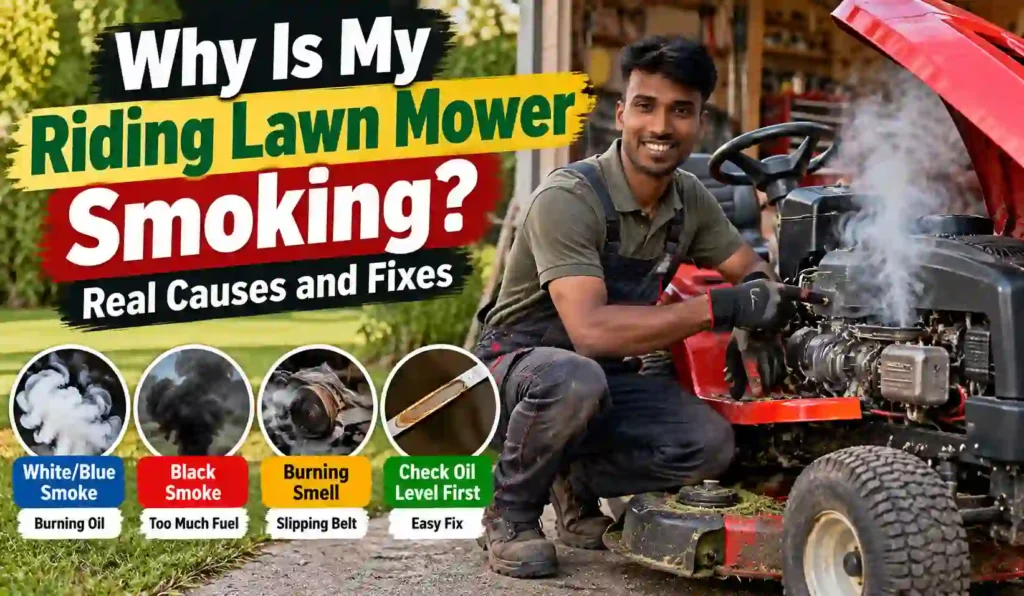
If you are asking why is my riding lawn mower smoking, the color and smell decide the answer. White or blue smoke usually means burning oil, often from too much oil in the engine. Black smoke means too much fuel, usually from a dirty air filter or a stuck choke. Smoke with a burning rubber smell points to a belt, not the engine. Shut the engine off, let it cool, and check the oil level first.
What Does the Smoke Color on a Riding Mower Mean?
The smoke color is the fastest clue you have. White or blue smoke points to oil, black smoke points to excess fuel, and smoke with a rubber or plastic smell points to a belt or wiring problem. Use the table below to narrow it down before you touch anything.
| What you see or smell | Most likely cause | How serious | First thing to check |
|---|---|---|---|
| A short puff of white smoke at startup | A small amount of oil or moisture burning off | Minor | Watch it for one to two minutes |
| Steady white or blue smoke | Too much oil, oil on the exhaust, or a steep angle | Minor to moderate | Oil level on the dipstick |
| Blue smoke that never clears | Worn piston rings, valve seals, or a head gasket | Serious | Oil level, then a compression test |
| Black smoke | Too much fuel or too little air | Minor to moderate | Air filter and choke |
| Gray smoke with an oily smell | Oil burning, often from a leak or overfill | Moderate | Oil level and gasket areas |
| Smoke with a burning rubber smell | Slipping belt or seized pulley | Moderate | Drive and deck belts |
| Smoke or a sharp plastic smell near the dash | Wiring or battery problem | Serious | Stop and disconnect the battery |
| Smoke rising from grass on the engine | Clippings smoldering on a hot surface | Moderate, fire risk | Clean the engine and muffler when cool |
If the smoke is thick, the engine knocks, or you see flames, shut the mower off at once and move away from it.
Why Is My Riding Lawn Mower Smoking White or Blue? Burning Oil Causes
White or blue smoke means oil is burning. The oil may be inside the cylinder, or it may be sitting on a hot part like the muffler. Start with the dipstick, because overfilled oil is the most common cause and the easiest to fix.
Too much oil in the crankcase
Overfilling is the top cause of white smoke. Extra oil gets pushed into the cylinder and burns with the fuel. It often happens after an oil change, when the oil is poured in by guesswork instead of measured.
- Park on level ground and wait several minutes for the oil to settle.
- Wipe the dipstick, push it all the way in, and read the level.
- If the level is above the full mark, drain a little at a time until it sits at full.
Engine oil capacity depends on your engine model, so check the owner’s manual for the right amount.
Oil spilled on the engine or exhaust
A small spill during an oil change can smoke for several minutes as it burns off a hot muffler. Check the oil fill area, the engine shroud, and the exhaust. Wipe away any oil once the engine is cool. If the smoke fades quickly after cleanup, the spill was the cause.
Steep slopes or tilting the machine
Engine makers warn that running a small engine at more than about 15 degrees can push oil into places it does not belong. Riding mowers get used on hills, so this matters. Oil can reach the air filter, the intake, and the cylinder, then burn off as a cloud of smoke.
- If you work on a steep bank, check the oil level and the air filter afterward.
- If you raised or tilted the machine for deck or blade work, check both before the next start.
- A short burst of smoke that clears within about 5 to 10 minutes on flat ground is usually leftover oil burning away.
A blocked crankcase breather
The breather is a vent that lets pressure out of the engine. On many engines the breather tube sits behind the air filter. If the tube is crimped or clogged, pressure builds up and pushes oil into the intake. Check that the tube is not pinched, cracked, or packed with debris.
A leaking gasket or seal
Any leaking gasket or seal can drip oil onto the hot exhaust. This kind of smoke comes from the outside of the engine, not the tailpipe. Look for wet, dirty patches around the valve cover and the lower engine.
Worn piston rings, valve seals, or a head gasket
If blue smoke continues after you have fixed the oil level and ruled out spills, the engine may be burning oil inside. Worn rings and valve seals let oil slip into the combustion area. A blown head gasket can cause the same thing.
- The smoke does not clear and the oil level keeps dropping.
- The mower loses power or runs rough.
- A compression test shows low readings.
This repair costs real money. On an older mower with many hours, compare the repair quote with the price of a replacement before you decide.
Water on a hot surface
White vapor with no oily smell can simply be steam. It happens after mowing wet grass or washing the mower. It stops within a minute or two once the surface dries.
Why Is My Riding Lawn Mower Smoking Black? Too Much Fuel
Black smoke means the engine is running rich, which is a short way of saying it gets too much fuel and not enough air. Unburned fuel leaves the exhaust as dark, sooty smoke. A clogged air filter is the usual cause, so check it first.
A dirty or clogged air filter
A filter packed with dust and grass clippings chokes off the air. This is common on riding mowers because they work in dusty, grassy conditions for long hours. Pull the filter and hold it up to the light. If you cannot see light through it, clean it or replace it.
- A foam filter can usually be washed and dried, if your engine manual allows it.
- A paper filter that is dirty, damaged, or soaked in oil should be replaced.
A choke that does not fully open
The choke cuts airflow to help a cold engine start. If it stays partly closed after the engine warms up, the mixture stays too rich. Make sure the choke control is all the way off once the engine is warm.
A flooding carburetor
A stuck float or a worn needle valve lets too much fuel into the engine. You may smell raw gas, and the engine may stall or surge. Pull the dipstick and smell the oil. If it smells strongly of gasoline, or the oil level has risen on its own, fuel is leaking into the crankcase. Stop using the mower right away. Fuel-thinned oil cannot protect the engine, so drain it and fix the carburetor before running the engine again.
Why Is My Riding Lawn Mower Smoking When the Engine Is Fine?
Not all smoke comes from the engine. On a riding mower, a belt, a brake, packed-in grass, or wiring can all make smoke while the engine itself is healthy. These causes are easy to miss, and some are a fire risk, so check them if the oil and air filter look fine.
A slipping belt or seized pulley
A belt that slips on a stuck pulley or deck spindle heats up fast and gives off gray smoke with a burning rubber smell. The smoke appears near the deck or the drive area, not at the exhaust.
- Shut the engine off, remove the key, and disconnect the spark plug wire before reaching under the machine.
- Look for glazed, cracked, or frayed belts.
- Spin each pulley by hand. A pulley that will not turn freely is the problem.
A brake that is not fully released
A parking brake or drive brake that drags can overheat and smoke near a rear wheel. Check that the brake releases fully and that nothing is rubbing.
Grass and debris on hot parts
Dry clippings packed around the engine shroud, muffler, or deck can smolder. This looks like thin smoke rising from the engine area with a burnt grass smell. Let the engine cool, then clear the debris.
Wiring or battery trouble
A sharp, acrid smell with smoke near the dash, battery, or wiring points to an electrical fault. Turn the key off, disconnect the battery, and do not restart the mower until you find the damaged wire or part. If you cannot trace it, call a technician.
Step-by-Step: What to Do When Your Riding Mower Starts Smoking
The right order saves time and protects the engine. Follow these steps from top to bottom, and stop as soon as you find the cause.
- Shut the engine off. Set the parking brake, turn the key off, and step away from the seat.
- Look for flames or glowing debris. If you see fire, move away and call 911. Do not use water on a fuel fire.
- Note what you saw. Write down the smoke color, the smell, and where the smoke came from. This points you to the right section above.
- Let it cool. Wait at least 15 to 20 minutes before touching the engine or exhaust.
- Check the oil. On level ground, read the dipstick. Drain any excess above the full mark, and smell the oil for gasoline.
- Look for oil on the outside. Check the muffler, the engine shroud, and the gasket areas. Wipe up spills.
- Check the air filter and choke. Replace a dirty or oil-soaked filter, and confirm the choke opens fully.
- Check belts and pulleys. Disconnect the spark plug wire first, then spin the pulleys and inspect the belts.
- Restart outdoors on flat ground. Let the engine run for 5 to 10 minutes and watch. If the smoke clears, the cause was leftover oil or a spill.
- Stop if the smoke returns. Thick or steady smoke means the problem is still there, and running the engine longer can cause damage.
Pro tip: Take a photo of the dipstick and the air filter before you change anything. It helps if you need to describe the problem to a technician later.
Practical Tips to Stop a Riding Mower from Smoking Again
Most smoking problems come from oil levels, airflow, and slopes. A few habits prevent nearly all of them.
- Check the oil level before each mowing session, and add oil in small amounts, rechecking as you go.
- Use only the oil grade and amount your owner’s manual lists.
- Replace the air filter at least once a season, and sooner if you mow in dust.
- Keep the choke fully off once the engine is warm.
- Stay within the slope limit in your manual, and check the oil after working on a steep bank.
- Clear clippings from the engine shroud, muffler, and deck after mowing.
- Inspect belts for cracks and glazing at the start of each season.
Common Mistakes to Avoid When a Riding Mower Smokes
These mistakes turn a small problem into an expensive one.
- Filling the oil by bottle size instead of by the dipstick, which leads to overfill.
- Running the mower for an hour “to burn it off” when the smoke is steady or thick.
- Washing a paper air filter with water instead of replacing it.
- Adjusting the carburetor without the steps in your engine manual.
- Ignoring a burning smell because the engine still runs.
- Spraying water on a hot muffler or engine, which can crack parts and spread fuel.
When to Get Professional Help for a Smoking Riding Mower
Stop and call a technician when the smoke does not clear after the basic checks. A mower that is still under warranty should also go to the dealer, since DIY repairs can cause problems with coverage. Get help in these cases:
- The smoke is thick, steady, or gets worse under load.
- The engine knocks, loses power, or runs rough.
- The oil smells like gasoline, or the level keeps rising on its own.
- The oil level keeps dropping between changes.
- You see oil leaking steadily from the engine.
- You smell burning plastic, or smoke comes from wiring.
- A compression test shows low readings.
Ask for a written estimate. On an older mower, a rebuild may cost close to the price of a replacement.
Related Questions About a Smoking Riding Mower
Why is my riding lawn mower smoking white after an oil change?
The most likely cause is too much oil or oil spilled on the engine. Check the dipstick on level ground, drain any excess, and wipe the muffler and engine clean. Smoke from a spill usually stops within several minutes.
Why is my riding lawn mower smoking black and losing power?
The engine is getting too much fuel or too little air. Start with the air filter, then confirm the choke opens fully. If both are fine, the carburetor may be flooding and needs cleaning or repair.
Why is smoke coming from under my riding mower deck?
Smoke near the deck usually comes from a slipping belt, a seized spindle pulley, or packed grass rubbing on a hot part. Shut the engine off, disconnect the spark plug wire, and check the belts and pulleys by hand.
FAQs
Can I keep mowing if my riding mower is smoking?
No, not until you know the cause. A short puff after an oil change or a steep slope can clear in a few minutes, but steady smoke, power loss, or knocking means you should stop the engine to avoid damage.
How long should smoke last after I fix an overfill or spill?
It usually clears within about 5 to 10 minutes of running on flat ground. If it keeps going after that, the cause is something else, such as a leak or internal wear.
Can a bad spark plug cause a riding mower to smoke?
A fouled spark plug can add to black smoke by causing incomplete burning. Replacing it is cheap, but if the smoke continues, the real cause is usually the air filter, the choke, the carburetor, or the oil level.
Is a smoking riding mower a fire risk?
It can be. Oil on a hot exhaust, grass packed around the muffler, and wiring faults can all start a fire. Shut the engine off, let it cool, and clean or repair the cause before the next start.
Final Answer: What to Check First When Your Riding Mower Smokes
Why is my riding lawn mower smoking? White or blue smoke points to burning oil, black smoke points to too much fuel, and a rubber smell points to a belt. Shut the engine off, check the oil level, then the air filter and choke. If the smoke returns, stop mowing and get the engine inspected.

Why Trust This Guide
This guide comes from a lawn mower repair shop, MowerInsights.com, run by Siddik Kazi, who services mowers in Italy. Reviewed by Siddik Kazi.
Sources and methodology: this guide draws on engine manufacturer guidance on oil and smoke, standard small-engine maintenance practice, and a review of existing coverage of this question. No hands-on testing was done for this article.