Quick Overview
- Five parts fail most in gas mowers. They are blades, spark plugs, air filters, oil filters, and belts. This comes from Siddik Kazi’s repair shop data (2026).
- A basic gas-mower spare-parts kit runs $40 to $90 USD. A battery-mower kit runs $60 to $180, mostly due to battery cost.
- Match every part to your exact model number. A universal blade or belt often does not fit right.
- Fuel and oil have a shelf life. Stabilized fuel lasts about 12 months. Regular gas starts to break down in 30 days.
- Store spare parts in a dry box, not a damp shed. Rust ruins bolts and blades fast.
Why Keep Spare Parts On Hand
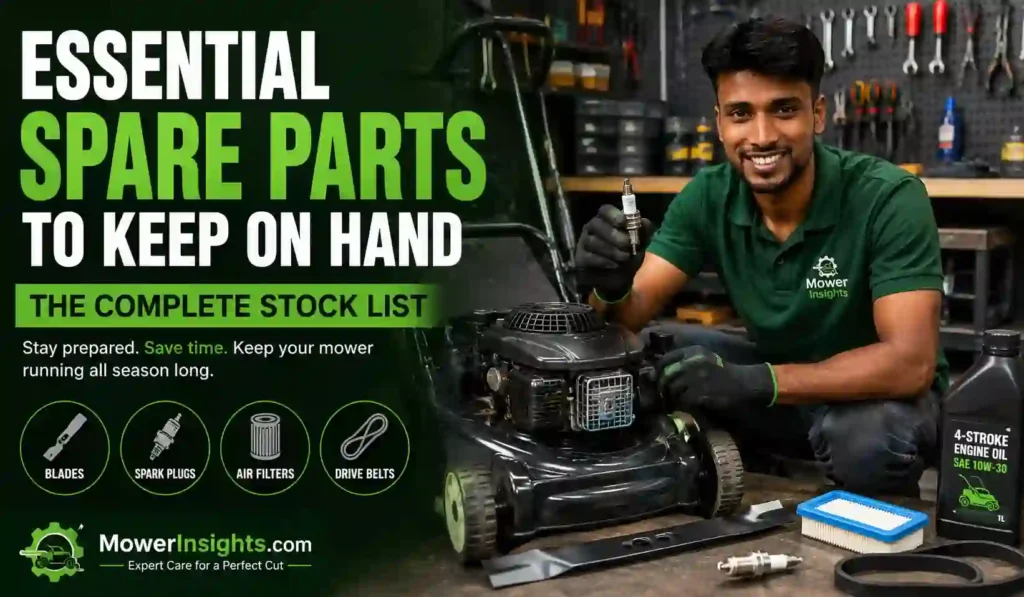
Keep a spare blade, spark plug, air filter, and drive belt on hand. These fail most often. Battery mowers need a spare blade and a backup battery instead. Robot mowers need spare blades and charging contacts. A basic kit costs $40 to $90 for gas mowers.
What “Essential Spare Parts” Means for a Mower Owner
Essential spare parts are the small items that fail most often. You will not need most of them right away. You will need one of them at the worst time. This guide covers gas mowers, battery mowers, and robot mowers. It covers how many parts to buy. It covers what they cost. It covers how long they last on a shelf. Everything here comes from real repair-shop visits at MowerInsights. It is not copied from a spec sheet.
How This List Was Put Together
This list is not copied from a manufacturer’s manual. It comes from real repair tickets at MowerInsights, our shop in Milan. We log the part swapped on every job. We track how often each part comes up.
Prices in this guide reflect typical retail prices as of 2026. Reconfirm any price close to your purchase date. Part behavior does not change by country. But part prices and stock availability do. Adjust your local budget as needed.
Why Keep Spare Parts On Hand
A worn spark plug can stop a mower mid-job. So can a cracked belt. Most of these failures are cheap to fix. But they cost real time.
In my shop, one thing repeats every season. A mower comes in for a part that failed slowly. The owner ignored small warning signs. A rough start. A shaking deck. A slipping belt sound.
Most of these parts cost under $20 each. A new engine can cost $200 or more. Stocking the right spares is cheap insurance. You also skip the wait for a part to ship.
The Core Spare Parts List for Gas Mowers
Gas mowers have the most moving parts. That means more things that can wear out. Here is the core list. It is ranked by how often each part fails in my shop.

1. Replacement Blade
A dull blade tears grass instead of cutting it. Torn grass turns brown at the tip. This is the single most common issue I see.
Sharpen your blade every 20 to 25 hours of mowing. Replace it once it gets too thin to sharpen. Also replace it if it is bent. A bent blade throws the whole deck off balance. That shakes the whole mower while you cut.
I once had a customer bring in a mower that vibrated so hard it walked across the driveway on its own. The blade had one small ding from a rock. That tiny ding was enough to throw off the balance. We swapped the blade. The shaking stopped right away.
Typical cost: $12 to $30, depending on deck size.
2. Spark Plug
A fouled spark plug is the top reason a mower won’t start. The plug ignites the fuel-air mix inside the engine. Carbon builds up on the tip over time. That carbon blocks the spark from firing.
Swap your spark plug once a season. Keep one spare in your shed at all times.
Typical cost: $4 to $10.
3. Air Filter
A clogged air filter starves the engine of air. This makes the mower run rich and lose power. You will notice black smoke or a rough idle.
Paper filters need replacing. Foam filters can be washed and reused a few times. Check yours every 25 hours, more often in dusty yards.
Typical cost: $5 to $15.
4. Oil Filter and Oil
Not every mower has an oil filter. Larger engines above 6.5 horsepower often do. Old oil turns dark and thin. Thin oil does not protect engine parts well.
Change the oil once a season. Or change it every 50 hours, whichever comes first. Keep one extra oil filter on the shelf. Also keep one quart of the correct oil type.
Typical cost: $6 to $12 for a filter. $8 to $15 per quart of oil.
5. Drive Belt
Self-propelled mowers use a belt to move the wheels. This belt stretches and cracks with age. A worn belt slips and makes a squealing sound under load.
Belts are model-specific. Buy the exact part number for your mower, not a generic size.
Typical cost: $15 to $35.
6. Fuel Filter and Fuel Stabilizer
A clogged fuel filter starves the engine of gas. This causes stalling. It can also cause a hard start. Fuel stabilizer is not a spare part. But it prevents fuel-line clogs.
Add stabilizer to any fuel that sits for more than 30 days.
Typical cost: $3 to $8 for a filter. $8 to $12 for a bottle of stabilizer.
7. Pull Cord and Recoil Spring
The starter rope snaps after years of yanking. This tends to happen on a cold morning. That is right when you need it most. Most home users find a full recoil-starter assembly easier to swap. Swapping just the rope alone is fiddlier.
Typical cost: $6 to $10 for a rope. $15 to $25 for a full recoil assembly.
8. Wheels, Wheel Bolts, and Height-Adjuster Parts
Wheels crack after years in the sun. Height-adjuster levers snap if forced while stiff with rust. Keep a spare set of wheel bolts. They strip easily during blade changes.
Typical cost: $8 to $20 per wheel. $2 to $5 for a bolt set.
Spare Parts for Battery-Powered Mowers
Battery mowers have far fewer moving parts. That means a shorter spare-parts list. But the parts that do fail cost more.
Replacement Blade
Battery mowers still need sharp blades. The blade mount often differs from gas models. Match your exact model number when you buy.
Typical cost: $15 to $35.
Backup Battery
This is the most expensive spare on this list. A battery loses capacity over 300 to 500 charge cycles. Runtime drops well before the battery fully dies.
Keep a second battery for a large yard. This helps if one charge does not finish the whole lawn. You can also mow with one battery while the other charges.
Typical cost: $80 to $150 for a mid-size pack.
Charging Contacts or Charger Cable
Charging contacts can corrode if a mower is stored outside. A frayed charger cable is a common shop repair on older units.
Typical cost: $10 to $30.
Mulching Plug or Bagger Parts
These plastic parts crack in cold weather. They are cheap parts overall. Keep a spare if you switch between mulching and bagging often.
Typical cost: $5 to $15.
Spare Parts for Robot Mowers
Robot mowers run almost every day in season. That wears parts faster than a once-a-week gas mower.
Replacement Blades
Robot mowers use small razor-style blades. Most brands sell these in sets of 9 or more. Replace them every 4 to 8 weeks in the growing season.
Typical cost: $10 to $25 per set.
Charging Contact Pins
These small metal pins touch the dock to charge the mower. They wear down or corrode over time. A worn pin causes charging failures.
Typical cost: $8 to $20.
Boundary Wire and Connectors
Older robot models use a buried wire to mark the yard. Trimmers cut this wire often. So does frost. So do digging animals. Keep spare wire and waterproof connectors on hand.
Typical cost: $20 to $40 for a 100-meter spool.
Wheels
Robot mower wheels wear down on gravel edges or rough terrain. Replace them once tread is visibly worn flat.
Typical cost: $15 to $30 per wheel.
How Many of Each Part to Stock
You do not need a full parts shelf. A small kit covers most emergencies. This table shows what I tell customers to keep. It is based on mower type.
| Part | Gas Mower Qty | Battery Mower Qty | Robot Mower Qty |
|---|---|---|---|
| Blade | 1 spare | 1 spare | 1 spare set |
| Spark plug | 1 spare | N/A | N/A |
| Air filter | 1 spare | N/A | N/A |
| Oil filter | 1 spare | N/A | N/A |
| Drive belt | 1 spare | N/A | N/A |
| Battery | N/A | 1 spare (optional) | N/A |
| Charging pins | N/A | N/A | 1 spare set |
| Boundary wire | N/A | N/A | 20m spare coil |
| Wheel bolts | 1 spare set | 1 spare set | N/A |
Which Parts Fail First: A Repair-Shop View
This is where most articles stop short. They list parts. They do not say which ones actually break first, or why.
In my shop, two issues bring in the most gas mowers. They are blade damage and spark plug fouling. This holds true across brands. It is not a Honda problem. It is not a Briggs problem. It is a wear-and-use problem.
Battery mower visits look different. Most are not about the mower body at all. They come from battery capacity loss. This shows up after two or three seasons of use. The blade is the second most common issue. The motor itself rarely fails first.
Robot mowers bring in wheel wear the most. Blade wear is close behind. Boundary wire cuts come next. This is common in yards with heavy edge trimming near the wire.
Expert tip: Check blade bolt torque every time you sharpen. A loose blade bolt causes silent deck vibration. Owners often blame the engine for it instead.
Cost of a Basic Spare-Parts Kit
Here is what a starter kit actually costs. Prices reflect real part prices as of 2026. Reconfirm prices close to your purchase date.
| Mower Type | Kit Contents | Estimated Total |
|---|---|---|
| Gas push mower | Blade, spark plug, air filter, oil filter, oil | $35 to $75 |
| Gas self-propelled | Above, plus drive belt | $50 to $110 |
| Battery mower | Blade, mulching plug | $20 to $50 |
| Battery mower with spare pack | Above, plus backup battery | $100 to $200 |
| Robot mower | Blade set, charging pins | $18 to $45 |
A spare-parts kit costs little next to a full repair bill. A new drive belt costs about $20. A skipped belt can snap and damage a pulley. That repair can run $80 or more in labor.
How to Store Spare Parts So They Last
A spare part is useless if it rots on a shelf. Storage matters as much as buying the right part.
Keep metal parts like blades and bolts in a sealed plastic bin. This stops rust from humid air. A light coat of oil on a spare blade also helps.
Store spark plugs and filters in their original packaging. Cardboard soaks up moisture, which can corrode the plug tip.
Fuel stabilizer keeps gas usable for about 12 months. Untreated gas starts breaking down in about 30 days. Do not store a full spare fuel can past one season.
Batteries lose charge slowly in storage. Store spare mower batteries at 40 to 60 percent charge. Keep them in a cool, dry spot. A fully drained battery left over winter may not recover.
Common Mistakes Homeowners Make with Spare Parts
- Buying a universal part instead of the exact model number. A universal blade may not balance right on your deck. This causes vibration and uneven cuts.
- Storing fuel and oil for more than a season. Old fuel gums up a carburetor. This turns a $5 fix into a $60 cleaning job.
- Skipping the spare battery for a large-yard battery mower. Running out of charge mid-lawn wastes a whole afternoon.
- Never checking part numbers before buying. Many brands change part numbers between model years. Always check your mower’s serial plate first.
- Throwing spare bolts in a loose drawer. Mixed hardware gets lost fast. A small labeled parts box saves real time later.
DIY vs. Calling a Professional
Most parts on this list are simple swaps. A blade, spark plug, or air filter takes 10 to 20 minutes. You only need basic tools.
Drive belts and recoil-starter assemblies are trickier. They often need the deck or housing removed. A running deck is not a place for a first-timer. That job is better left to a shop.
Battery pack issues and motor problems are worth a professional look. So is any electrical fault. These parts cost more. A wrong installation can damage the mower further.
Good fit for DIY: blade swaps, spark plugs, air filters, oil changes.
Better left to a pro: belt jobs on complex decks, battery diagnostics, boundary wire faults.
Symptom-to-Part Troubleshooting Table
| Symptom | Likely Cause | Part Needed |
|---|---|---|
| Mower won’t start | Fouled spark plug | Spark plug |
| Rough idle, black smoke | Clogged air filter | Air filter |
| Uneven cut, grass looks torn | Dull or bent blade | Blade |
| Squealing under load | Worn drive belt | Drive belt |
| Engine stalls under load | Clogged fuel filter | Fuel filter |
| Pull cord won’t retract | Broken recoil spring | Recoil assembly |
| Battery mower won’t hold charge | Battery past cycle life | Battery pack |
| Robot mower won’t dock | Corroded charging pins | Charging contact set |
| Robot mower stops at random spots | Cut boundary wire | Boundary wire and connectors |
Frequently Asked Questions
What spare parts should every mower owner keep on hand?
A spare blade, spark plug, air filter, and belt cover most gas-mower breakdowns. Battery mowers need a spare blade. For large yards, add a backup battery too.
How often should I replace my mower blade?
Sharpen the blade every 20 to 25 hours of mowing. Replace it once it gets too thin to sharpen. Also replace it if it shows any bend.
Do battery mowers need fewer spare parts than gas mowers?
Yes. Battery mowers skip spark plugs, air filters, oil, and fuel filters entirely. The main spares are the blade and, optionally, a backup battery.
How long does mower fuel last in storage?
Untreated gas starts breaking down in about 30 days. Fuel treated with stabilizer stays usable for about 12 months.
Can I use a universal replacement blade?
You can, but it carries risk. A universal blade may not balance right on your deck. This causes vibration. It can also shorten bearing life. Match your exact model number when possible.
How much does a basic spare-parts kit cost?
A gas-mower kit runs $35 to $110. The range depends on whether your mower is self-propelled. A battery-mower kit runs $20 to $200. The top end assumes you add a spare battery.
When should I call a repair shop instead of doing it myself?
Call a pro for belt swaps on complex decks. Also call one for battery diagnostics or boundary wire faults. Simple swaps like blades, plugs, and filters are fine for most owners.
Pingback: Essential Lawn Mower Tool Kit: What You Actually Need in 2026
Pingback: How to Replace Lawn Mower Drive Belt: My Fix